
Plant-based pre-sun active ingredients
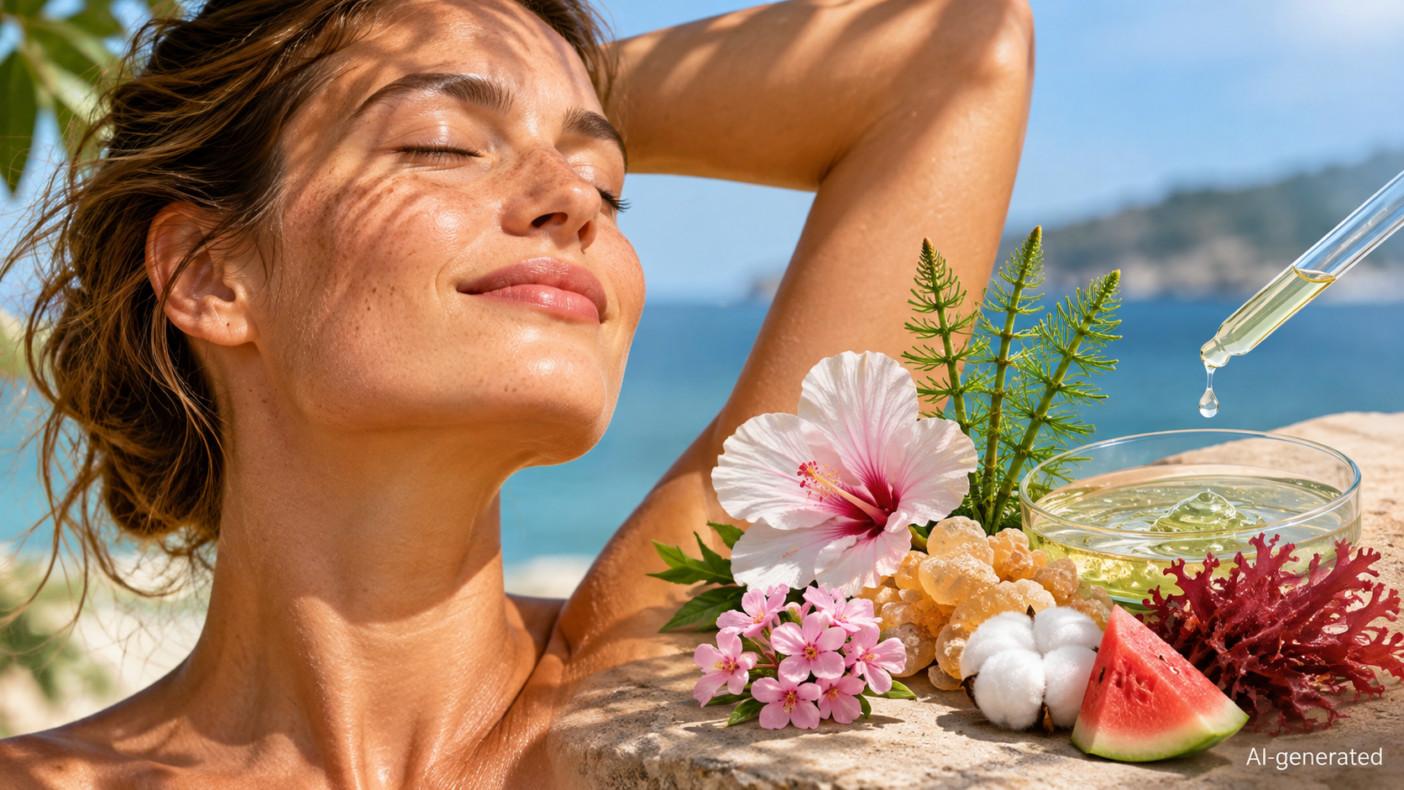
Pre-sun active ingredients: Plant-based innovations to prepare the skin for the sun
Sunlight influences numerous biological processes in our skin. While moderate sun exposure can, among other things, contribute to the body’s own production of vitamin D, excessive UV radiation causes oxidative stress, changes to the skin barrier, and, in the long term, accelerated skin aging.
Modern cosmetics therefore take a holistic approach: In addition to reliable sun protection, targeted skin care before and after sun exposure is becoming increasingly important.
Plant-based pre-sun active ingredients offer interesting possibilities in this regard. They can improve hydration, support antioxidant processes, and strengthen the skin barrier. Some innovative plant extracts are also being studied for their impact on UV-induced biological changes.
The goal here is not to accelerate natural tanning or replace sunscreen. Rather, the aim is to keep the skin in the best possible condition through appropriate skincare formulations.
For cosmetic brands, this approach opens up new opportunities to develop innovative pre-sun products, daytime skincare, barrier protection serums, and complementary sun protection concepts.
What Are Pre-Sun Active Ingredients?
Pre-sun care refers to cosmetic products applied before planned sun exposure.
The focus is on three key skincare goals:
- Supporting the skin barrier: An intact lipid barrier helps limit moisture loss and protect the skin from external stressors.
- Antioxidant care: Certain plant-based substances can neutralize free radicals or influence biological processes associated with oxidative stress.
- Improving hydration: Humectants and film-forming ingredients can make the skin smoother and reduce feelings of dryness.
Another interesting approach is supporting the skin’s own regenerative processes.
However, it is crucial to distinguish between experimentally observed mechanisms of action and clinically proven cosmetic effects.
Important: Pre-sun care is no substitute for sunscreen with an appropriate SPF. Even antioxidant or barrier-strengthening ingredients do not offer reliably quantifiable protection against UV radiation without appropriate testing.
How does the skin protect itself from UV radiation?
The skin has various natural mechanisms for responding to sunlight.
Melanin production
Melanin absorbs and scatters a portion of the incoming UV radiation.
However, the increased pigment production following UV exposure is merely a reaction to radiation exposure and is not a reliable substitute for sunscreen.
Thickening of the stratum corneum
With repeated UV exposure, the epidermis may respond by thickening the stratum corneum.
This so-called “sun callus” offers limited natural protection but does not prevent UV-induced skin damage.
Antioxidant defense mechanisms
The skin possesses various antioxidant defense systems.
These include, for example:
- Superoxide dismutase
- Catalase
- Glutathione-dependent enzyme systems
- Vitamin E
- Other molecules with antioxidant activity
Under intense UV exposure, these systems can become overwhelmed.
Cellular repair mechanisms
UV radiation can cause changes to DNA, proteins, and lipids.
The skin has mechanisms for detecting and repairing certain types of DNA damage.
However, this repair is not complete and does not prevent all long-term consequences of repeated UV exposure.
This is precisely where innovative cosmetic care concepts come into play: They are designed to support the skin’s normal function without promising any medical protective or reparative effects.
Plant-Based Pre-Sun Active Ingredients for Modern Cosmetic Formulations
Plants contain numerous biologically interesting compounds.
These include polyphenols, flavonoids, polysaccharides, phytosterols, and unsaturated fatty acids.
Through targeted extraction processes, high-quality cosmetic active ingredient complexes can be produced from them.
The following raw materials offer different approaches for the development of innovative pre-sun and barrier protection products.
1. Marshmallow and Field Horsetail: AKOWELL™ SUN
Trade name: AKOWELL™ SUN
Supplier: Akott
INCI: Propanediol, Aqua (Water), Althaea Officinalis Root Extract, Equisetum Arvense Leaf Extract
This active ingredient combines extracts from marshmallow root and field horsetail.
Marshmallow root: Polysaccharides for hydration
Marshmallow (Althaea officinalis) contains various mucilages, polysaccharides, and other water-binding plant components.
These ingredients are particularly valuable for cosmetic formulations designed to provide pleasant hydration and leave the skin feeling supple.
Field horsetail: Plant compounds with antioxidant potential
Field horsetail (Equisetum arvense) contains, among other things, silicic acid and various phenolic compounds.
The plant extract is used in cosmetic skincare formulations designed to support the skin barrier and provide antioxidant benefits.
Active Ingredient Concept
AKOWELL™ SUN has been studied for its effects on UV-induced skin changes.
The manufacturer reports, among other things, findings regarding hyaluronidase activity, as well as skin hydration and transepidermal water loss.
The active ingredient is particularly suitable for:
- Pre-sun serums
- Moisturizing care before sun exposure
- After-sun products
- Day care
- Barrier protection formulations
Clinical applicability and specific marketing claims must be assessed based on the complete active ingredient documentation.
2. Frankincense: BOSEXIL® for skin-soothing care
Trade name: BOSEXIL®
Supplier: BASF
INCI: Boswellia Serrata Resin Extract, Lecithin, Microcrystalline Cellulose, Silica
Frankincense is derived from the resin of various Boswellia species.
Of particular interest are the boswellic acids it contains.
These have been studied for many years with regard to various biological properties.
Phytosomes as a delivery system
BOSEXIL® uses a phospholipid-based active ingredient system.
Such delivery systems can facilitate the incorporation of lipophilic plant components into cosmetic formulations and influence their interaction with the skin.
Cosmetic Applications
The active ingredient is offered for skin-soothing skincare formulations.
Of particular interest are:
- Skincare for sensitive skin
- Pre-sun creams
- After-sun emulsions
- Barrier protection products
- Soothing body care
Studies on such active ingredient systems focus, among other things, on skin reactions following mechanical, chemical, and UV-induced stress.
However, a proven skin-soothing effect should not be equated with sufficient protection against UV-induced cellular damage.
3. Arabian Cotton: Arabian Cotton™
Trade name: Arabian Cotton™
Supplier: Vyrus Biotech
INCI: Glycerin, Gossypium Herbaceum (Cotton) Seed Extract, Citric Acid
Arabian Cotton™ is based on a plant-derived active ingredient complex from Gossypium herbaceum.
The raw material is marketed for its antioxidant and skin-nourishing properties.
Polyphenols as Antioxidant Ingredients
Due to their chemical structure, plant-derived polyphenols can interact with reactive oxygen species.
In cosmetic research, they are therefore frequently studied for their potential in combating oxidative stress.
Protection Concepts Against Different Types of Radiation
In addition to UV radiation, the effects of visible light and infrared radiation on biological skin processes are also being investigated.
Arabian Cotton™ is offered for skincare concepts targeting light-induced skin aging.
It should be noted that the biological relevance of individual types of radiation and the required evidence vary.
Suitable Product Formulations
- Antioxidant Day Care
- Pre-Sun Serums
- Anti-Aging Emulsions
- Facial Care with Botanical Active Ingredients
4. Dwarf Soapwort: PhytoCellTec™ nunatak®
Trade Name: PhytoCellTec™ nunatak®
Supplier: Mibelle Biochemistry
INCI: Saponaria pumila callus culture extract, isomalt, lecithin, water
Saponaria pumila is an alpine plant species adapted to harsh environmental conditions.
The active ingredient is derived from plant cell cultures.
Why are plant cell cultures of interest?
Plant cell cultures enable the controlled extraction of selected plant-based ingredients.
Standardized production conditions can help reduce fluctuations in raw material quality.
Cosmetic Active Ingredient Application
PhytoCellTec™ nunatak® is offered for anti-aging and protective skincare formulations.
The manufacturer describes research into biological processes related to skin structure and light-induced skin aging.
Interesting areas of application include:
- Anti-aging day care
- Pre-sun products
- Care for sensitive skin
- High-end facial care
The active ingredient is particularly suitable for brands that wish to integrate innovative plant biotechnology into their product positioning.
5. Red Algae: Algyl® for the Skin Barrier
Trade Name: Algyl®
Supplier: Gelyma
INCI: Water, Glycerin, Gigartina Stellata Extract, Kappaphycus Alvarezii Extract, Corallina Officinalis Extract
Red algae contain numerous biologically interesting components.
These include, in
particular, polysaccharides, minerals, and other secondary constituents.
The Importance of the Epidermal Barrier
The skin’s protective function depends on more than just its lipid composition.
Keratinocyte differentiation and intercellular junctions also play essential roles in maintaining epidermal integrity.
These include, among others:
- Desmosomal structures
- Tight-junction proteins
- Components of the stratum corneum
- Epidermal lipids
Algyl® is offered for skincare formulations designed to support these barrier functions.
Possible Applications
- Barrier protection creams
- Moisturizing serums
- Pre-sun care
- After-sun products
- Skincare for dry skin
Particularly interesting is the combination with ceramides, panthenol, and suitable humectants.
6. Watermelon: PEPHA® Protect
Trade name: PEPHA® Protect
Supplier: DSM Personal Care
INCI: Citrullus Lanatus (Watermelon) Fruit Extract, Citrulline, Glycerin, Aqua, Phenoxyethanol, Sodium Benzoate, Potassium Sorbate
Watermelons contain various amino acids and other water-soluble ingredients.
The amino acid citrulline is particularly interesting due to its role in various biological metabolic processes.
Citrulline and Antioxidant Protection Concepts
As a non-proteinogenic amino acid, citrulline is an interesting component of innovative skincare formulations designed to support the skin’s natural defense mechanisms against environmental stress.
PEPHA® Protect combines watermelon extract with citrulline and is offered for cosmetic skincare concepts focused on environmental stress and light-induced skin aging.
Active Ingredient Research
The manufacturer describes studies on oxidative stress and UV-associated cellular changes.
For cosmetic applications, its antioxidant properties and ability to support a healthy complexion are of particular interest.
Product Ideas
- Antioxidant Day Care
- Pre-Sun Serum
- Light Facial Emulsion
- Skincare Products for Stressed Skin
The following also applies to this active ingredient: Results for individual biological markers do not, on their own, prove sufficient UV protection for the finished cosmetic product.
7. Lycopene: A carotenoid with antioxidant potential
INCI: Lycopene
Example trade name: SpecPure® LCP
Supplier: Spec-Chem Industry
Lycopene is a naturally occurring carotenoid.
For example, it gives tomatoes and certain other fruits their characteristic red color.
How does lycopene work?
Lycopene has a pronounced ability to react with certain reactive oxygen species.
Its effect on singlet oxygen is particularly interesting.
As a result, lycopene is frequently studied in research in the context of oxidative stress.
Formulation Challenges
Lycopene is lipophilic and sensitive to certain external factors.
Therefore, the following factors must be taken into account during processing:
- Light sensitivity
- Oxidation stability
- Temperature stress
- Suitable solvent and carrier systems
- Potential discoloration of the formulation
Appropriately stabilized raw material grades are suitable for cosmetic formulations.
Interesting Applications
- Antioxidant skincare
- Pre-sun products
- Anti-aging serums
- Lipid-rich skincare formulations
8. Poppy Seed Oil: Plant-Based Lipids for Supple Skin
Trade Name: Refined Poppy Oil-BCE1035
Supplier: Biocosmethic
INCI: Papaver somniferum seed oil, Tocopherol, Helianthus annuus (sunflower) seed oil
Poppy seed oil is a plant-based oil with an interesting fatty acid profile.
In particular, it contains linoleic acid and oleic acid.
Why are plant-based fatty acids important?
Linoleic acid is an essential fatty acid and plays an important role in the skin’s lipid metabolism.
Plant-based oils with a high linoleic acid content can therefore be valuable ingredients in barrier protection formulations.
Cosmetic Benefits
- Smoother skin feel
- Care for dry skin
- Complement to lipid-rich emulsions
- Support for the skin barrier
- Pleasant sensory experience
Poppy seed oil is particularly suitable for pre-sun creams, body care, and after-sun products.
9. Amaranth: Plant-Based Oil for Demanding Skin
Example trade name: Amaranth Oil-BCE1060
Supplier: Biocosmethic
INCI: Amaranthus Caudatus Seed Extract
Amaranth is one of the most traditional cultivated plants.
High-quality plant-based lipids can be extracted from the seeds.
Amaranth oil contains, among other things, unsaturated fatty acids and, depending on the quality of the raw material, other lipophilic components such as squalene.
Cosmetic Properties
Plant-based amaranth lipids are particularly suitable for:
- Dry skin
- Advanced facial care
- Rich body care
- Barrier-protecting emulsions
- After-sun products
The actual fatty acid composition and the content of accompanying substances depend on the specific quality of the raw material.
10. Box Bean: Entadine® from Entada phaseoloides
Trade name: Entadine®
Supplier: Biosil Technologies
INCI: Entada phaseoloides Bark/Seed Extract, Propanediol, Water
Entada phaseoloides is a tropical climbing plant from the legume family.
Its seeds and other plant parts contain various secondary metabolites.
Cosmetic Active Ingredient Application
Entadine® is offered for skincare formulations designed to support the skin barrier and improve the appearance of sun-exposed skin.
The manufacturer also describes studies on hydration and other skin-related parameters.
Possible Product Applications
- Pre-sun care
- Antioxidant day care
- Anti-aging products
- Barrier-protecting serums
The validity of specific efficacy claims depends on the available studies and the concentration used.
Additional botanical ingredients for pre-sun care
In addition to specialized active ingredient complexes, various classic botanical lipids are suitable for modern skincare formulations.
Shea butter
INCI: Butyrospermum Parkii Butter
Shea butter contains a high proportion of nourishing lipids and various unsaponifiable components.
It is particularly suitable for rich creams and body care products.
Jojoba oil
INCI: Simmondsia Chinensis Seed Oil
Jojoba oil consists primarily of liquid wax esters.
It has pleasant sensory properties and is particularly suitable for high-quality skin care formulations.
Sunflower Oil
INCI: Helianthus Annuus Seed Oil
Depending on its quality, sunflower oil contains varying proportions of linoleic acid and oleic acid.
Linoleic acid-rich varieties are particularly suitable for skincare formulations focused on the skin barrier.
Avocado Oil
INCI: Persea Gratissima Oil
Avocado oil contains various fatty acids and unsaponifiable components.
It is suitable for rich skincare products.
Pomegranate seed oil
INCI: Punica Granatum Seed Oil
Pomegranate seed oil is particularly interesting due to its punicic acid content.
It is used in high-performance skincare and formulations with antioxidant properties.
Rice wax and rice extracts
Examples of INCI: Oryza Sativa Bran Wax, Oryza Sativa Bran Extract
Rice-based raw materials offer different cosmetic properties depending on their composition.
These include structure-forming waxes, lipids, and antioxidant-rich accompanying substances.
Important: Even though certain plant oils can absorb UV radiation to a limited extent, they must not be advertised as reliable sunscreens without appropriate testing.
How can plant-based pre-sun active ingredients be effectively combined?
Selecting individual active ingredients is only one part of formulation development.
Their combination with a suitable cosmetic base is crucial.
Moisturization
Suitable ingredients:
- Glycerin
- Hyaluronic acid
- Betaine
- Panthenol
- Trehalose
Supporting the skin barrier
Interesting components:
- Ceramides
- Cholesterol
- Free fatty acids
- Phytosterols
- Plant-based lipids
Antioxidant care
Possible active ingredients:
- Tocopherol
- Lycopene
- Polyphenol-rich plant extracts
- Suitable vitamin C derivatives
Skin-soothing care
Interesting ingredients:
- Panthenol
- Beta-glucan
- Bisabolol
- Ectoine
- Selected plant extracts
The final combination of active ingredients must be evaluated for stability, tolerability, and regulatory compliance.
Five innovative product ideas for cosmetics brands
The development of modern pre-sun active ingredients opens up interesting possibilities for new cosmetic products.
1. Pre-Sun Antioxidant Serum
A lightweight facial serum with selected plant extracts, hyaluronic acid, and antioxidant active ingredients.
Product idea: Complementary care before sun exposure.
2. Skin Barrier Preparation Cream
A barrier-strengthening cream with ceramides, panthenol, and plant-based lipids.
Product idea: Intensive care for dry and sensitive skin.
3. Botanical Defense Day Cream
A lightweight day cream with antioxidant plant extracts and moisturizing agents.
Product concept: Modern skincare for skin regularly exposed to external environmental stressors.
4. After-Sun Recovery Gel
A cooling gel with panthenol, beta-glucan, and selected moisturizing active ingredients.
Product concept: Soothing care after sun exposure.
5. Well-Aging Botanical Concentrate
A high-quality serum with selected botanical active ingredients and antioxidant components.
Product concept: Sophisticated facial care focused on hydration and a smoother complexion.
Can pre-sun products increase the SPF?
A common misconception is to equate antioxidant or botanical skincare products with proven sun protection.
For example, a cosmetic active ingredient may reduce certain UV-induced changes in cell tests without resulting in a measurable SPF for the finished product.
Appropriate testing is therefore required for sun protection products.
In the European Union, the UV filters used must comply with regulatory requirements. In addition, advertised protection claims must be substantiated through appropriate testing procedures.
Pre-sun care is a supplement to sun protection, not a substitute for it.
A sensible skincare routine can consist of a moisturizer, a suitable sunscreen, and a complementary after-sun care product.
What matters most in product development?
Developing high-quality skincare products requires careful balancing of various factors.
Raw Material Quality
Plant extracts can have varying compositions depending on their origin, harvest, extraction method, and standardization.
Stability
Antioxidant plant compounds can be sensitive to light, oxygen, or temperature.
Galenics
The choice of emulsion system influences, among other things:
- Active ingredient distribution
- Sensory Properties
- Skin feel
- Physical stability
- Packaging compatibility
Tolerability
Appropriate testing is particularly important for products intended for sensitive skin.
Proof of efficacy
Cosmetic advertising claims must be verifiable based on appropriate data.
A distinction must be made between raw material studies and tests on the finished product.
Developing Pre-Sun Active Ingredients: Cosmacon as Your Partner
The development of innovative Pre-Sun products combines plant chemistry, modern formulation technology, and cosmetic active ingredient research.
Cosmacon GmbH supports cosmetic brands in the development of customized skincare products.
Our services include:
- Scientifically sound active ingredient research
- Selection of innovative plant extracts
- Development of customized formulations
- Production of laboratory samples
- Stability and tolerability testing
- Regulatory documentation
- Safety assessment in accordance with the EU Cosmetics Regulation
- Support for industrial manufacturing
Through our international supplier network and our extensive raw material database, we can specifically integrate innovative active ingredient concepts into new product developments.
Conclusion: Plant-Based Pre-Sun Active Ingredients as a Complement to Modern Sun Care
Preparing the skin for sun exposure is an interesting concept in modern cosmetics.
Plant extracts, antioxidant active ingredients, and barrier-strengthening lipids offer a wide range of possibilities for improving skin hydration and supporting the skin’s natural protective functions.
However, this skincare should always be viewed as a complement to effective sun protection.
This opens up exciting opportunities for cosmetics brands to develop innovative serums, creams, and complementary sun care products based on scientifically sound active ingredient concepts.
Cosmacon develops customized pre-sun care products for your brand—from the initial idea for an active ingredient to a production-ready formulation.
Contact us, if you’d like to incorporate innovative plant-based active ingredients into your next cosmetic product.
When you need it fast:
✨ Our partner Tojo Cosmetics offers innovative, active-ingredient-rich private-label products—quickly available, high-quality, and perfect for brands that want to impress with passion and quality.