Mitochondrial Cosmetics: Cellular Energy as a New Lever for Longevity
What is mitochondrial cosmetics?
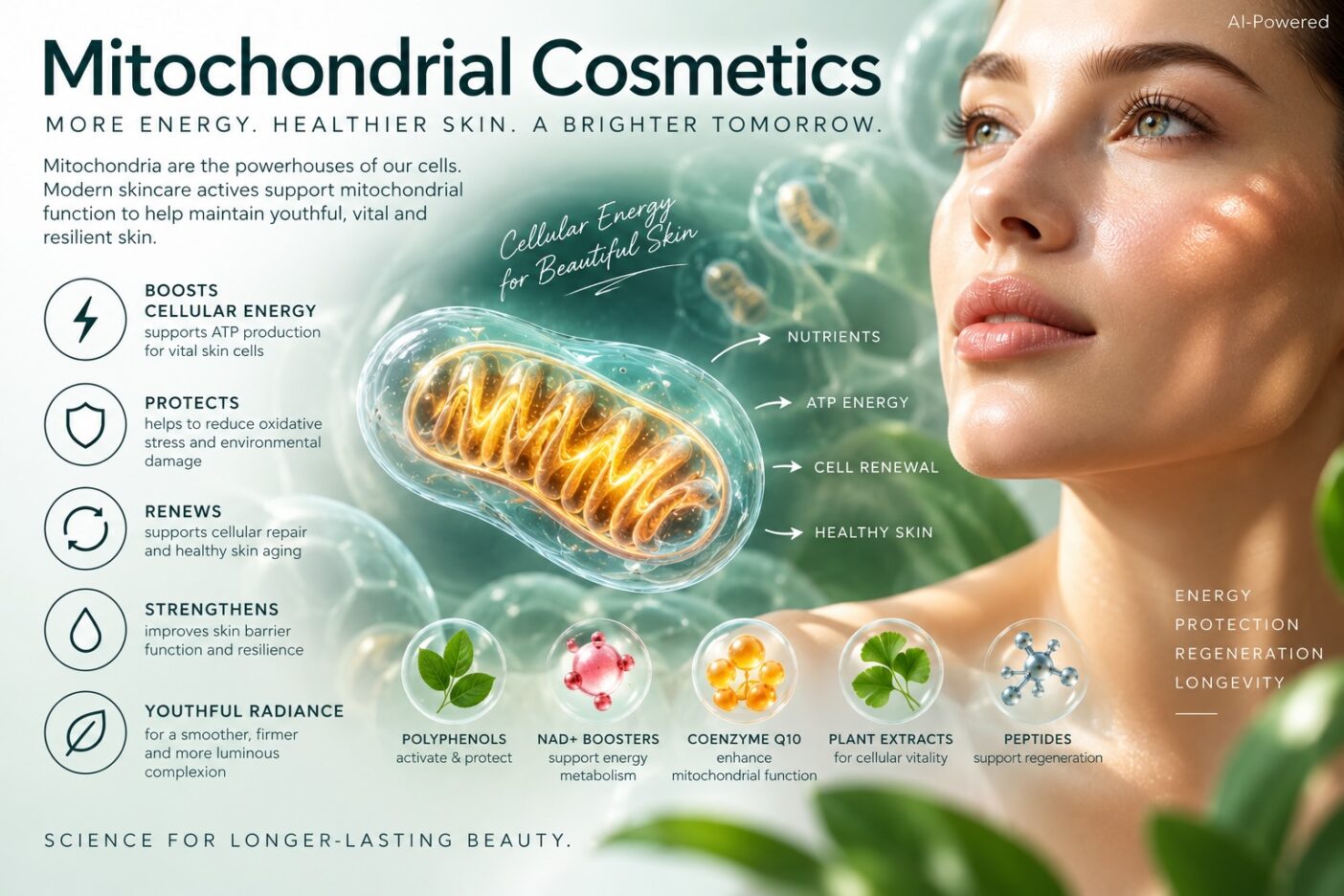
Mitochondria are the cell’s powerhouses. Through a process known as oxidative phosphorylation, they produce adenosine triphosphate (ATP)—the universal energy currency for virtually all cellular processes. Skin cells such as keratinocytes and fibroblasts have high energy demands: they constantly renew themselves, build collagen and elastin, and maintain the skin barrier. All of this is only possible with stable ATP production.
The approach aims to maintain or reactivate precisely this energy supply. Rather than concealing individual signs of aging, the goal is to enable the cells to perform their repair and regeneration functions at a high level for longer. This clearly places the field within the realm of longevity and well-aging.
Why Mitochondria Are Linked to Skin Aging
With age and under external stress, mitochondrial function declines. Two mechanisms are particularly relevant:
- mtDNA damage: Mitochondrial DNA is located close to the respiratory chain and has fewer repair mechanisms than nuclear DNA. Deep-penetrating UVA radiation, in particular, promotes mutations that accumulate over the years.
- Oxidative stress: A disrupted respiratory chain produces increased levels of reactive oxygen species (ROS). These, in turn, damage the mitochondria themselves—a self-perpetuating cycle that depletes cellular energy and fuels inflammatory processes (“inflammaging”).
The consequence of mitochondrial dysfunction is a decline in cellular energy: collagen and elastin synthesis decrease, regeneration slows down, and the skin loses its elasticity, moisture, and resilience. Energy status is also crucial in the hair follicle—one reason why mitochondrial-based approaches are increasingly appearing in scalp and hair care.
Relevant Active Ingredients and INCI
Mitochondria-targeted formulations typically combine antioxidant protection with “energizing” cofactors. The most important approaches:
- Ubiquinones and ubiquinol (coenzyme Q10 / reduced Q10): a central component of the respiratory chain and an antioxidant; the classic cornerstone of any mitochondrial formulation.
- Pyrroloquinoline quinone (PQQ): supports mitochondrial biogenesis and protects cells against UV-induced stress.
- NAD⁺ precursors such as NMN or niacinamide: boost cellular energy production and repair mechanisms.
- Creatine: provides readily available energy reserves for cells with high metabolic turnover.
- Urolithin A: is associated with “mitofagia” (the targeted recycling of damaged mitochondria) and overlaps with the topic of autophagy.
- Astaxanthin and other powerful antioxidants: shield the mitochondrial membrane from ROS.
At the 2026 active ingredient trade shows, the trend was clear: peptide delivery systems with integrated ubiquinones for targeted cellular energy, as well as hair follicle concepts that combine autophagy and mitochondrial activity, were among the most notable innovations. This underscores that cellular energy is no longer viewed as a side effect, but rather as an independent mechanism of action.
Formulation: What Matters
Many energy-related active ingredients are sensitive. Coenzyme Q10, for example, is sensitive to oxidation and light and has limited skin permeability. In practice, this means:
- Stabilization and delivery: Encapsulation, combination with co-antioxidants, and suitable carrier systems improve stability and bioavailability.
- Meaningful synergies: Antioxidant protection plus an energetic cofactor plus barrier care results in a well-rounded concept—rather than an isolated “hero ingredient.”
- Realistic claims: Cosmetic claims must relate to the skin’s appearance. Mechanistic formulations (“activates mitochondria”) belong in technical communications, not on packaging.
Often terms of price, high-purity raw materials such as ubiquinol, PQQ, or urolithin A fall into the high-end segment—the price range is wide, making these active ingredients particularly interesting for premium and longevity lines.
Frequently Asked Questions About Mitochondrial Cosmetics
What does mitochondrial cosmetics mean?
It refers to skincare concepts that support the energy metabolism of skin cells. Rather than simply masking individual signs of aging, the goal is to support the mitochondria—the cell’s powerhouses—in their ATP production to maintain repair, collagen synthesis, and regeneration.
What active ingredients are used for this?
Typical examples include coenzyme Q10 (ubiquinone/ubiquinol), PQQ, NAD⁺ precursors such as NMN or niacinamide, creatine, urolithin A, and powerful antioxidants like astaxanthin. They are often combined with delivery systems.
How are mitochondria related to skin aging?
With age and under UVA stress, mitochondrial function declines, leading to mtDNA damage and an increase in free radicals. This reduces cellular energy and weakens collagen synthesis, regeneration, and the skin barrier.
Is this just a skin issue?
No. Hair follicles are also highly energy-dependent. That is why there is a growing number of scalp and hair care approaches that address mitochondrial activity and autophagy.
Would you like to develop a mitochondrial treatment concept?
Custom Formulation Development
From active ingredient selection to a stable, market-ready formulation: Cosmacon develops your tailor-made longevity skincare.
Fast market access
Immediately available white-label base for a quick start: Tojo Cosmetics – private-label products with a focus on active ingredients.
References
- Zong Y. et al. Mitochondrial dysfunction: mechanisms and advances in therapy. Signal Transduct Target Ther. 2024.
- Sreedhar A. et al. Mitochondria in skin health, aging, and disease. Cell Death Dis. 2020;11:444.
- Stout R., Birch-Machin M. Mitochondria’s Role in Skin Aging. Biology (Basel). 2019;8(2):29.
- Hipkiss A.R. Aging, proteotoxicity, mitochondria, glycation, NAD⁺, and carnosine. Int J Mol Sci. 2017.