
Hyaluronic Acid – The Biopolymer
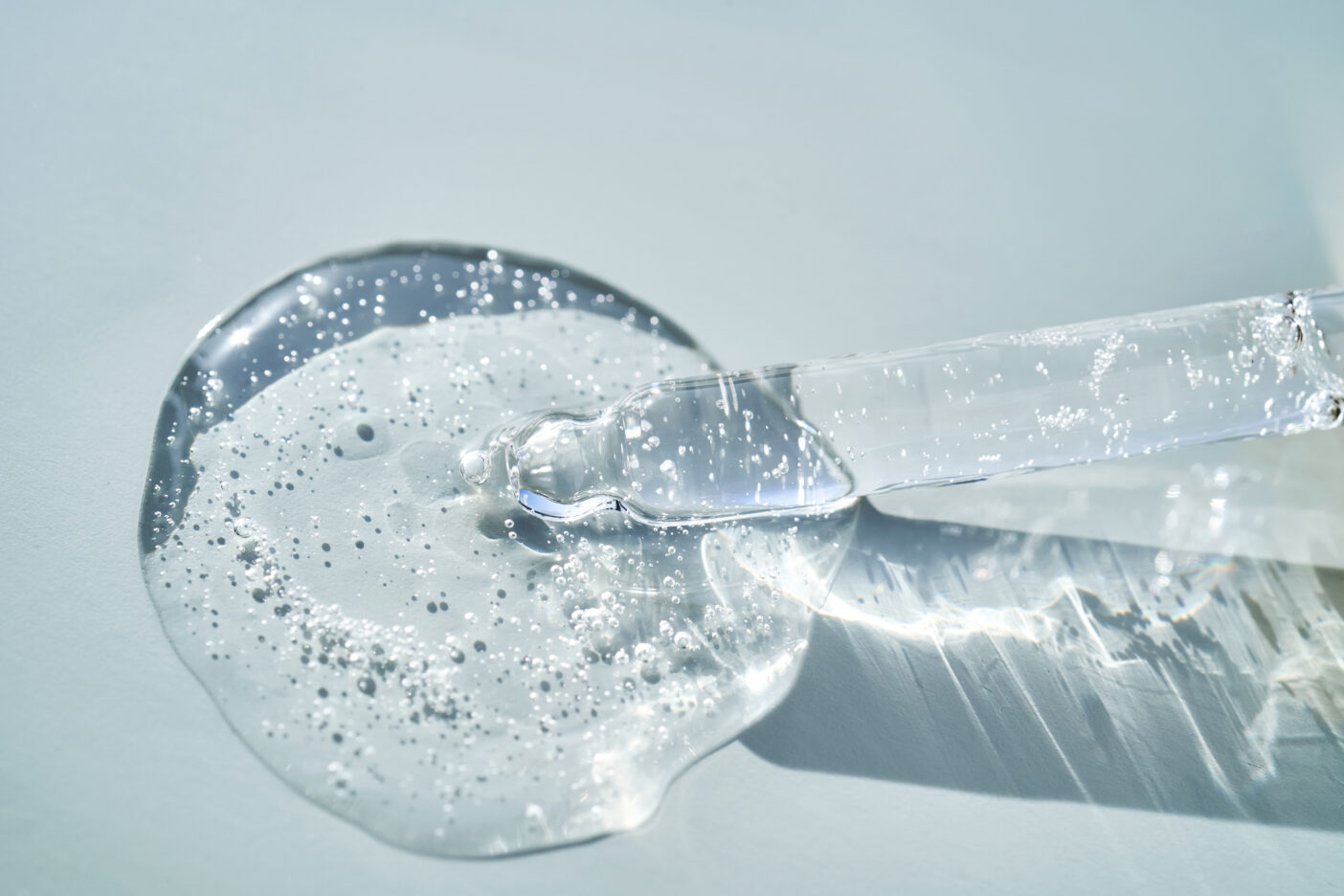
Hyaluronic acid (Hyaluronic Acid, hyaluronan, or hyaluronate) is one of the most important glycosaminoglycans in the extracellular matrix. It is found in the tissues of all vertebrates, but is also present in microorganisms and mollusks.
Due to its unique chemical structure, hyaluronic acid is of enormous physiological importance. It serves as a water reservoir, a mechanical barrier, and an important component of the immune system. Furthermore, it is involved in tissue repair and cellular communication.
These diverse properties make hyaluronic acid an indispensable component of modern applications in orthopedics, ophthalmology, dermatology, and cosmetics.
What Is Hyaluronic Acid?
Hyaluronic acid belongs to the group of glycosaminoglycans (GAGs), also known as acidic mucopolysaccharides. Its basic structural unit consists of a disaccharide composed of N-acetylglucosamine and D-glucuronic acid with a molecular weight of approximately 400 daltons.
These disaccharides are linked via glycosidic bonds to form long polysaccharide chains. This results in macromolecules with molecular weights ranging from 200 to 10,000 kDa. The number of disaccharide units can be repeated up to 10,000 times, resulting in molecular weights of four to ten million daltons.
Thanks to this extraordinary structure, hyaluronic acid can form numerous hydrogen bonds and bind large amounts of water. As a result, it provides structure to tissues, supports osmotic balance, and acts as a barrier to regulate the transport of ions, proteins, and cells.
Discovered Early and Widely Used
As early as the 17th century, there were initial indications of a substance responsible for the gel-like consistency of the umbilical cord.
However, hyaluronic acid was not actually discovered until 1934 in the aqueous humor of the bovine eye. Its name is derived from the Greek word “hyaloid” and refers to its presence in the vitreous body of the eye.
Hyaluronic acid is the only known polymeric substance found in both higher organisms and microorganisms, as well as in mollusks.
In the human body, about half of all hyaluronic acid is found in the skin. Particularly high concentrations are also found in the vitreous humor of the eye, in the synovial fluid of the joints, in the umbilical cord, in cartilage tissue, and in connective tissue.
The Amazing Molecule
Hyaluronic acid and its sodium salt, sodium hyaluronate, are water-soluble and are characterized by an extraordinary ability to bind water.
A 2-percent solution can bind up to 98 percent water, forming a viscoelastic gel in the process. This property makes hyaluronic acid an ideal biological lubricant and cushioning material, for example in joints or in the eye.
The numerous negatively charged carboxyl groups cause the molecular chains to repel one another, thereby allowing them to store particularly large amounts of water. This ability forms the basis for tissue turgor—the elasticity of the tissue—as well as many medical and cosmetic applications.
In addition, hyaluronic acid can act as a cation exchanger and form polyelectrolyte complexes that can be used in pharmaceutical and cosmetic formulations.
Biosynthesis of Hyaluronic Acid
Hyaluronic acid is produced on the inner surface of the cell membrane in vertebrates and microorganisms. This process is carried out by membrane-bound hyaluronic acid synthetases, which link activated sugar building blocks together.
The dermal fibroblasts and epidermal keratinocytes of the skin are particularly active in this process.
Synthesis and Degradation
For hyaluronic acid to fulfill its biological functions, a continuous metabolic process must take place. This occurs through the interaction of various enzymes:
- Hyaluronic acid synthetases for synthesis
- Hyaluronidases for degradation
- Exoglucosidases for the further breakdown of degradation products
In humans, three hyaluronic acid synthetases and six different hyaluronidases are known. These regulate the concentration and structure of hyaluronic acid in the tissues.
A Key Biological Substance
Hyaluronic acid plays a central role in maintaining the body’s water balance. It acts as a water reservoir, stabilizes electrolyte balance, and ensures the elasticity of the skin and connective tissue.
As a component of the extracellular matrix, it influences cell migration, cell division, and wound healing. At the same time, it forms a natural diffusion barrier and protects tissues from uncontrolled fluid movement and local infections.
Furthermore, hyaluronic acid is involved in numerous signaling processes. Low-molecular-weight degradation products, for example, can regulate inflammatory processes, tissue repair, angiogenesis, and other biological reactions.
Extraction and Production
In the past, hyaluronic acid was primarily extracted from animal sources, particularly rooster combs. Due to potential contaminants and limited yields, production today is almost exclusively biotechnological.
In modern fermentation processes, specialized microorganisms produce hyaluronic acid in large quantities. The hyaluronic acid obtained in this way is referred to as “Non-Animal Source Hyaluronan” (NASH) and meets the highest quality standards for medical and cosmetic applications.
Versatile Applications
Thanks to its excellent biocompatibility and exceptional water-binding capacity, hyaluronic acid is used in a wide variety of applications today:
- Ophthalmology
- Orthopedics
- Dermatology
- Cosmetic Surgery
- Wound Healing
- Drug Delivery
- Dietary Supplements
- Cosmetic Skin Care
In cosmetic formulations, hyaluronic acid is primarily used as a moisturizing active ingredient. It improves the skin’s texture, supports hydration of the upper skin layers, and contributes to a smooth, well-cared-for appearance.
A Molecule with Great Potential
Hyaluronic acid is one of nature’s most fascinating biopolymers. Its significance extends far beyond cosmetic applications and encompasses numerous medical and biological functions.
Supporting and replenishing the body’s own hyaluronic acid levels is now an important component of modern dermatology, cosmetics, and anti-aging approaches.
Cosmacon supports you with all questions regarding the development of innovative cosmetic products containing hyaluronic acid and related active ingredients. Contact us!
When you need a quick solution:
✨ Our partner Tojo Cosmetics offers innovative, active-ingredient-rich private-label products—quickly available, high-quality, and perfect for brands that want to impress with passion and quality.