
Hyaluronic Acid in the Skin
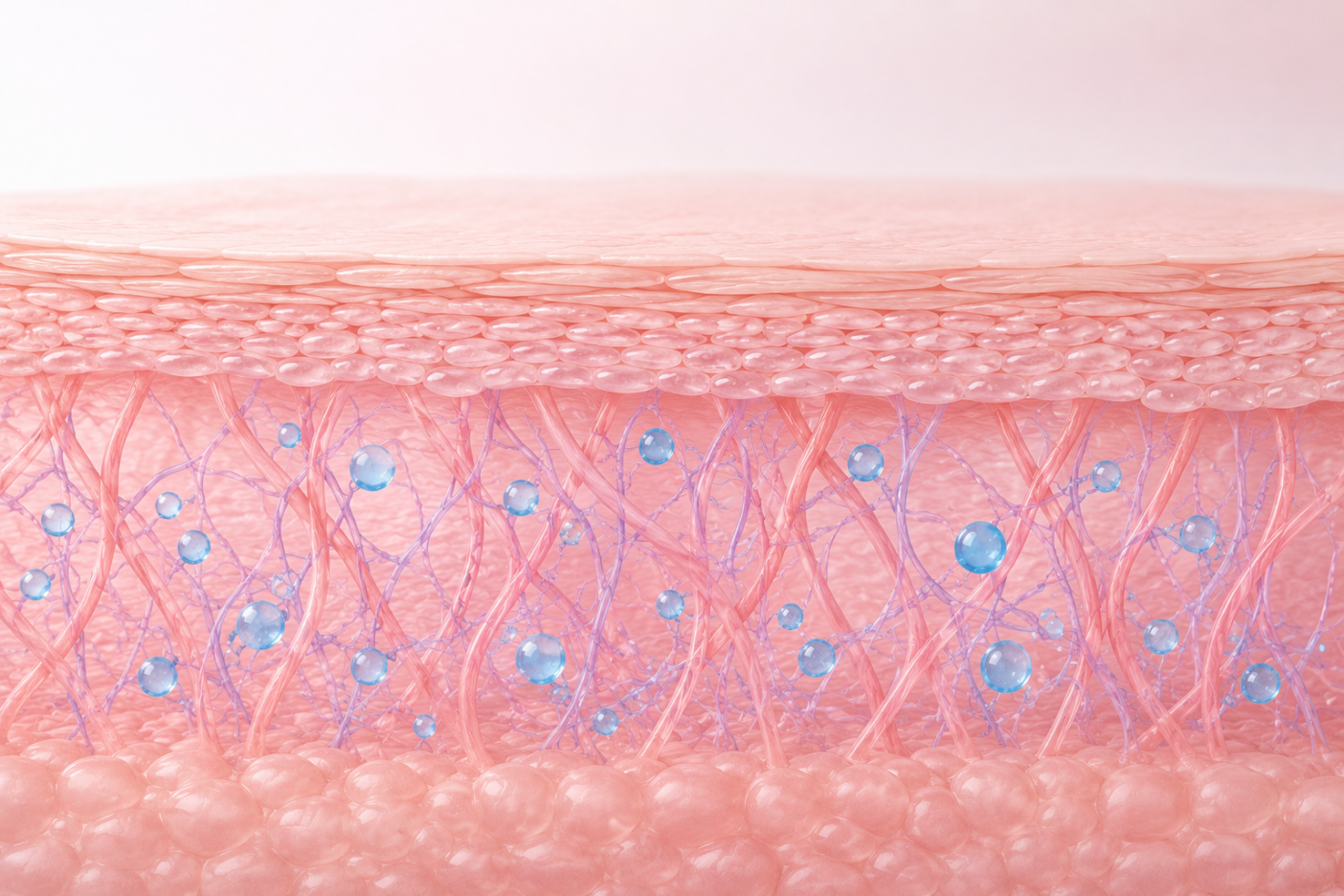
Hyaluronic acid in the skin is one of the most important components of the extracellular matrix. In addition to hyaluronic acid, this tissue structure also includes proteoglycans, other glycosaminoglycans, and structural proteins such as collagen and elastin. Together, they form the skin’s scaffold and facilitate the exchange of nutrients, signaling molecules, and metabolic byproducts.
Together with dermatan sulfate, chondroitin sulfate, heparin, and heparin sulfate, hyaluronic acid in the skin plays a key role in the formation and stabilization of the tissue matrix. At the same time, it regulates communication between cells and their environment, as well as numerous processes of growth, differentiation, and regeneration.
Formation of Hyaluronic Acid in the Skin
Particularly large amounts of hyaluronic acid are produced by dermal fibroblasts and epidermal keratinocytes.
Synthesis occurs via the enzyme hyaluronic acid synthetase on the inner side of the cell membrane. N-acetylglucosamine and glucuronic acid combine to form long hyaluronic acid chains, which are transported outward and form a gel-like matrix there.
To date, three isoenzymes are known: HAS1, HAS2, and HAS3. While HAS2 primarily produces high-molecular-weight hyaluronic acid for the extracellular matrix, HAS3 tends to form shorter molecular chains that play an important role in cellular signaling.
The production of hyaluronic acid in the skin is regulated by various factors. Growth factors, cytokines, and cell density influence the activity of hyaluronic acid synthetases and thus the amount of hyaluronic acid produced.
How is hyaluronic acid distributed in the skin?
Hyaluronic acid is found in both the dermis and the epidermis. Particularly high concentrations are found in the basal layer of the epidermis as well as in the adjacent papillary dermis.
Interestingly, the concentration of hyaluronic acid in the intercellular spaces of the epidermis is about ten times higher than in the dermis. There, it not only supports water retention but also performs important regulatory functions for cell growth.
Both epidermal and dermal hyaluronic acid have a half-life of about 24 hours, which illustrates the extremely active metabolism of this biopolymer.
Hyaluronic Acid in the Dermis
In the dermis, hyaluronic acid binds many times its own weight in water due to its polyanionic structure. As a result, it plays a crucial role in the skin’s hydration, firmness, and elasticity.
Furthermore, it facilitates the transport of nutrients and metabolic byproducts within the tissue and serves as a link between the various cells of the skin.
The extracellular matrix functions not only as a structural framework but also as a communication platform. Information is transmitted between cells via signaling molecules such as cytokines, hormones, and growth factors. At the same time, specific receptor bindings give rise to long-term regulatory effects.
Hyaluronic Acid in the Epidermis
In the epidermis, hyaluronic acid helps maintain the extracellular space between cells. This facilitates the diffusion of nutrients and the removal of metabolic byproducts.
At the same time, hyaluronic acid influences the development and differentiation of keratinocytes. It helps maintain the balance between cell division and keratinization, thereby supporting the skin’s natural regeneration.
Through its interaction with specific receptors, hyaluronic acid can promote wound healing and support the regeneration of skin cells.
Furthermore, it protects the skin from harmful environmental influences and helps neutralize free radicals.
Receptors for Hyaluronic Acid in the Skin
The biological effects of hyaluronic acid are mediated by specific receptors known as hyaloadherins.
The CD44 and RHAMM receptors are particularly important.
- CD44 binds hyaluronic acid at the cell surface and plays a central role in cell-cell and cell-matrix interactions, the organization of the epidermis, and the regulation of cell growth and cell migration.
- The RHAMM receptor (Receptor for Hyaluronan-Mediated Motility) is primarily involved in controlling cell motility. The interaction between hyaluronic acid and RHAMM activates various intracellular signaling pathways that influence growth, regeneration, and repair processes.
Metabolism of Hyaluronic Acid in the Skin
The continuous synthesis and degradation of hyaluronic acid are crucial to its functions.
While hyaluronic acid synthetases are responsible for its synthesis, hyaluronidases break down the biopolymer.
Medicine specifically exploits this property to enhance the penetration of certain active ingredients. Temporary degradation of the extracellular matrix can facilitate the absorption of drugs.
In the skin, the half-life of hyaluronic acid is approximately 24 hours. After degradation, the components are transported away via the lymphatic system and ultimately processed further in the liver and kidneys.
Why Hyaluronic Acid Is So Important for the Skin
As we age, the skin’s natural hyaluronic acid content decreases. This leads to a loss of moisture, elasticity, and firmness. Since hyaluronic acid plays a key role in cell communication, wound healing, hydration, and skin regeneration, it is now considered one of the most important active ingredients in modern skincare.
Cosmetic formulations containing hyaluronic acid can help support the skin’s moisture balance and improve the appearance of dry and mature skin.
Cosmacon is happy to advise you on all questions regarding the use of hyaluronic acid in skincare and develops customized formulations for innovative cosmetic products.
When you need it fast:
✨ Our partner Tojo Cosmetics offers innovative, active-ingredient-rich private-label products—quickly available, high-quality, and perfect for brands that want to impress with passion and quality.