
Camelina Oil
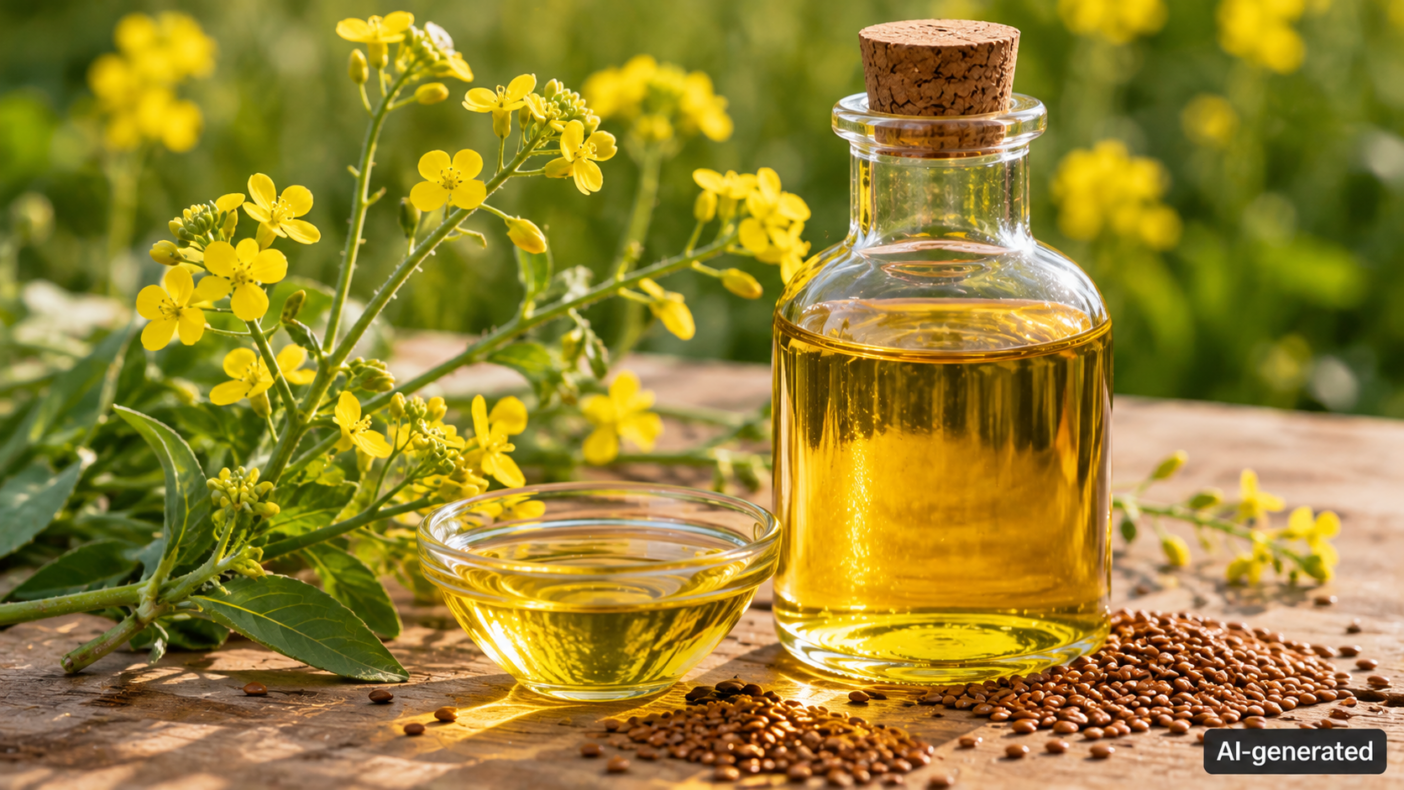
Camelina Oil – Omega-3-Rich Vegetable Oil for Skin Care and Cosmetics
Camelina oil is one of Europe’s most traditional vegetable oils and is experiencing a renaissance in modern cosmetics. The golden-yellow oil extracted from the seeds of Camelina sativa stands out for its exceptionally high content of alpha-linolenic acid (omega-3), valuable unsaturated fatty acids, and natural antioxidant compounds.
It offers particularly beneficial skincare properties for dry, sensitive, and demanding skin. This versatile vegetable oil also opens up numerous formulation possibilities in hair care.
Camelina – A Crop Rich in Tradition
Camelina (Camelina sativa) belongs to the cruciferous family (Brassicaceae). This annual, herbaceous plant grows to a height of up to 1.20 meters and has been cultivated for millennia as an oilseed and crop plant.
Archaeological findings confirm its use as far back as prehistoric times. In Europe in particular, camelina long played an important role in the production of cooking and lamp oil before it was increasingly displaced by higher-yielding oil crops such as rapeseed and sunflowers.
Today, the plant is regaining importance. Reasons for this include its relatively low cultivation requirements, its versatility, and its interesting fatty acid profile.
Depending on the variety and growing conditions, the seeds contain about 30 to 40 percent oil. Gentle cold pressing produces an intensely yellow to yellow-reddish vegetable oil with a characteristic, slightly herbaceous odor.
Camelina Oil and Its Versatile Uses
Traditionally, the oil has been used both as a food and for technical applications. Due to its high content of polyunsaturated fatty acids, it possesses drying properties and is suitable, for example, as a component of certain varnishes, paints, and coatings.
In addition, camelina is being investigated as a renewable raw material for bio-based fuels. As early as 2011, a transatlantic flight was conducted using a fuel blend that contained a portion of biofuel derived from camelina.
The oil is also of nutritional interest. Its high content of alpha-linolenic acid makes it a plant-based source of essential omega-3 fatty acids.
For the cosmetics industry, however, the focus is primarily on the skin-nourishing lipids, the pleasant feel on the skin, and its versatile formulability.
Camelina Oil in Cosmetics: Effects on the Skin
Its unique fatty acid profile makes Camelina sativa seed oil an attractive ingredient for modern skincare products.
Omega-3 Fatty Acids and the Skin Barrier
With a content often ranging from about 33 to 39 percent, alpha-linolenic acid is one of the oil’s most important fatty acids.
It also contains linoleic acid (omega-6), oleic acid (omega-9), and other long-chain fatty acids.
This combination of lipids supports the health of the skin’s surface and can help reduce transepidermal water loss (TEWL) by forming a moisturizing, protective lipid film.
Particularly dry and rough skin benefits from cosmetic oils that compensate for lipid deficiency and make the skin appear smoother.
Skin-Soothing Care for Sensitive Skin
Sensitive skin often reacts to external factors such as cold, dry air, or unsuitable cleansing products.
Here, the plant oil—as part of a balanced formulation—can help reduce feelings of tightness and keep the skin supple.
The alpha-linolenic acid it contains is also an interesting starting point for scientific research into inflammation-related processes.
Important: No clinically proven anti-inflammatory effect of the finished cosmetic product can be inferred from the fatty acid profile alone. Likewise, camelina oil should not be advertised as a treatment for atopic dermatitis or other skin conditions.
Softness and Protection for Dry Skin
As an emollient, the oil improves the spreadability of cosmetic formulations and leaves the skin feeling nourished and supple.
It is particularly suitable for:
- Rich face and night creams
- Barrier-strengthening skincare formulations
- Body lotions and body oils
- Lip care products
- Mild cleansing oils and oil serums
- Skincare products for dry and sensitive skin
When combined with suitable humectants such as glycerin, panthenol, or hyaluronic acid, formulations can be developed that address both moisture supply and lipid care.
Camelina oil for hair care
Not only the skin, but also dry and damaged hair can benefit from this plant oil.
The lipids it contains form a nourishing film on the hair’s surface, helping to reduce friction between individual strands.
As a result, the hair feels smoother, becomes easier to comb, and gains a natural shine.
The oil is particularly suitable for:
- Hair masks and intensive treatments
- Nourishing conditioners
- Hair oils and split-end treatments
- Leave-in products
- Care formulations for dry, brittle hair
When developing lightweight hair care products, the concentration should be carefully selected to ensure the hair is not weighed down.
Natural Antioxidants and Oxidative Stability
In addition to its fatty acid profile, camelina oil contains natural accompanying compounds such as tocopherols and phytosterols.
Tocopherols contribute to the antioxidant stabilization of the oil phase. Phytosterols are also interesting components in skin-care formulations due to their lipophilic properties.
However, the oil has a high proportion of polyunsaturated fatty acids. This makes it comparatively susceptible to oxidative changes.
Oxygen, light, and elevated temperatures can promote the degradation of unsaturated fatty acids and lead to undesirable changes in odor.
For cosmetic formulations, the following is therefore recommended:
- Combining it with more oxidatively stable vegetable oils
- Targeted use of suitable antioxidants, such as tocopherol
- Processing as gently as possible at low temperatures
- Using light-protected, low-oxygen packaging
- Testing the oxidative stability of the finished product
Oxidative stability is a crucial quality factor, especially in high-quality facial oils and water-free formulations.
Camelina Oil Profile
INCI: Camelina Sativa Seed Oil
Botanical Name: Camelina sativa
Plant Family: Brassicaceae (Cruciferae)
Extraction: Preferably cold-pressing of the seeds
Appearance: Yellow to yellow-reddish
Odor: Characteristic, slightly herbaceous
Melting or solidification behavior: Depends on the composition; literature sources indicate a range of approximately −11 to −18 °C.
Saponification value: Typically about 185–194 mg KOH/g
Major fatty acids:
- Alpha-linolenic acid (omega-3): about 33–39%
- Linoleic acid (omega-6): approximately 14–22%
- Oleic acid (omega-9)
- Eicosenoic acid (gondoic acid)
- Palmitic acid
- Stearic acid
- Other long-chain fatty acids, depending on variety and origin
The exact composition may vary depending on plant variety, growing conditions, and extraction methods.
Cosmetic properties: Moisturizing, skin-nourishing, promotes suppleness, and supports the skin barrier.
Applications: Face and body care, lip care, skin oils, and hair care products.
Formulation ideas with camelina oil
Due to its unique composition, the oil is suitable for various cosmetic product concepts.
1. Omega-3 Barrier Repair Cream
A rich moisturizing cream for dry and sensitive skin.
Possible combination of active ingredients:
Camelina oil, ceramides, phytosterols, panthenol, and glycerin.
This formula combines moisturizing plant lipids with ingredients that bind moisture and support the skin barrier.
2. Nourishing Facial Oil
A nourishing facial oil with a balanced lipid profile.
Possible combination of active ingredients:
Camelina oil, squalane, jojoba oil, tocopherol, and bisabolol.
Combining it with more stable lipids improves the sensory profile and reduces the oxidative sensitivity of the oil phase.
3. Omega Hair Repair Serum
A lipid-rich care product for dry hair lengths and ends.
Possible combination of active ingredients:
Camelina oil, light ester oils, plant-based squalane, and tocopherol.
The goal is a smooth hair surface with improved shine and reduced tangling.
Advantages and Challenges in Cosmetic Development
This plant oil offers several interesting advantages:
Advantages
- High content of plant-based omega-3 fatty acids
- Valuable combination of various unsaturated fatty acids
- Natural tocopherols and phytosterols
- Well-suited for moisturizing skin care products
- Versatile use in skin and hair care
- Interesting regional and renewable raw material
Challenges
- Increased susceptibility to oxidation
- Possible changes in odor during storage
- Variations in the fatty acid profile depending on raw material quality
- Required testing of stability in the finished product
- Sensory adjustment for light formulations
Careful selection of raw materials and a formulation tailored to the specific product are therefore crucial.
Conclusion: Camelina oil as a valuable cosmetic raw material
Camelina oil combines traditional vegetable oil extraction with modern requirements for high-quality skin care. Its high omega-3 content, combination of essential fatty acids, and natural accompanying compounds make it an interesting raw material for sophisticated cosmetic formulations.
It particularly shines in products for dry and sensitive skin, as well as in nourishing hair oils. Key factors include an appropriate concentration, sensory balance, and sufficient oxidative stabilization.
Would you like to develop innovative cosmetics with camelina oil?
Cosmacon supports you in selecting suitable raw materials and developing stable, effective, and market-ready formulations. Contact us!
If you need a quick solution:
✨ Our partner Tojo Cosmetics offers innovative, active-ingredient-rich private-label products—quickly available, high-quality, and perfect for brands that want to impress with passion and quality.
References
Flaxseed and Camelina Meals as Potential Sources of Health-Beneficial Compounds.
Tavarini S, De Leo M, Matteo R, Lazzeri L, Braca A, Angelini LG. Plants (Basel). 2021
Identification of bottlenecks in the accumulation of cyclic fatty acids in camelina seed oil.
Yu XH, Cahoon RE, Horn PJ, Shi H, Prakash RR, Cai Y, Hearney M, Chapman KD, Cahoon EB, Schwender J, Shanklin J. Plant Biotechnol J. 2018 Apr;16(4):926-938.