
Phytoceramides
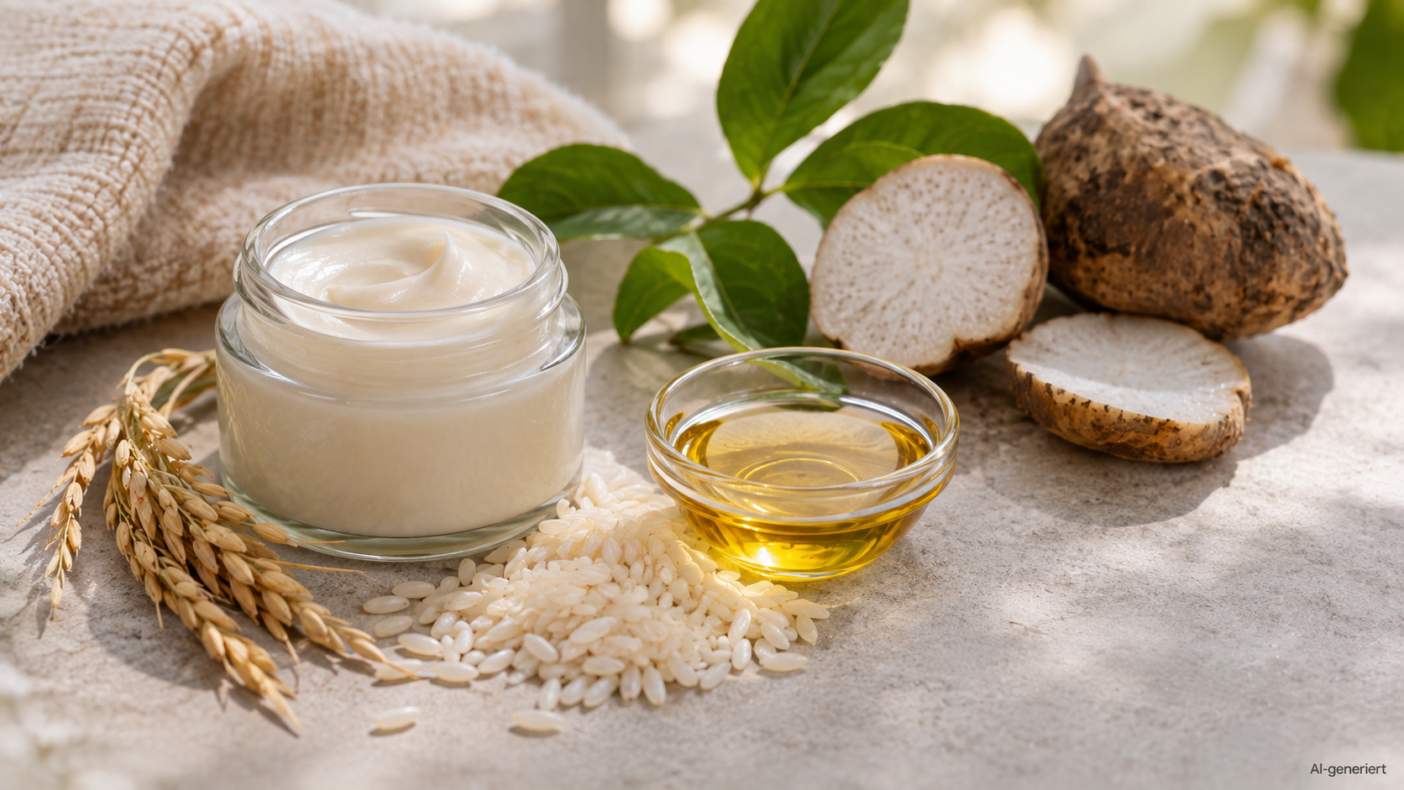
Phytoceramides – Plant-Based Ceramides for an Intact Skin Barrier
Phytoceramides are among the most interesting plant-based active ingredients used in modern skincare products. As components or precursors of important skin lipids, they offer versatile options for caring for dry, sensitive, and mature skin. Particularly exciting is the combination of topical application in cosmetic products and oral intake via dietary supplements.
While synthetically produced ceramides have traditionally been used in cosmetics, plant-based sphingolipids are gaining increasing importance. Rice, wheat, soy, and the konjac tuber are interesting natural sources of raw materials. They enable innovative skincare concepts that combine scientifically based skincare with plant-based active ingredients.
Ceramides – Essential Building Blocks of the Skin Barrier
Ceramides belong to the group of sphingolipids and are among the skin’s most important endogenous lipids. Their basic chemical structure consists of a long-chain sphingoid base—such as sphingosine or phytosphingosine—whose amino group is linked to a fatty acid via an amide bond. Depending on the structure of the sphingoid base and the bound fatty acid, different classes of ceramides with specific physicochemical properties are formed.
When the primary hydroxyl group of a ceramide is linked to phosphocholine, sphingomyelin is formed, an important component of biological cell membranes. In glycosphingolipids, however, this position is linked to one or more sugar units. These compounds include glucosylceramides, which play an important role in epidermal lipid metabolism.
Within the epidermis, the lipid composition changes during the differentiation of keratinocytes. While membrane lipids such as phospholipids and cholesterol dominate in the living cell layers, glucosylceramides, among other compounds, are formed in the stratum granulosum and released into the extracellular space via lamellar bodies. There, they undergo enzymatic conversion into ceramides, which, together with free fatty acids and cholesterol, form the characteristic lipid lamellae of the stratum corneum.
Ceramides account for approximately 40 to 50 percent of the intercellular lipids in the stratum corneum. They are therefore crucial for the organization of the skin barrier, the limitation of transepidermal water loss (TEWL), and protection against external influences. Changes in their concentration or composition can be associated with dry, rough, and sensitive skin, as well as impaired barrier function.
What are phytoceramides?
The term refers to plant-derived ceramides or plant lipid fractions containing ceramides. Commercially available raw materials are often glycosylceramides—particularly glucosylceramides—in which a sugar moiety is bound to the ceramide backbone. These compounds perform important functions within plant cell membranes and are involved in various cellular regulatory processes.
Plant-derived ceramides share structural similarities with human skin lipids but are not fundamentally identical to the ceramides naturally found in the skin. Differences exist, for example, in the sphingoid bases, the fatty acid chains, and their hydroxylation. It is precisely this structural diversity that makes plant-derived sphingolipids of interest for research into active ingredients in cosmetics.
Important plant-based sources include:
- Rice (Oryza sativa)
- Wheat (Triticum aestivum)
- Soy (Glycine max)
- Spinach (Spinacia oleracea)
- Konjac (Amorphophallus konjac)
The composition of the extracted lipid fractions depends on the plant species, the extraction method, and the subsequent purification process. Standardized raw materials with a defined glycosylceramide content are therefore particularly attractive for cosmetic development.
How do plant-derived ceramides support the skin barrier?
An intact skin barrier can be simply compared to a brick wall. The keratinocytes form the bricks, while the intercellular lipids act as the binding mortar. If the composition of this lipid matrix is disrupted, more water can escape from the skin, and sensitivity to external influences may increase.
Phytoceramides offer various approaches for cosmetic care. Depending on their structure and formulation, they can supplement the skin’s lipid supply, support the organization of the skin barrier, and contribute to a smoother skin feel. Plant-derived glycosylceramides are also being investigated for their potential role as precursors to epidermal ceramides.
The following cosmetic objectives are of particular interest:
- Supporting and stabilizing the skin barrier
- Reducing transepidermal water loss
- Improving skin hydration
- Caring for dry and rough skin
- Improving skin suppleness and elasticity
- Reducing dryness-related fine lines
- Promoting an even skin tone
For effective barrier care, combination with other lipids relevant to skin physiology is recommended. Cholesterol and free fatty acids, in particular, can contribute to the formation of suitable lamellar lipid structures when combined with ceramides. Complementary humectants such as glycerin, hyaluronic acid, or ectoine enable holistic skincare formulations.
Phytoceramides as “Beauty-from-Within” Active Ingredients
A particularly interesting area of research is the oral intake of plant-based sphingolipids. The so-called “Beauty-from-Within” concept combines traditional skincare with dietary supplements whose ingredients are intended to support specific skin-related functions. In addition to collagen peptides, hyaluronic acid, and antioxidants, plant-derived ceramides are increasingly being investigated for such product concepts.
In the gastrointestinal tract, complex sphingolipids are hydrolyzed by various enzymes. This process produces, among other things, ceramides, free sphingoid bases, and other metabolites, some of which can be absorbed through the intestinal wall and further processed by the body. However, a significant proportion of the ingested sphingolipids or their breakdown products is excreted again.
Animal studies using labeled sphingolipids suggest that certain metabolites can also be detected in the skin after ingestion. Further studies indicate that ingested sphingoid bases can be used for the biosynthesis of new sphingolipids. These findings offer interesting explanatory models but cannot be directly applied to human metabolism.
Clinical studies in humans suggest that selected ceramide-containing dietary supplements can improve skin hydration and reduce transepidermal water loss. However, the results depend on the composition of the extract, the dosage, the duration of use, and the study population. A synergistic effect with topically applied ceramides is an interesting development concept, but it must be demonstrated for each specific product combination.
Ceramosides™ HP – Plant-Based Sphingolipids from Wheat
The French active ingredient manufacturer Seppic offers Ceramosides™ HP, a plant-based lipid complex for cosmetic applications. Derived from wheat, this active ingredient contains glycosphingolipids and other plant-based lipids that are beneficial for maintaining the skin barrier and improving skin appearance. The concept combines plant-based raw material extraction with biomimetic skincare.
INCI: Glycosphingolipids (and) Glycolipids
In addition to sphingolipids, the active ingredient complex contains other lipid components with various fatty acids. The manufacturer positions Ceramosides™ HP specifically for moisturizing, skin-smoothing, and anti-aging formulations. Improving skin firmness and the appearance of enlarged pores are also among the described cosmetic applications.
Ceramosides™ for Skin Care from the Inside
In addition to the cosmetic active ingredient, Seppic offers ceramide-containing raw materials for dietary supplements. These are available as powders and oils and can be used in various dosage forms such as capsules, tablets, softgels, sticks, or functional beverages. According to the manufacturer, these are gluten-free, non-GMO raw materials; however, the respective specifications and certifications must be considered on a product-by-product basis.
In two clinical studies involving a total of 80 participants, daily doses of 30 mg of the powder form and 70 mg of the oil form were tested, according to the manufacturer. Initial positive changes were reported as early as 15 days into the study. After two months of use, the manufacturer reported the following results:
- 21% increase in skin moisture
- 18% reduction in wrinkle depth
- 26% increase in skin elasticity
The results pertain to the dietary supplement raw materials studied and the respective study conditions. They cannot be directly applied to topically applied cosmetic products or other ceramide-containing extracts. Nevertheless, they demonstrate the interesting potential of standardized plant-based lipid complexes for combined skin care regimens.
Konjac—An Alternative Source of Phytoceramides
The konjac plant (Amorphophallus konjac) belongs to the arum family (Araceae) and has been cultivated for centuries in various regions of Asia. The plant has a long tradition as a food source, particularly in Japan and China. It is best known for its high content of glucomannan, a water-soluble polysaccharide with a pronounced ability to bind water.
In addition to glucomannan, however, the tuber contains other interesting compounds, including plant-based sphingolipids. This lipid fraction differs significantly from the water-soluble dietary fibers and can be enriched using suitable extraction methods. This opens up an additional plant-based source of raw materials for cosmetic active ingredients and dietary supplements.
Konjac is particularly interesting for product concepts that aim to avoid wheat-based ingredients. However, being gluten-free does not automatically mean that a raw material is free of all allergenic components. Appropriate raw material specifications and analytical evidence are therefore required for corresponding product claims.
SkinCera® – Standardized Glycosylceramides from Konjac
Plant extract manufacturer Vidya Herbs offers SkinCera®, a standardized extract derived from the konjac tuber. Containing at least five percent glycosylceramides, this hydroalcoholic plant extract has been tested for both topical applications and dietary supplement formulations. Its primary benefits include supporting the skin barrier, improving skin hydration, and promoting a smoother, more even complexion.
SkinCera® Ingredient Profile
- Manufacturer: Vidya Herbs
- Trade Name: SkinCera®
- INCI: Amorphophallus Konjac Root Extract
- Botanical origin: Amorphophallus konjac
- Dosage form: Powder
- Standardization: at least 5% glycosylceramides
- Cosmetic usage concentration: up to 1% according to manufacturer’s specifications
- Tested oral dosage: 100 mg daily
- Indications: barrier protection, moisturizing care, anti-aging, and “Beauty from Within”
Standardization enables a comparatively precise dosage of the sphingolipid fraction contained in the product. At a cosmetic concentration of 1 percent and a glycosylceramide content of 5 percent, the finished product contains, by calculation, 0.05 percent glycosylceramides. This distinction between the raw material concentration and the actual active ingredient content is particularly important for product development and transparent consumer communication.
Clinical Studies on the Oral Use of SkinCera®
In a randomized, placebo-controlled, single-blind study, the effect of konjac extract on various skin parameters was investigated. A total of 41 male and female participants with various skin characteristics—such as dryness, roughness, uneven skin tone, or fine lines—took part in the study. Over a period of six weeks, participants in the active ingredient group received 50 mg of SkinCera® twice daily.
The daily dosage tested was thus 100 mg of extract, corresponding to at least five milligrams of glycosylceramides. Over the course of the study, improvements in various cosmetically relevant skin parameters were reported. These included, in particular, skin hydration, radiance, evenness of skin tone, and the appearance of fine lines.
Initial positive changes were observed as early as three weeks into the study and persisted throughout the remainder of the trial. The absorption and metabolic processing of plant-derived sphingolipids are being discussed as a possible mechanism of action. Whether individual metabolites directly influence epidermal ceramide synthesis must be clarified through further studies.
Clinical Studies on Topical Application
The cosmetic application of konjac extract was also investigated. In a double-blind study involving 34 women, a cream containing 1 percent SkinCera® was used. The participants applied the product twice daily for twelve weeks.
The evaluation included dermatological assessments, instrumental measurements, and subjective evaluations by the participants. Based on the study results described, the following changes were reported:
- 45% smoother skin
- 46% more even skin tone
- 37% higher skin moisture
- 25% reduction in wrinkle depth
- 6% increase in radiance
- 8% lightening of pigment spots
These results pertain specifically to the formulation tested and the respective evaluation methods. When extrapolating to other cosmetic products, particular attention must be paid to the composition of the base, the concentration used, and the stability of the active ingredient. Furthermore, statements regarding the inhibition of tyrosinase activity should initially be classified as mechanistic research approaches and should not automatically be equated with clinically proven skin lightening.
Plant-Based Ceramides or Synthetic Ceramides?
Both plant-based and synthetically produced ceramides possess properties of interest for cosmetic development. While synthetic or biotechnologically produced ceramides can be specifically manufactured with defined molecular structures, plant extracts often consist of complex mixtures of various sphingolipids and other lipid components. Both groups of raw materials open up different possibilities for formulating modern skincare products.
Plant-based lipid complexes are particularly attractive for brands focused on natural cosmetics, vegan skincare concepts, and combined “beauty-from-within” products. In contrast, defined ceramides such as Ceramide NP, Ceramide AP, or Ceramide EOP allow for the targeted selection of specific ceramide classes for biomimetic barrier protection formulations. It is important to note that ceramides produced synthetically or biotechnologically can also be vegan.
Origin alone does not determine cosmetic efficacy. Rather, the decisive factors are the molecular structure, purity, concentration of use, formulation, and scientific validation of the desired properties. A combination of different ceramide types and plant-based lipid complexes can therefore represent a particularly interesting development strategy.
Formulation Challenges
Due to their chemical structure, ceramides and plant-derived sphingolipids place special demands on cosmetic formulations. Many compounds in this group exhibit low water solubility, comparatively high melting temperatures, and a pronounced tendency to form ordered lipid structures. Inadequate incorporation can lead to crystallization, inhomogeneities, or changes in product stability.
Lamellar emulsion systems are particularly suitable for high-quality barrier protection products. They can support the formation of ordered lipid structures and allow for an appropriate combination of ceramides, cholesterol, and free fatty acids. Liposomal delivery systems and preformulated ceramide complexes also offer ways to integrate poorly soluble lipids into various cosmetic textures.
When using plant extracts, additional factors such as potential impurities, natural color, odor, microbiological quality, and oxidative stability must also be taken into account. If the raw material contains unsaturated lipids, appropriate antioxidant protection may be necessary. The optimal processing temperature and incorporation phase depend on the properties of the specific commercial raw material and the manufacturer’s recommendations.
Innovative Product Concepts with Phytoceramides
The versatile properties of plant-derived sphingolipids enable numerous modern skincare concepts. Of particular interest is the combination with active ingredients that address different aspects of the skin barrier and moisture regulation. This allows for the development of products that go beyond purely moisturizing care and combine various cosmetic objectives.
Phytoceramide Barrier Repair Cream
A rich, lamellar cream for dry and sensitive skin can combine plant-based glycosylceramides with Ceramide NP, cholesterol, and selected fatty acids. Complementary ingredients such as panthenol, ectoine, and glycerin support moisture retention and ensure a pleasant skin feel. This concept is particularly well-suited for dermatologically oriented cosmetic brands and high-performance barrier protection products.
Advanced Ceramide Hydration Serum
A lightweight hydrating serum combines suitable plant-derived ceramide complexes with various types of hyaluronic acid, beta-glucan, and niacinamide. The goal is to achieve a balanced combination of moisture retention and support for the skin’s natural barrier. This requires an active ingredient system that can be stably and sensorially appealingly integrated into a lightweight serum base.
Ceramide Overnight Recovery Mask
An intensely nourishing overnight mask can combine plant-based sphingolipids with squalane, shea butter, and selected humectants. The rich texture supports the care of dry skin areas and leaves the skin feeling supple. Complementary antioxidants offer further possibilities for sophisticated anti-aging concepts.
Beauty-from-Within Ceramide Duo
A combined skincare concept consisting of a topically applied ceramide serum and a standardized dietary supplement combines two different routes of application. While the serum is applied directly to the skin, the dietary supplement is based on the oral intake of selected plant-based sphingolipids. For such a product duo, the requirements of cosmetic and food regulations must be considered separately, and any claims of synergy must be substantiated accordingly.
Regulatory Requirements for Cosmetic Products and Dietary Supplements
Cosmetic products containing plant-based ceramides are subject to the Cosmetics Regulation (EC) No. 1223/2009 in the European Union. Claims regarding the improvement of skin hydration, support of the skin barrier, or reduction of visible wrinkles must be scientifically substantiated in accordance with the common criteria of Regulation (EU) No. 655/2013. Therapeutic claims regarding the treatment of skin conditions, however, are not permitted for general cosmetic products.
Different legal frameworks apply to dietary supplements. In particular, health-related advertising claims are subject to the Health Claims Regulation (EC) No. 1924/2006. Clinical studies on a ceramide-containing dietary supplement therefore do not automatically authorize the use of corresponding health-related advertising claims.
Furthermore, for novel extracts, the novel food status may need to be assessed. The traditional use of a plant as a food does not necessarily mean that every highly concentrated active ingredient fraction derived from it is marketable without further testing. An early regulatory assessment is therefore particularly recommended for combined “beauty-from-within” concepts.
Conclusion: Phytoceramides for Modern Barrier Protection Concepts
Plant-based ceramides combine the importance of the skin’s own sphingolipids with the potential of natural sources of active ingredients. Standardized extracts from wheat or konjac offer interesting possibilities for moisturizing, skin-smoothing, and barrier-strengthening skincare products. At the same time, research on the oral intake of plant-based sphingolipids opens up new perspectives for holistic “beauty-from-within” concepts.
However, cosmetic efficacy depends not only on plant-based origin or a high ceramide content, but also on the quality of the raw material, its proper incorporation, and the scientific validation of the final formulation. Combinations of plant-based lipid complexes, defined ceramides, and other ingredients relevant to skin physiology are particularly promising. This approach enables the development of innovative products for dry, sensitive, and mature skin.
Cosmacon supports you in developing high-quality cosmetic products with phytoceramides—from selecting suitable active ingredients and developing lamellar emulsion systems to conducting stability testing and scientifically sound product positioning. Contact us!
When you need a quick solution:
✨ Our partner Tojo Cosmetics offers innovative, active-ingredient-rich private-label products—quickly available, high-quality, and perfect for brands that want to impress with passion and quality.
Scientific Literature
Heggar Venkataramana S., Puttaswamy N., Kodimule S. (2020): Potential benefits of oral administration of Amorphophallus konjac glycosylceramides on skin health – a randomized clinical study. BMC Complementary Medicine and Therapies, 20, 26.
Guillou S., Ghabri S., Jannot C., Gaillard E., Lamour I., Boisnic S. (2011): The moisturizing effect of a wheat extract dietary supplement on women’s skin: a randomized, double-blind, placebo-controlled trial. International Journal of Cosmetic Science, 33(2), 138–143.