
Water-in-oil emulsions – structure, stability and high-end sensory properties
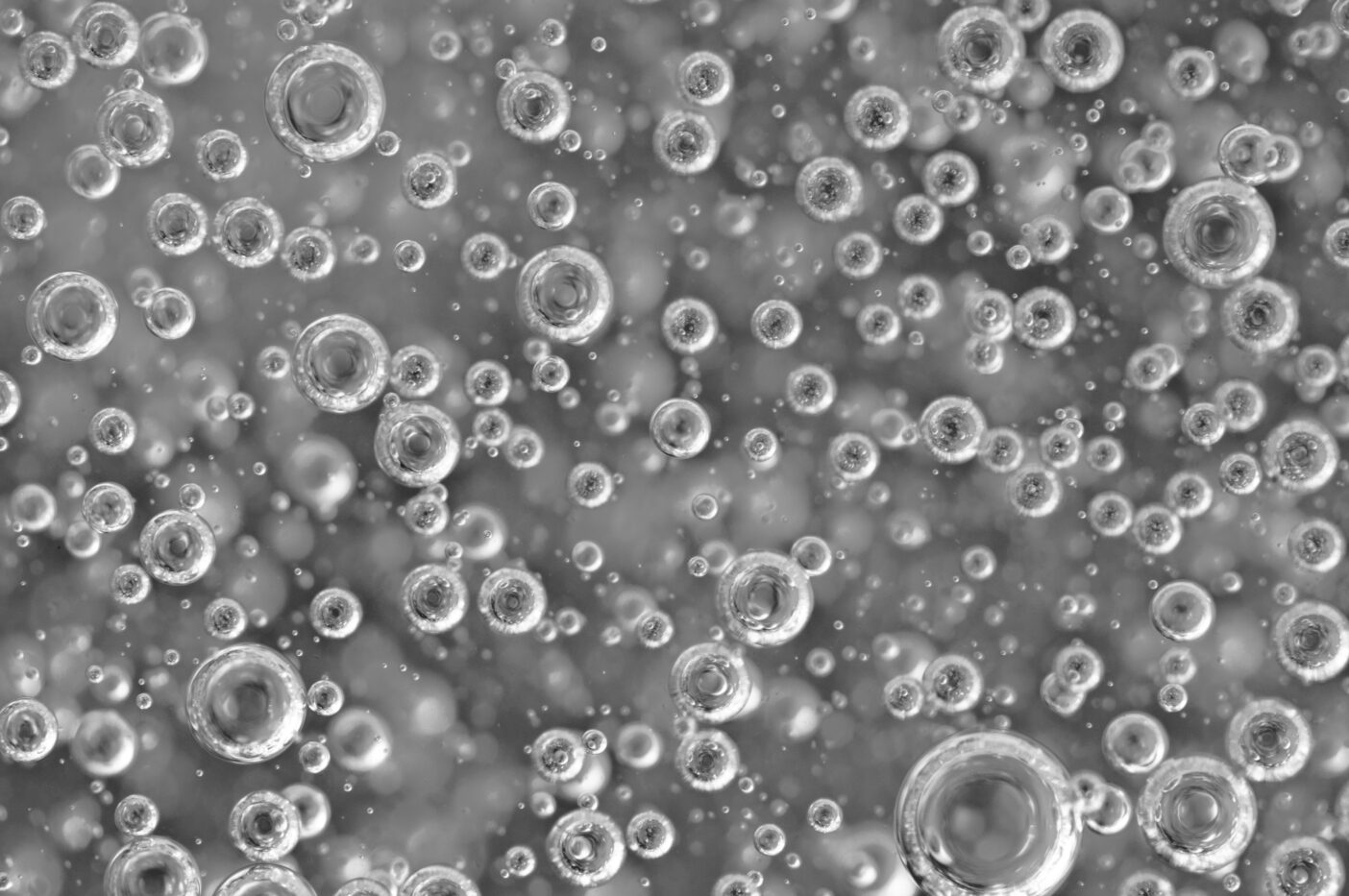
Water-in-oil emulsions are among the most sophisticated yet powerful emulsion systems in modern cosmetics. While O/W systems dominate the market, water-in-oil emulsions come into their own wherever protection, water resistance, barrier care and a particularly luxurious skin feel are required.
What makes a water-in-oil emulsion unique?
A water-in-oil emulsion consists of finely distributed water droplets surrounded by an outer oil phase. This special structure ensures:
- strong occlusion effect
- intensive barrier protection
– excellent water resistance.
– high cold resistance
– ideal pigment suspension
– rich, yet often elegant sensory properties
Water-in-oil emulsions are therefore particularly common in sunscreen, baby creams, winter care, make-up and waterproof formulations.
The emulsifier is the foundation of every stable water-in-oil emulsion
For a water-in-oil emulsion to remain stable, it needs lipophilic emulsifiers with low HLB values. These form a stable film around the water droplets, preventing them from merging. This emulsifier is optimally supplemented by co-emulsifiers, which further compact the interface structure.
A precise combination is crucial for stability, texture and sensory properties.
Stabilisers are the internal framework of the emulsion
Stabilisers such as waxes, hydrogenated castor oil, magnesium stearate, trihydroxystearin or organoclays play an essential role. They:
- reduce the mobility of the water droplets.
- increase mechanical stability.
- improve viscosity control
- ensure a harmonious skin feel
- support heat and long-term stability.
Organoclays in particular enable a thixotropic structure and are therefore perfect for elegant, stable textures.
Glycerine in water-in-oil emulsions is much more than a humectant: it has a stabilising effect within the inner phase, protects the droplets from frost damage and increases the cold stability of the formulation. Higher concentrations also improve the elasticity and durability of the system – an important factor for outdoor and winter care products.
The choice of oil phase is the key to elegance and stability
In a water-in-oil emulsion, the oil phase is decisive for:
- Viscosity
- Sensory properties
- Stability
- Temperature resistance
Non-polar oils provide excellent stabilisation, medium-polar oils balance elegance and performance, while high-polar oils must be used sparingly and in a targeted manner. A balanced oil mix determines the ‘feel’ of the entire formulation.
Salt as a stability booster
Small amounts of salt can have surprisingly large effects in water-in-oil emulsions. They support a more compact interfacial film and slow down droplet growth. The result is a significantly more stable emulsion.
Even small amounts of salt (usually 0.7% to 1% is sufficient) can significantly improve the stability of a W/O emulsion:
- reduces the attraction between water droplets, thereby reducing coalescence.
- increases the osmotic pressure in small droplets, thereby slowing down Ostwald ripening.
- Slightly ‘dehydrates’ hydrophilic head groups, enabling more compact interfacial films.
Our recommendation of suitable salts:
- Sodium chloride (NaCl)
- Magnesium salts
- Zinc salts (e.g. zinc PCA; zinc sulphate)
The manufacturing process is one of the most important success factors
Process control is crucial.
- Slowly incorporate water into the oil phase.
- First homogenisation hot, second at ~25 °C.
- Avoid temperature peaks.
- Select an optimal water-oil ratio (50–75% water content).
- The drop size should not be reduced too much.
Any deviation can have a massive impact on stability. Therefore, no type of emulsion is as dependent on process precision as a water-in-oil emulsion.
Troubleshooting – typical challenges:
Common problems are:
- Phase separation
- Viscosity too low
- Graininess
- Poor heat stability
- Air pockets
These can usually be solved by optimising the emulsifier content, the structuring agents, the oil phase and the process steps.
Conclusion Water-in-oil emulsions
Formulating a water-in-oil emulsion means perfectly combining structural mechanics, phase behaviour and sensory properties. Finding the right balance of emulsifier, oil phase, stabilisers and process control results in formulations with exceptional performance – from highly effective sun protection to luxurious skin care creams.
Cosmacon develops individual, innovative and highly effective W/O emulsions for your brand – scientifically sound, stable and precisely tailored to your target group.
Use our contact form and send us your enquiry!
If you need a quick solution: Tojo Cosmetics offers you immediately available, high-quality private label products – including W/O formulations rich in active ingredients.
Literature:
Effect of water content on stratum corneum penetration mechanism of W/O type microemulsions.
Nakamura E, Iwase H, Arima-Osonoi H, Sakuragi M.RSC Adv. 2023 Jun 12;13(26):17742-17749
https://www.rahn-group.com/de/cosmetics/services/cosmetopolitan/