
Vinegar
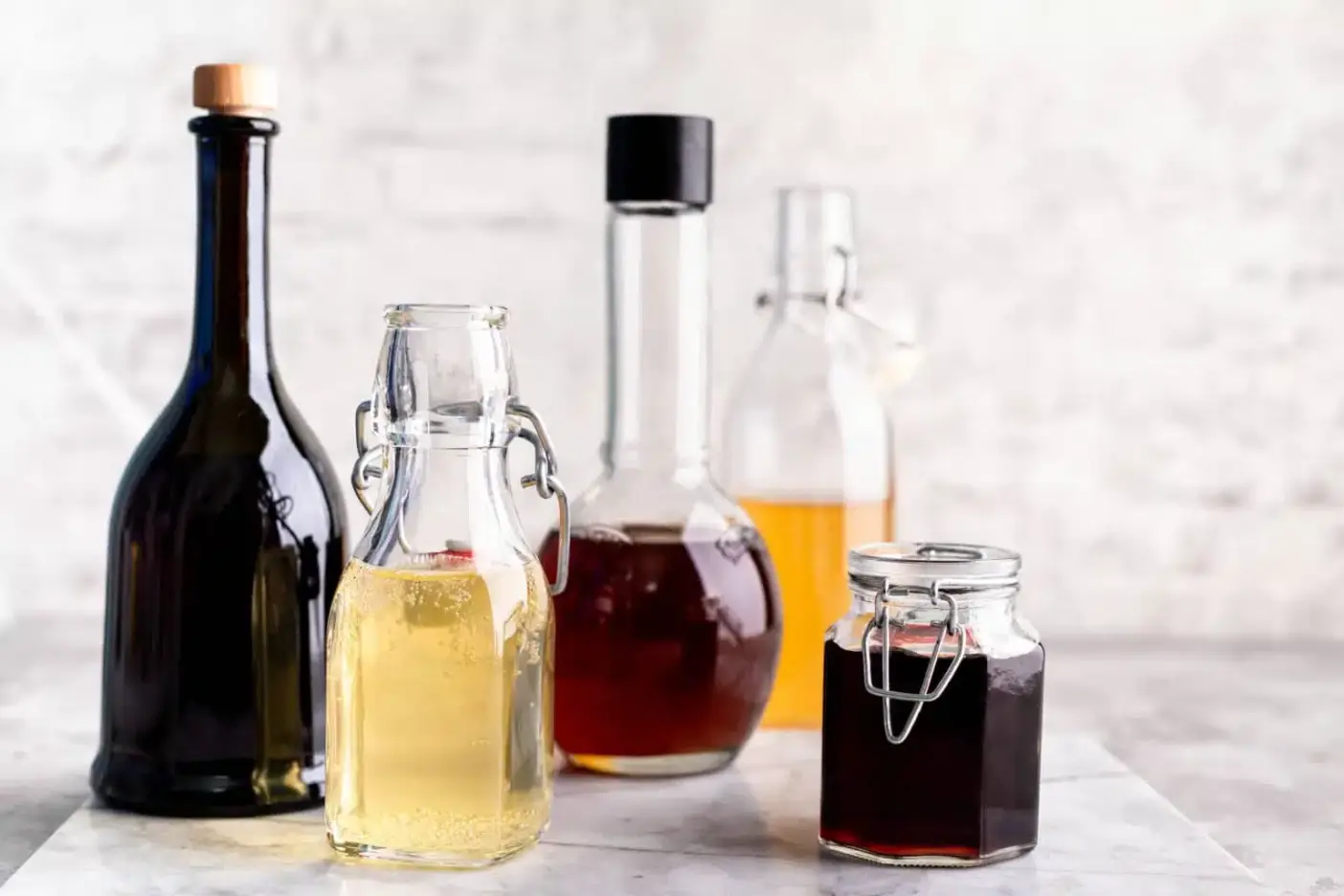
Vinegar: Healthy, Nourishing, Culinary
Even the ancient Romans valued vinegar—whether as a refreshing drink diluted with water or for its antibacterial, anti-inflammatory, and disinfecting properties.
Today, this tart-tasting liquid is primarily used as a seasoning and preservative, as a household cleaner, and for skin and hair care. Table vinegar, cooking vinegar, and preserving vinegar with an acidity of 5 to 15% are available in stores. Depending on the variety, they may contain sugar, plant extracts, or flavorings.
Vinegar is produced through fermentation, when alcoholic liquids are converted into acetic acid under the influence of acetic acid bacteria and oxygen. Acetic acid bacteria also play an indispensable role in industrial production.
Acetic acid is an organic acid with the formula CH₃COOH. It occurs naturally in vinegar but can also be produced synthetically. It must be clearly distinguished from vinegar essence: This contains around 80% acetic acid and is highly corrosive.
The human body produces acetic acid itself and can break it down completely.
Depending on the variety, vinegar contains up to 18 amino acids and has an average pH of about 3. Its health-promoting properties are therefore hardly surprising. It is used, among other things, to aid digestion, boost metabolism, regulate gut flora, and positively influence insulin levels.
Vinegar for Skin and Hair Care
Apple cider vinegar is particularly commonly used for external application on the skin and hair.
It possesses disinfecting, antibacterial, and pH-regulating properties. For blemished and oily skin, it can be used as a peel two to three times a week; for normal skin, one application per week is usually sufficient.
Before application, the pores of the facial skin can be opened with a warm, damp towel or steam. Then, a mixture of warm water and vinegar is applied. To do this, soak a cloth in the solution, leave it on the face for a few minutes, and then rinse with warm water.
A facial toner made from water and apple cider vinegar can clarify oily and blemished skin, visually refine the pores, tighten the skin, and improve circulation and radiance. At the same time, it supports the skin’s natural acid mantle and can soothe irritated or itchy skin.
The face should be thoroughly cleansed before use. Then dilute the apple cider vinegar with mineral water in a 1:1 ratio and apply. This can be done in the morning and evening.
Since vinegar has a very low pH value, it should always be used diluted to avoid lowering the skin’s natural pH level too much.
Sensitive or dry skin should be particularly careful when using apple cider vinegar or other fruit vinegars. Mild rice vinegar can be an alternative in such cases. Cosmetic products containing vinegar that are specifically labeled for this purpose are recommended.
Vinegar in Cosmetic Products
In cosmetic products, vinegar is listed under the INCI name Acetum. It is found, for example, in facial toners, but primarily in shampoos, solid shampoos, dry shampoos, and hair conditioners.
Vinegar improves the combability of the hair, reduces static electricity, and acts as a so-called acidic rinse. This smooths the hair’s cuticle layer, resulting in more shine and suppleness.
It is suitable for both oily and dry or itchy scalps and can help reduce the formation of dandruff.
Vinegar should always be diluted when used for scalp care. Depending on tolerance, two to three applications per week are sufficient; for sensitive scalps, one application per week is recommended.
Types of vinegar at a glance
Fruit vinegar
Fruit vinegars are made, for example, from apples, pears, raspberries, plums, or elderberries. Their flavor is largely determined by the fruits used. While berries provide an intense fruity note, apple cider vinegar is comparatively neutral.
The longer the vinegar ages, the more intense its flavor becomes. Age and ingredients therefore often determine the price as well. A high-quality fruit vinegar should contain no added acids.
Apple cider vinegar is particularly suitable for skin and hair care.
In the kitchen, fruit vinegars enhance dressings, fruit salads, light sauces, and marinades for meat, fish, and vegetables.
The acidity is usually around 5%. Contrary to some advertising claims, apple cider vinegar contains hardly any vitamin C, but does provide small amounts of potassium and calcium.
Spirits vinegar
Spirits vinegar is made from distillates of sugar beets, grains, or potatoes. Its aroma is neutral, and the acidity ranges between five and ten percent.
It is frequently used for pickling vegetables and as an inexpensive ingredient in mustard, ketchup, mayonnaise, or marinades.
Wine vinegar
Red wine vinegar has a stronger aroma than white wine vinegar due to its tannins. While white wine vinegar pairs well with fish dishes, leafy salads, and light sauces, red wine vinegar is particularly suitable for red cabbage or marinated roast beef.
Genuine wine vinegar consists exclusively of wine and contains at least six percent acidity.
Balsamic
Balsamic vinegar is considered a particularly aromatic vinegar specialty. The base ingredient is reduced grape must, which develops its characteristic sweet-sour flavor through long aging.
High-quality balsamic vinegar contains grape must as its main ingredient. Aceto Balsamico di Modena is particularly well-known, and its production is regulated by law.
The longer the aging period, the higher the quality and the more expensive the product becomes. Aceto Balsamico Tradizionale di Modena ages for at least twelve years and is among the most exclusive vinegars in the world.
Sherry vinegar
With an acidity of seven to eight percent, sherry vinegar has a particularly intense aroma. It pairs excellently with game dishes and hearty salads.
Rice vinegar
Rice vinegar usually contains only two to four percent acidity and is considered particularly mild. It is frequently used in Asian cuisine and is also suitable for sensitive skin.
Malt vinegar
Malt vinegar is characterized by a spicy, tangy flavor. It is particularly popular in the UK, where it is traditionally served with fish and chips.
Vinegar: What Should Not Be Included?
Colorants, which are sometimes found in fruit vinegars or balsamic vinegar, are not permitted in organic products.
Sugar serves as the basis for vinegar fermentation. While apple cider vinegar is virtually sugar-free, balsamic vinegar naturally contains higher amounts of sugar due to the grape must.
It is also important that the fermentation process is fully complete to ensure that no undesirable substances such as acetaldehyde or elevated levels of ethanol and methanol are present.
Due to its high acidity, vinegar has a virtually unlimited shelf life when stored in a sealed bottle. Even after opening, it remains stable for a long time when stored in a cool place and kept tightly sealed. Preservatives are therefore not required.
Vinegar in Cosmetic Products from Cosmacon
Cosmacon develops custom cosmetic formulations with vinegar and supports brands in creating innovative skin and hair care products. This means you, too, can soon offer a modern vinegar-based product under your own brand. Contact us!
When speed is of the essence:
✨ Our partner Tojo Cosmetics offers innovative, active-ingredient-rich private label products—quickly available, high-quality, and perfect for brands that want to impress with passion and quality.