Meno Peels – tailored exfoliation strategies for skin during the menopause
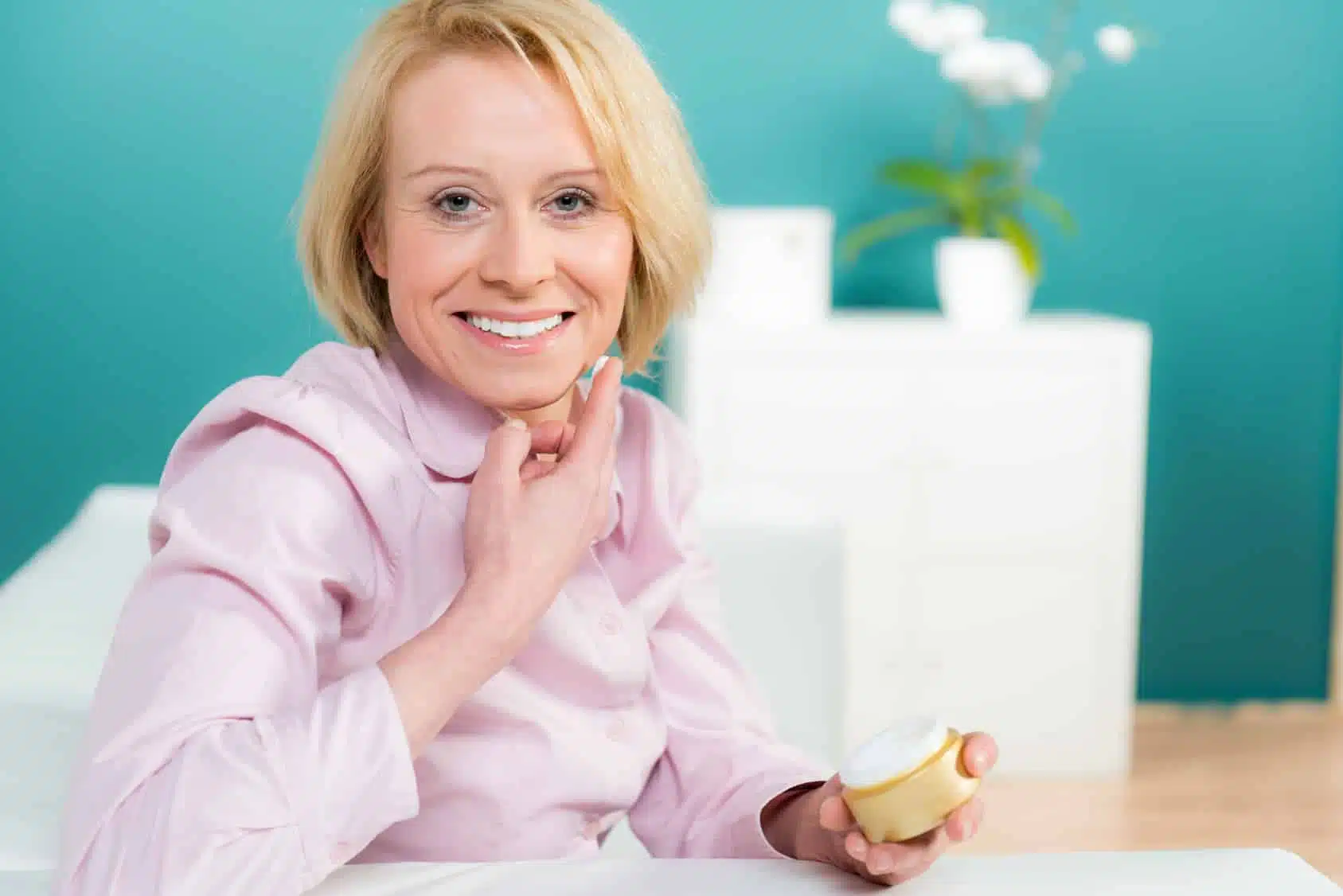
The skin undergoes fundamental changes during the menopause. Falling oestrogen levels have a significant impact on its structure, moisture content and barrier function. Meno peels take these changes in skin condition into account and focus on gentle, regulating and regeneration-supporting concepts instead of aggressive exfoliation.
Skin condition after the menopause – what changes
With the onset of menopause, collagen and elastin production decreases measurably. Studies show that up to 30% less collagen is produced in the first five years after menopause. The skin becomes thinner, drier and loses its elasticity. At the same time, cell division slows down, the pH value of the skin rises and the acid mantle becomes more unstable.
Typical characteristics of menopausal skin are:
– Increased dryness and tightness
– Loss of volume and elasticity
– Increased sensitivity
– Uneven skin texture
– Slowed regeneration
Meno peels are therefore not primarily aimed at removing the horny layer, but at supporting the barrier function, regeneration and skin comfort.
When used correctly, meno peels can stimulate slowed cell renewal, regulate the increased pH value, improve the absorption of subsequent care products and refine the skin structure without overloading it.
Why exfoliants are useful during the menopause
As a general rule, menopausal skin tolerates mainly superficial to medium-strength exfoliants. Deep exfoliants are less commonly indicated and carry an increased risk for thinner skin.
Suitable exfoliating acids for menopausal exfoliation are mild AHA concepts, as fruit acids in low concentrations support cell renewal while also binding moisture and regulating pH.
The following are particularly suitable:
– Lactic acid: exfoliating, hydrating, well tolerated
– Mandelic acid: slow penetration, ideal for sensitive skin,
– Citric acid: gentle exfoliation, pH stabilisation.
Aggressive high concentrations should be avoided. The combination of acid type, concentration and pH value is crucial.
PHA – a gentle alternative for sensitive skin
Polyhydroxy acids are particularly well suited for menopausal peels as they are large molecules and work slowly.
Typical advantages are:
– Gentle exfoliation
– Simultaneous moisture retention
– Very good skin tolerance
– Supports the skin barrier
PHA-based peels are suitable for both regular home use and professional applications.
BHA should be used with caution, as salicylic acid can be useful in cases of simultaneous sebum overproduction, but should be used in low doses and not too frequently, as menopausal skin is often dry rather than oily.
Optimal exfoliant compositions for menopausal exfoliants:
Mild PHA exfoliating tonic: gluconolactone, lactobionic acid, glycerine, niacinamide → gentle exfoliation, barrier strengthening, suitable for daily use.
AHA-PHA combination serum: lactic acid (low dose), mandelic acid, PHA, panthenol → targeted skin renewal while maintaining skin comfort.
Overnight Regeneration Peeling: very low AHA dosage, peptides, ceramides, essential fatty acids → supports night-time regeneration without irritation.
Innovative care products to complement Meno Peelings
Peelings during the menopause should always be part of a holistic care concept. The following are particularly useful:
– Barrier-strengthening serums with ceramides, cholesterol and linoleic acid,
– Moisture boosters with hyaluronic acid and glycerine immediately after exfoliation,
– Niacinamide serums to soothe and stabilise the barrier,
– retinol products applied gradually to support collagen regeneration, and
– daily sun protection with SPF 50, as exfoliants increase UV sensitivity.
This combination makes menopausal exfoliants effective and well tolerated in the long term.
When it comes to treatment frequency and safety, the principle is: less is more.
The following are recommended:
– Superficial chemical peels every 4–6 weeks
– Mild enzymatic peels once or twice a week
– No simultaneous use of multiple exfoliating products
The skin should be consistently moisturised and supplied with lipids before and after peeling.
Conclusion on menopausal peels
Peels for the post-menopausal period are not standard peels, but individually tailored care products for hormonally altered skin. Gentle acids, low concentrations and barrier-supporting active ingredients are the main focus. When correctly formulated and applied, they can improve the skin structure, support regeneration and significantly increase skin comfort during the menopause.
Innovative chemical exfoliation products require a thorough understanding of acid chemistry, precise formulation work and a keen sense of efficacy, skin compatibility and regulatory requirements.
Cosmacon develops tailor-made chemical exfoliation concepts – from gentle PHA formulations to powerful multi-acid systems. We accompany projects from the selection of active ingredients to recipe development and stability assessment to marketable implementation, always focusing on safe, effective and cosmetically acceptable solutions. Just ask us – we will be happy to advise you free of charge.
For those who want to get to market faster, Tojo Cosmetics also offers immediately available white label products in the exfoliation sector. These immediately available formulations enable a quick market entry and can be customised as needed.
Literature:
Medical Beauty – Dermatology, issue 06/2025, article ‘Exfoliants for skin during menopause’, pages 49–51