Ictasol
What is Ictasol?
Chronic skin diseases have been treated with slate oil for more than 100 years. It inhibits excessive cell division and keratinization, relieves itching, and has an anti-inflammatory effect. Its antimicrobial, anti-irritant, and wound-healing properties have proven effective in many areas of application. Light-colored sulfonated shale oil—or, in other words, Ictasol—provides valuable services in the healing of eczema, the removal of dandruff and skin flakes, and the external treatment of skin diseases such as skin suppuration and boils. Other indications include nail bed inflammation, psoriasis, rosacea, senile pruritus, acne, diaper rash, neurodermatitis, and anal itching. The combination of anti-inflammatory and antimicrobial properties produces very good results in the elimination of skin blemishes such as pimples.
After a six-week treatment phase with more than 100 test subjects and a concentration of 1.0 percent Ictasol, the effectiveness was rated as either “very good” or “good” in more than 75 percent of cases.
The effectiveness of a formulation containing 1.0 percent Ictasol and 0.5 percent salicylic acid has also been tested in a study. The average number of visible skin changes decreased by 80 percent during the eight-week treatment phase.
How is Ictasol obtained?
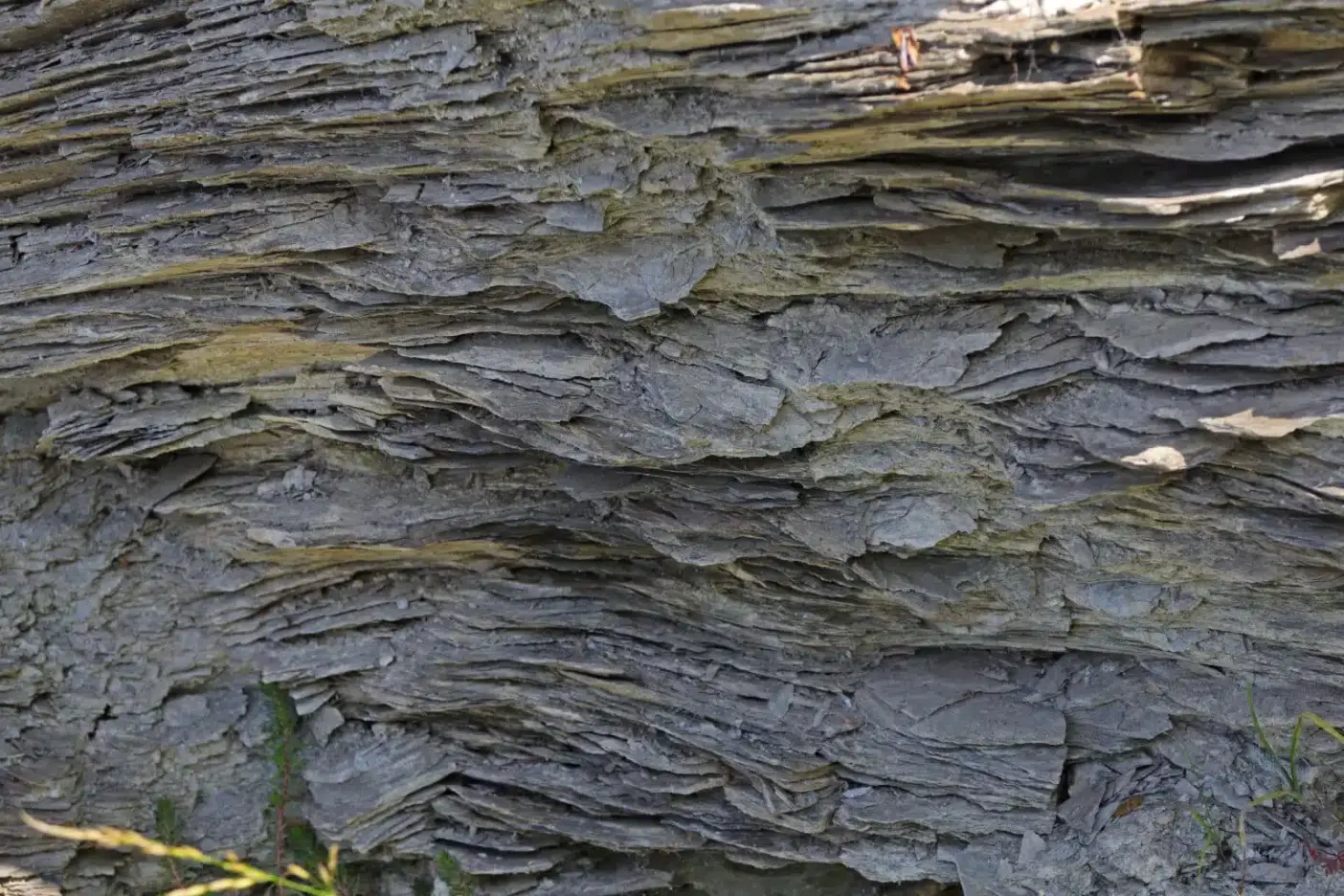
Ictasol is obtained from natural shale or oil shale with a high sulfur content. It originates from deposits of tiny algae in a specific lagoon environment in the Alpine region during the Mesozoic era (middle of the Earth’s history). During the biological decomposition of the phytoplankton, organically bound sulfur was formed in the biomass by sulfate-reducing bacteria. Over time, the deposits formed sedimentary rocks known as oil shale, which contain what is now solid marine biomass. To extract it, the oil shale must be dry distilled at 450 degrees Celsius. During this process, various fractions are collected and separated by condensation.
Naturally, Ictasol has a rather strong, distinctive odor, which can, however, be optimized for cosmetic applications. The shorter molecules, which boil at a lower temperature, are lighter in color and do not smell as strong as the dark, viscous fraction with a higher boiling point. The ingredients of the dark ammonium bituminosulfonate increase blood circulation and soften the skin: We are familiar with this effect from the corresponding drawing salves, which accelerate the breakthrough of pus to the outside in purulent skin processes. The pressure pain thus subsides and the inflammation is drawn outwards, so to speak. The light bituminosulfonate has only a reduced drawing effect and is therefore used for superficial skin diseases.
In principle, sulfonated shale oils have no carcinogenic, teratogenic, or mutagenic properties, are well tolerated, and no photosensitizing or phototoxic effects have been observed to date.
PAHs in Ictasol?
Ictasol is rich in sulfur, extremely pure in terms of PAHs (less than 0.001 ppm benzo[a]pyrene) and water-soluble. Due to its similar spectrum of activity and typical odor, Ictasol is often still classified as a tar. However, this is incorrect, as Ictasol is in fact a gentle alternative to coal tar. Due to the toxicity of tar, cosmetic coal tar shampoos have not been allowed to be manufactured within the EU since 1996. Coal tar is heavily contaminated with PAHs (more than 5000 ppm benzo[a]pyrene), low in sulfur, and not water-soluble. In addition, there is clear evidence of mutagenicity and carcinogenicity. In contrast, the good tolerability of Ictasol has already been proven in numerous toxicological studies. The active ingredient is suitable for both short-term and long-term administration. It can be used for rinse-off products (e.g., shampoos) and leave-on products (e.g., body lotions).
Ictasol profile
(formerly: sodium shale oil sulfonate)
INCI: Ictasol
Alternative names: Ichthyolic acid, sodium salt
CAS number: 1340-06-3, 12542-33-5
EINECS/ELINCS number: 215-671-7
Definition: a light-colored sulfonated shale oil
Extraction: by dry distillation at approximately 450 degrees Celsius from oil shale derived from phytoplankton
Effect: helps combat dandruff on the scalp, inhibits the growth of microorganisms such as fungi and bacteria, anti-inflammatory
A proven active ingredient with many advantages
Sulfonated shale oils are largely free of polycyclic aromatic hydrocarbons and are very well tolerated. Ictasol also impresses with its outstanding effectiveness. Cosmacon will be happy to formulate modern and sophisticated cosmetics with Ictasol for you.
When products are needed quickly:
✨ Our partner Tojo Cosmetics offers innovative, active ingredient-rich private label products – quickly available, high quality and perfect for brands that want to impress with passion and quality.