
dark circles
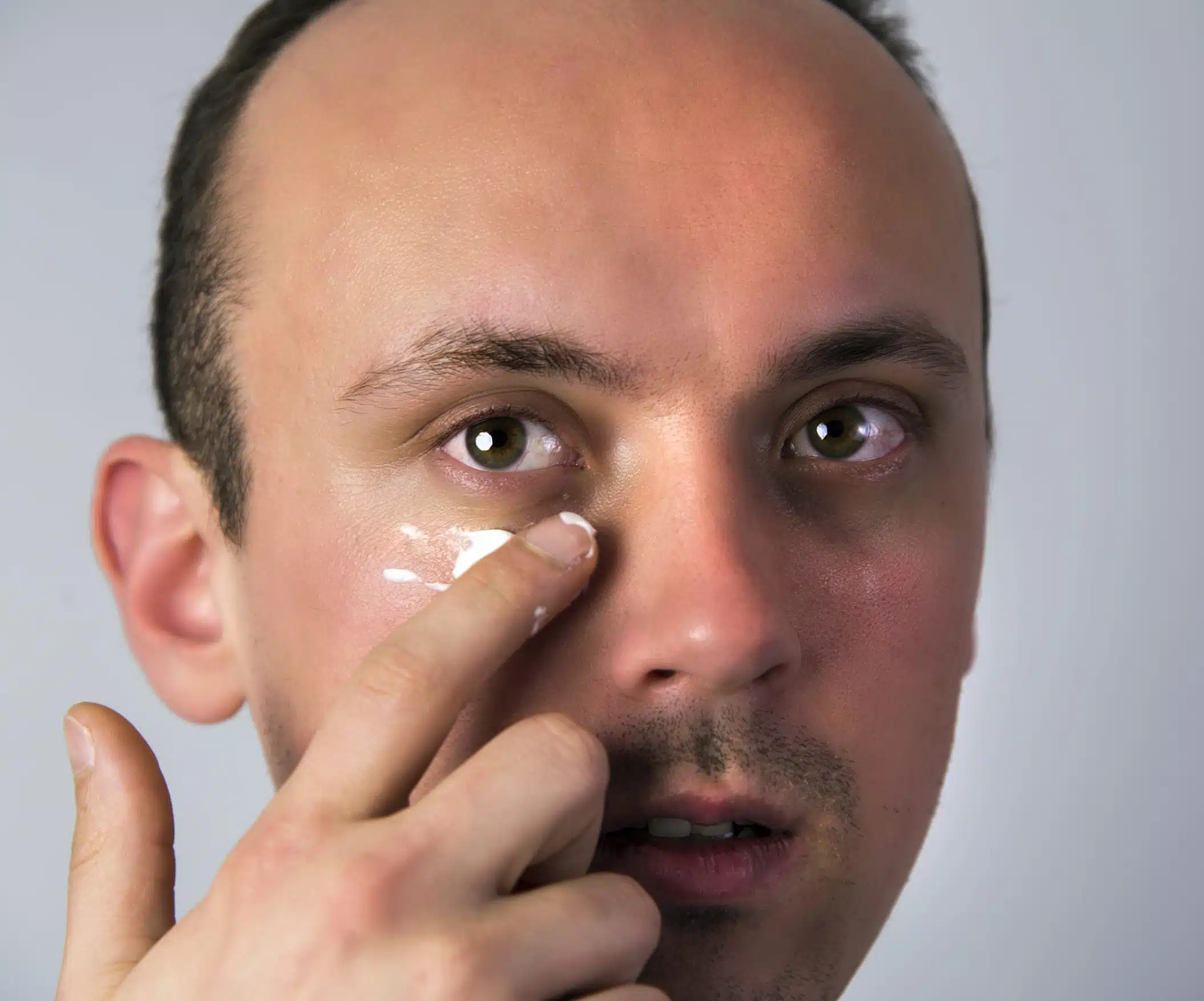
Dark circles under the eyes are not a single problem, but result from a combination of pigmentation, visible blood vessels, very thin skin, oedema (‘bags under the eyes’) and shadows caused by the anatomy. The predominant cause determines which active ingredients really help and when procedures such as laser or fillers are more appropriate.
Why do dark circles under the eyes develop?
– Pigmentation (brown): increased melanin, often genetic or as a result of inflammation.
– Vascular (bluish-purple): visible blood vessels/blood breakdown products under extremely thin lower eyelid skin.
– Shadows/structure: loss of volume, skin laxity → shadowing.
– Oedema/bags: lymphatic congestion, vascular fragility, lack of sleep or salt.
These are usually mixed forms, which is why combination formulations often work best.
Active ingredients with evidence:
1) Niacinamide:
Inhibits the transfer of melanosomes, reduces pigmentation and strengthens the skin barrier.
Studies show a significant lightening of hyperpigmented areas.
2) Vitamin C:
It has antioxidant, tyrosinase-inhibiting and collagen-strengthening properties.
Clinical studies have demonstrated a lightening and improvement in skin structure, including around the eyes.
3) Tranexamic acid:
It modulates melanogenesis and has a strong depigmenting effect.
It has been studied both topically and in injections and has been shown to be effective against hyperpigmentation.
4) Caffeine:
It has a vasoconstrictive and antioxidant effect and reduces swelling.
In combination with vitamin K, studies have shown significant improvements in dark circles under the eyes.
5) Vitamin K/vitamin K oxide
It supports the breakdown of blood breakdown products and is effective against vascular dark circles under the eyes.
It has been clinically tested in eye pads, often in combination with caffeine.
6) Peptides
Acetyl tetrapeptide-5, dipeptide-2 or palmitoyl tetrapeptide-7 promote drainage and strengthen the vessels.
In combination with chrysin and N-hydroxysuccinimide, it supports the breakdown of haemosiderin.
Clinical studies have proven a visible reduction in dark circles and puffiness.
7) Retinoids
They promote collagen regeneration and thickening of the dermis, which reduces the visibility of blood vessels.
This is particularly useful for structurally caused dark circles.
8) Other depigmenting agents
Arbutin, azelaic acid, kojic acid and liquorice extract complement the portfolio for pigment-related dark circles.
9) Hydrators
Hyaluronic acid, ceramides and panthenol immediately improve the moisture balance and provide a visible brightening effect.
Limitations of topical care
When anatomical shadows or very pronounced vessels dominate, creams alone are often not enough. In these cases, lasers, fillers or peels may be useful – care products then provide additional support.
Smart formulation approaches
Pigment focus:
Niacinamide, tranexamic acid, vitamin C, peptides and hyaluronic acid.
Vascular/oedema focus:
caffeine, vitamin K, drainage peptides and amino acids.
Mixed form/structure focus:
retinol/retinal in low doses, niacinamide, chrysin/N-hydroxysuccinimide, hydrators.
Application and expectations
The first visible improvements can usually be expected after 4–8 weeks.
Combinations are more effective than single ingredients.
Lifestyle factors (sleep, diet, sun protection) play a major role.
Conclusion
Dark circles under the eyes are a complex problem, but modern formulations can tackle the most important causes – pigmentation, vessels, oedema and structure – at the same time. With the right combination of active ingredients, visible improvements can be achieved.
We develop elegant and effective eye products for dark circles – scientifically proven and skin-friendly. Just ask us.
Alternatively, you can get started quickly: our partner Tojo Cosmetics GmbH offers pre-developed private label eye care products that can be used to complete a line immediately.
Literature:
Periocular Dark Circles: Correlates of Severity. Lim HGY, Fischer AH, Sung S, Kang S, Chien AL. Ann Dermatol. 2021 Oct;33(5):393-401
Clinical Efficacy of a Novel Topical Formulation on Periorbital Dark Circles: An Objective Analysis. Brady RT, Shah-Desai S.J Cosmet Dermatol. 2025 Jul;24(7):e70326.