Conditioner
Conditioner ingredients: Which ingredients are suitable for which hair types?
A frequent concern among our customers is the question of which ingredients are contained in hair treatments and conditioners—and, above all, which of these are best suited to their specific hair type. Although simple recommendations are often given, the issue is actually much more complex. For developers of hair care products, it is crucial to be aware of the multitude of possibilities and also the limits of current knowledge.
Main categories of conditioning agents
The most important classes of conditioning active ingredients can be divided as follows:
- Lipids
- Humectants
- Emollients (softening agents)
- Proteins & peptides
- Silicones
- Quaternized surfactants
- Quaternized polymers
These ingredients each have different mechanisms of action and vary in effectiveness depending on hair condition and product type.
Why are conditioners used at all?
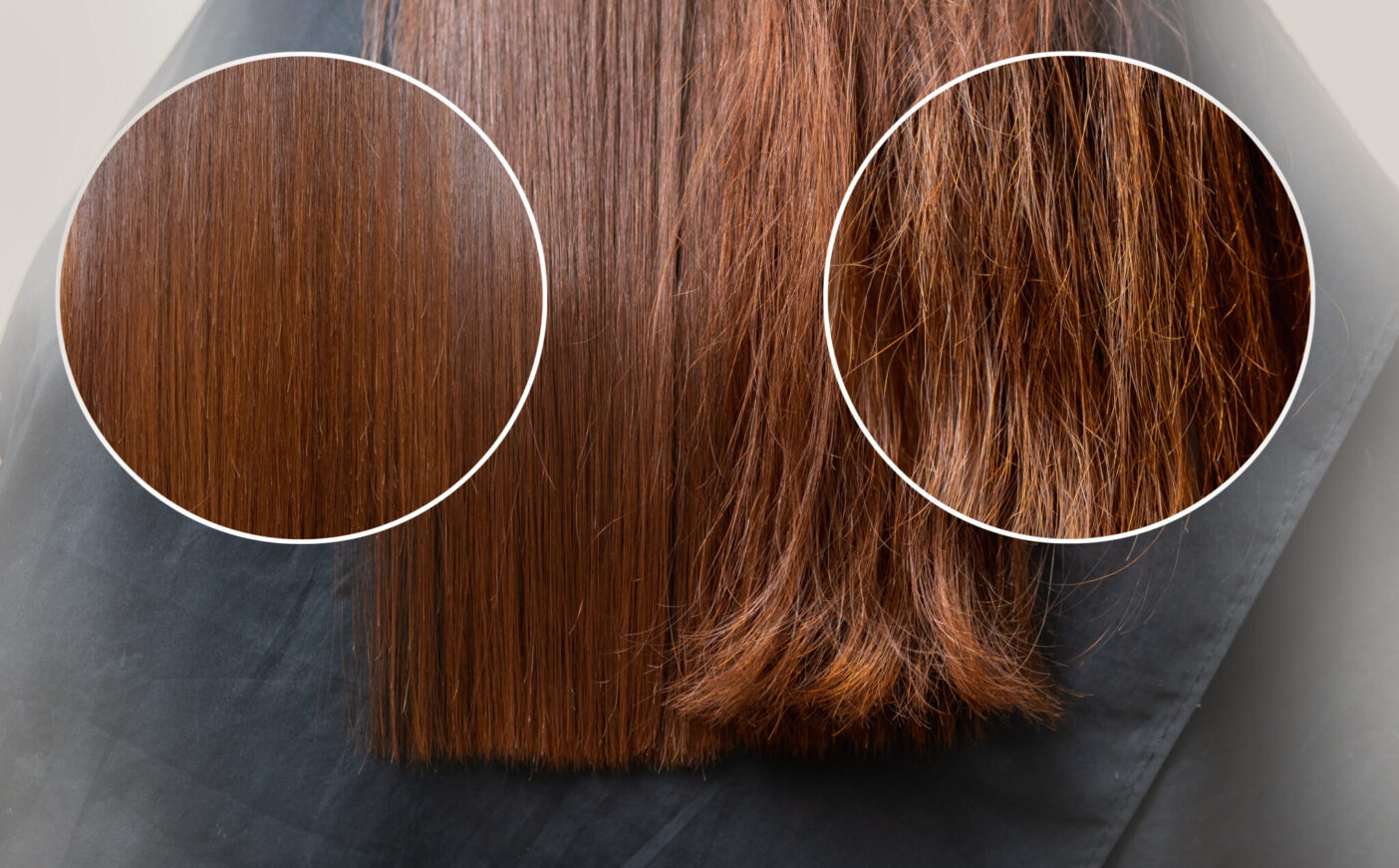
Hair care products such as conditioners fulfill several key functions:
- Improved combability
- More pleasant hair feel
- Protection from mechanical or thermal damage
- Shine and smoothness
The way in which an active ingredient achieves these goals depends largely on its chemical structure and mechanism of action.
How do conditioning ingredients work?
Conditioning agents essentially work in two ways:
- Film formation on the hair surface:
A smooth, protective film improves feel, combability, and light reflection. Typical substances: silicones, lipids, polymers.
- Penetration into the hair fiber:
Active ingredients such as glycerin, panthenol, or certain plant oils penetrate the hair and improve its flexibility and moisture balance. This reduces hair breakage and makes the hair feel healthier.
Important: Conditioners are only effective if the active ingredients remain in the hair. Anything that is completely rinsed out cannot have a long-term effect.
How do conditioning agents remain in the hair?
There are three main mechanisms by which active ingredients adhere to the hair:
- Hydrophobic adsorption
Non-water-soluble substances (e.g., dimethicone, vegetable oils) accumulate on the hair surface due to their affinity for it.
- Electronegative adsorption
Positively charged cationic surfactants or polymers adhere to negatively charged areas of damaged hair fibers.
- Diffusion absorption
Hydrophilic substances such as glycerin or hydrolysis proteins slowly penetrate the hair – the main route for water-soluble ingredients.
Leave-in vs. rinse-off products
Leave-in conditioners
Easy to apply, effective in their action. But: risk of uneven distribution and residue.
Rinse-off conditioners
Most widely used. Despite rinsing, effective substances can remain in the hair through adsorption.
Conditioning shampoos – a compromise with limitations
Shampoos are designed to cleanse – and that is precisely what makes combining them with conditioning ingredients difficult. Hydrophobic substances and cationic surfactants are often incompatible with the anionic surfactants used in the cleansing phase. Only certain silicones and quaternized polymers can be formulated in such a way that they still adhere to the hair.
Conclusion: Conditioning shampoos can provide a basic effect – but they are no substitute for a proper conditioner.
Why does a conditioner work differently on every hair type?
Its effectiveness depends on numerous factors:
- Condition of the hair structure
- Damaged hair binds more cationic ingredients.
- Healthy hair benefits more from film-forming components such as silicones or oils.
- Hair type
- Curly or wavy hair tends to frizz, is more difficult to comb, and reflects less light. It usually requires more intensive care.
- Fine hair, on the other hand, can appear weighed down if over-treated.
Examples of cosmetic active ingredients (with fact sheet)
Cetrimonium Chloride
- INCI: Cetrimonium Chloride
- Appearance: Colorless to yellowish, viscous liquid
- Molecular formula: C19H42ClN
- Physical state: Liquid
- Melting point: approx. 242 °C
- Solubility: Water soluble
- Use: Cationic conditioner active ingredient, improves combability
- Evidence: 35% reduction in combability in panel studies
Panthenol
- INCI: Panthenol
- Appearance: White, crystalline powder
- Molecular formula: C9H19NO4
- Physical state: Solid
- Melting point: 64–69 °C
- Solubility: Water soluble
- Use: Moisturizer, soothes the scalp
- Evidence: Improves hair flexibility according to in vitro studies
Conclusion: Tailor-made care with expertise from Cosmacon
Choosing the “best” conditioner is no easy decision. Different hair types, care needs, and personal preferences make development a real challenge. At Cosmacon, we therefore focus on tailor-made solutions: We develop different formulation variants, test them thoroughly, and tailor them to your target group.
Whether classic, silicone-free, or for certified natural cosmetics—our expertise enables us to find the right solution.
Would you like to develop your own conditioner line?
Then feel free to contact us—we will provide you with expert support from the initial idea to the market-ready formulation.