Butcher’s broom
Introduction
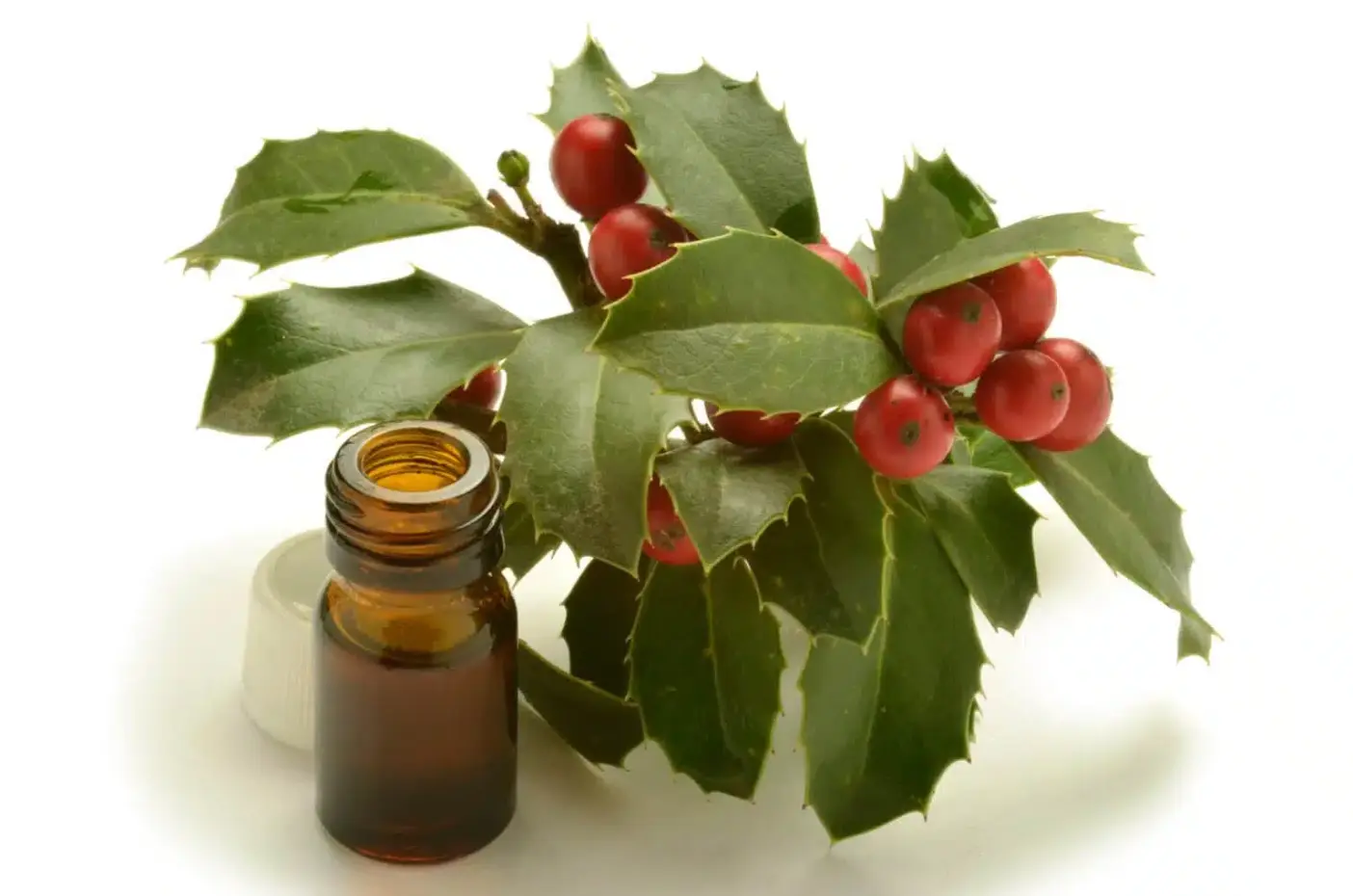
Butcher’s broom (Ruscus aculeatus) is an evergreen shrub that belongs to the asparagus family. It is native to Western Europe, the Mediterranean region, Iran, and the Caucasus. Between March and May, pretty white to green flowers appear on its spiny, leaf-like short shoots, later forming small red berries, which are poisonous.
Butcher’s broom is a typical representative of Mediterranean flora and reaches heights of 80 centimeters. It loves dry, stony, and warm slopes and thrives at altitudes of up to 1,000 meters. The unusual name has a specific reason: in the past, the thorny plant was used to keep mice away from food supplies. Its rootstock was also used as a substitute for asparagus and was used in cooking, while the strong branches were used to make brooms. In the 16th and 17th centuries, the extract of the plant was considered a miracle cure for the dreaded dropsy. Today, the branches of the mouse-ear hawkweed are often used for decorative arrangements and grave decorations.
The most interesting thing, however, is that the plant offers excellent medicinal benefits. Mouse-ear hawkweed even received the “Medicinal Plant of the Year” award in 2002. Naturopathy recommends mouse-ear hawkweed tea for kidney problems, jaundice, and inflammation of the urethra, for example. When taken internally, the plant can have a mild diuretic and laxative effect. However, this does not apply to external use.
Butcher’s broom and its medicinal effects
In France, Italy, and Switzerland, butcher’s broom has long been a proven natural remedy for varicose veins. Researchers emphasize that it has a similar effect to horse chestnut, but is gentler and milder.
Butcher’s broom can relieve the pain and typical heaviness in the legs associated with chronic venous insufficiency and is recommended as a supportive therapy for nighttime calf cramps. Unpleasant burning and itching in the legs and arms usually subsides quickly. Butcher’s broom also helps against water retention in the legs by stimulating lymphatic transport. Frequent flyers use products containing butcher’s broom to protect themselves from thrombosis on long flights. As the root extract has a protective effect on the fiber protein elastin, the connective tissue is strengthened and the veins remain elastic for longer. Another medical application is the treatment of hemorrhoids, as these can be compared to varicose veins in the broadest sense. Butcher’s broom has a very good anti-inflammatory and anti-edematous effect here, so that the hemorrhoids recede in many cases.
However, the following applies to all areas of application: It can take some time for the soothing or healing effect to take hold. Butcher’s broom extract should therefore be used regularly and/or over a longer period of time if possible.
Only the dried underground parts of the plant are used. These contain the saponins ruscin and ruscoside, as well as the equally valuable steroid sapogenins neo-ruscogenin and ruscogenin. These are believed to have vein-toning, capillary-sealing, draining, and anti-inflammatory properties. Butcher’s broom extract also contains small amounts of essential oils and triterpenes.
Butcher’s broom extract in cosmetics
Since butcher’s broom extract has a firming effect, it is also used in body care products. It is often found in serums, skin care creams, body lotions, anti-dandruff shampoos, and cellulite remedies. Butcher’s broom stabilizes surface vessels and can help against skin redness and swelling.
People who suffer from couperose benefit particularly from its strengthening properties. The vasodilation is noticeable on the cheeks and nose in the form of bright red veins and is usually an enormous psychological burden for those affected. Butcher’s broom provides a natural remedy here.
The same applies to the treatment of unsightly stretch marks. The extract is well tolerated and is also suitable for the sensitive eye area. It helps tired eyes regain their vitality. It has a slightly invigorating and revitalizing effect and is therefore also popular as a soothing “refreshment” for tired legs. If the complexion is dull and slack, butcher’s broom extract provides a great boost of freshness. It is also ideal for sports and massage balms or gels. Women who normally struggle with water retention before their menstrual period often feel much better thanks to butcher’s broom extract.
In rare cases, however, the use of a product containing butcher’s broom can cause (usually mild) allergic reactions. Pregnant and breastfeeding women should consult their doctor before using products containing butcher’s broom.
Butcher’s broom extract profile
INCI: Ruscus Aculaetus Root Extract
CAS number: 84012-38-4
EINECS / ELINCS: 281-682-9
Order: Asparagaceae
Alternative names: Thorn myrtle, prickly myrtle, spiny myrtle
Solubility: soluble in water, alcohol, vegetable oil, and glycerin
Main ingredients: Ruscoside, ruscin, saponins, essential oils, tannins
Effect: Combats skin redness, decongestant and astringent, ideal for venous insufficiency (varicose veins), spider veins, and couperose
Possible applications: Primarily as a serum, balm, cream, or lotion
Concentration: 2.0 to 10.0 percent
Butcher’s broom as an active ingredient for sophisticated cosmetics
The roots of Mediterranean medicinal plants have amazing properties and are a completely natural miracle cure for venous insufficiency, varicose veins, skin redness, rosacea, and water retention, among other things. If the appropriate cosmetic products are used consistently over a longer period of time, the results are usually very good. For people who cannot tolerate products containing horse chestnut, which has a similar effect, butcher’s broom extract is an effective alternative. Would you like to offer your target group high-quality butcher’s broom products? Ask us, we will be happy to assist you. Call us today and arrange a no-obligation consultation.
Sources:
The Role of Food Supplementation in Microcirculation—A Comprehensive Review.Raposo A, Saraiva A, Ramos F, Carrascosa C, Raheem D, Bárbara R, Silva H.Biology (Basel). 2021 Jul 2;10(7):616
Drugs containing extracts from Ruscus in chronic venal disease therapy—what’s new we know about their effects? Woroń J. Pol Przegl Chir. 2022 Mar 10;94(1):75-78