Betaine—the Underrated Active Ingredient: New Studies Reveal Surprising Effects
Betaine – More Than Just a Moisturizer
When formulators are asked about the most important cosmetic active ingredients for intensive skin care, names like hyaluronic acid, niacinamide, ceramides, or ectoine often come up. Betaine, on the other hand, is often viewed merely as a supplementary moisturizer and frequently plays only a minor role in formulations.
Yet recent scientific studies tell a completely different story. New human studies show that betaine can do far more than simply improve skin hydration. Positive effects on the skin barrier, transepidermal water loss (TEWL), skin elasticity, wrinkle depth, and even the diversity of the skin microbiome make it clear that “Betaine—the underrated active ingredient” is one of the most exciting multifunctional active ingredients in modern skincare.
Betaine opens up new possibilities, particularly for formulations in the areas of Skin Longevity, Barrier Repair, Healthy Aging, and Sensitive Skin. While many anti-aging active ingredients specifically target individual metabolic processes, betaine protects skin cells from osmotic stress while simultaneously supporting the skin’s natural barrier function—two properties that are becoming increasingly important, especially in times of growing environmental stress and sensitive skin types.
It is therefore worth rediscovering “Betaine—the underrated active ingredient”.
What is betaine?
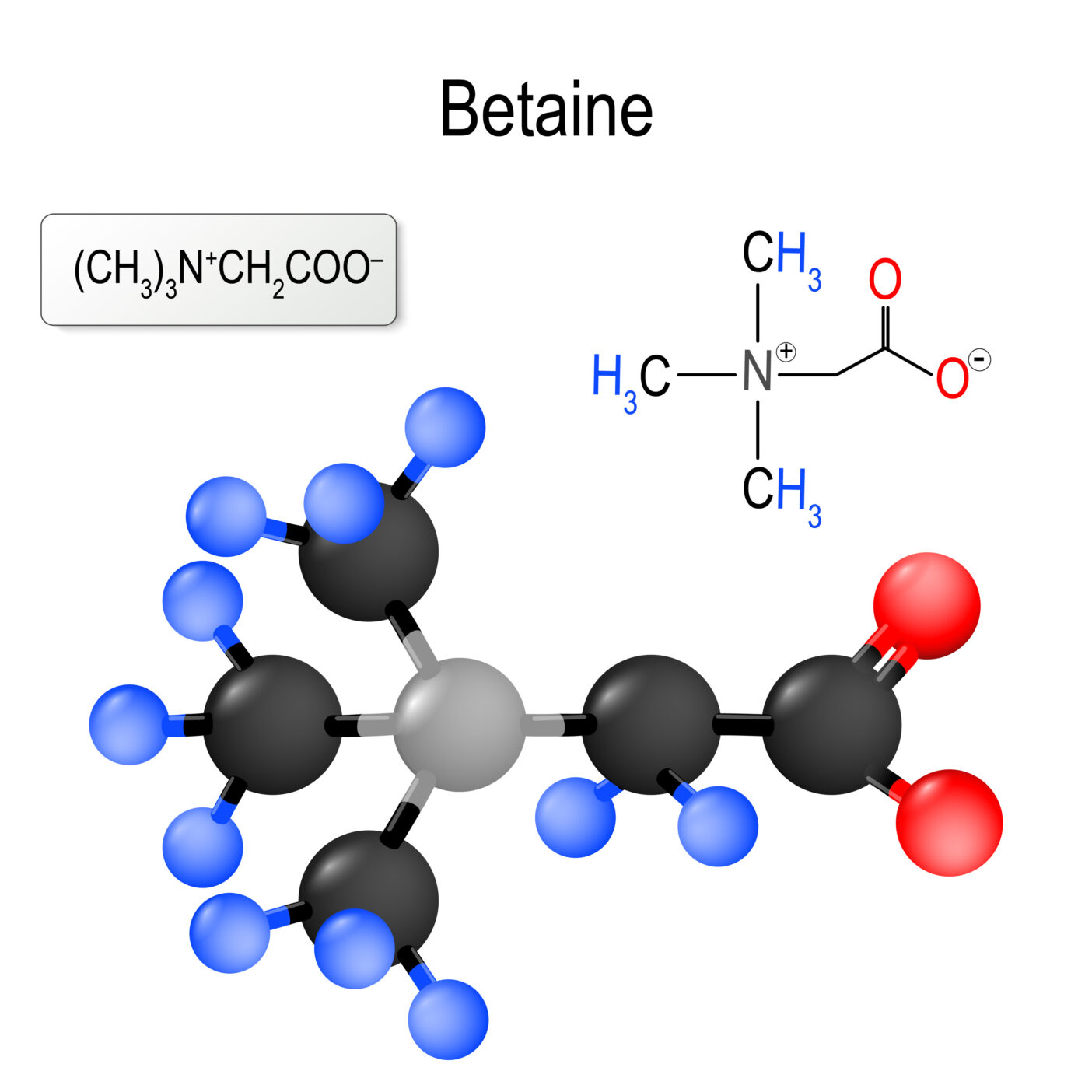
Betaine, chemically known as trimethylglycine (TMG), is a naturally occurring quaternary ammonium compound. The active ingredient owes its name to the sugar beet (Beta vulgaris), from which it was first isolated as early as the 19th century.
Today, however, betaine is found not only in sugar beets but also in:
- spinach
- quinoa
- wheat
- seafood
- microorganisms
- numerous plants
In nature, betaine serves as what is known as an osmoprotectant. Plants and microorganisms use it to protect themselves from drought, salt stress, heat, or cold. It is precisely this protective function that modern cosmetics harness.
While traditional humectants merely bind water, betaine additionally protects the cell structure itself and helps skin cells maintain their water balance even under stressful conditions. This is precisely why “Betaine—the underrated active ingredient” is now considered one of the most interesting representatives of the so-called osmolyte group.
Production—Sustainably Derived from Sugar Beets
Another advantage of betaine is its sustainable production.
Industrially, cosmetic betaine is primarily extracted from sugar beets. During sugar production, betaine initially remains in the molasses. Through multi-stage separation and purification processes, the active ingredient can then be isolated, purified, and prepared for cosmetic applications.
As a result, it is a raw material that:
- is of plant origin,
- is available in a vegan form,
- can be produced in a resource-efficient manner,
- and fits perfectly with upcycling concepts.
Brands with a focus on sustainability, in particular, benefit from this source.
Physical and Chemical Properties
Betaine possesses a number of properties that make it particularly interesting for cosmetic formulations.
Property Description
INCI Betaine
Chemical Name Trimethylglycine
CAS 107-43-7
Molecular Weight 117.15 g/mol
Appearance white crystalline powder
Water Solubility highly water-soluble
pH Stability wide pH range
Temperature Stability very high
Usage concentration: typically 2–5%
Recommended test concentration: 4%
Due to its high water solubility, betaine can be easily incorporated into serums, toners, emulsions, gels, cleansers, or hair care formulations. At the same time, the active ingredient exhibits excellent formulation stability and is compatible with a wide variety of other cosmetic ingredients.
How does betaine work?
The particular strength of betaine lies in the fact that the active ingredient supports several biological mechanisms simultaneously.
- Osmoprotection
The most important mechanism of action is what is known as osmoprotection.
Our skin cells are constantly exposed to osmotic stress. UV radiation, dry heated air, seawater, surfactants, or climatic fluctuations can cause water to be lost from the cells.
Betaine counteracts this process.
It stabilizes the osmotic pressure within the cell and helps retain water where it is needed.
As a result, the following are largely preserved:
- cell volume,
- cell function,
- enzyme activity,
- and metabolic processes
even under stressful conditions.
- Stabilization of Proteins
Another advantage of betaine is that it can stabilize proteins.
Many enzymes lose their spatial structure under drought stress.
Betaine counteracts this process and thereby supports numerous physiological processes in the skin.
- Improvement of the Skin Barrier
The stratum corneum forms our body’s most important protective barrier.
If this barrier is disrupted, the so-called transepidermal water loss (TEWL) increases.
The result:
- dry skin,
- a feeling of tightness,
- increased sensitivity,
- and impaired regeneration.
As recent human studies show, “Betaine—the Underrated Active Ingredient” can make a valuable contribution precisely at this point by reducing water loss and improving the skin’s barrier function.
- Protection Against Environmental Stress
In addition to UV radiation, numerous environmental factors affect our skin on a daily basis:
- fine particulate matter,
- ozone,
- temperature fluctuations,
- dry air,
- surfactants.
Betaine helps the skin better cope with these stresses.
That’s why this active ingredient is increasingly found in modern Barrier Repair and Urban Skin Care products.
Why betaine is a perfect fit for today’s cosmetic trends
In recent years, the focus of the cosmetics industry has shifted significantly.
While individual wrinkles were often the main focus in the past, modern approaches are centered on the long-term maintenance of healthy skin functions.
Current buzzwords include:
- Skin Longevity,
- Healthy Aging,
- Barrier Repair,
- Microbiome Skincare,
- Neurocosmetics,
- Sensitive Skin.
This is precisely where “Betaine—the underrated active ingredient” demonstrates its unique strengths.
Unlike many classic anti-aging active ingredients, betaine does not primarily work by directly stimulating collagen synthesis. Instead, the active ingredient improves the conditions under which skin cells can function optimally. Well-hydrated cells that are protected from osmotic stress can maintain their natural regeneration processes more efficiently. This forms the foundation for healthy skin function and also supports the skin’s appearance in the long term.
Betaine—the ideal combination partner
Another advantage of betaine is that it can be excellently combined with other modern active ingredients.
Particularly interesting combinations include:
Betaine + Niacinamide
To support the skin barrier and improve skin hydration.
Betaine + Ceramides
Ideal for dry, sensitive, or barrier-compromised skin.
Betaine + Panthenol
To soothe irritated skin following environmental stress or cosmetic treatments.
Betaine + Ectoine
A powerful combination of two osmoprotectants for urban skin care and sensitive skin.
Betaine + Hyaluronic Acid
For intensive hydration while improving cellular protection.
Betaine + Peptides
For modern anti-aging serums focused on hydration and skin elasticity.
It is precisely this versatility that makes “Betaine—the underrated active ingredient” particularly attractive to formulators.
From Moisturizer to Multifunctional Active Ingredient
Just a few years ago, betaine was primarily viewed as a cost-effective moisturizer. However, current research indicates a significantly broader efficacy profile.
In addition to improved skin hydration, new human studies point to positive effects on:
- stabilizing the skin barrier,
- reducing transepidermal water loss,
- improving skin elasticity,
- reducing wrinkles,
- and positively influencing the skin microbiome
. These results underscore that “Betaine—the underrated active ingredient” is now far more than just a classic moisturizer.
Several recent human studies using a 4% PuraBeet® betaine formulation examined its effects on the skin barrier, skin hydration, wrinkles, elasticity, and even the skin microbiome. It is particularly noteworthy that all studies were conducted under controlled conditions with a placebo control and showed consistent improvements. As a result, “Betaine—the underrated active ingredient” is evolving from a traditional moisturizer into a scientifically well-documented multifunctional active ingredient.
- Improvement of the skin barrier in atopic dermatitis
The skin barrier is our body’s first line of defense against environmental stressors, allergens, and microorganisms. At the same time, it prevents excessive water loss.
This barrier is particularly compromised in people with atopic dermatitis. The so-called transepidermal water loss (TEWL) is significantly elevated. As a result, the skin continuously loses moisture, dries out more quickly, and reacts more sensitively to external stimuli.
Study Design
To investigate this issue, a randomized human study involving 21 participants was conducted. A prerequisite was the presence of two acute eczema lesions that were as comparable as possible, ideally mirror images of each other on the same body region.
One skin area was treated twice daily for four weeks with a cream containing 4% PuraBeet® betaine. The second area received an identical placebo formulation without betaine. Transepidermal water loss was measured using a Tewameterat the start of the study and after four weeks.
Results
After just four weeks, the betaine-containing formulation showed a significant reduction in transepidermal water losscompared to baseline. The placebo formulation did not achieve this effect to a comparable degree.
From a cosmetic perspective, this means:
- reduced water loss,
- a more stable stratum corneum,
- improved barrier function,
- more resilient skin,
- better skin condition.
Thus, the study provides compelling evidence that “Betaine—the underrated active ingredient” not only hydrates the skin in the short term but can also sustainably support its natural protective function.
Product Ideas with 4% Betaine
Barrier Repair Cream
Enriched with ceramides, cholesterol, and free fatty acids for dry and barrier-damaged skin.
Sensitive Skin Balm
With panthenol and bisabolol to care for sensitive or irritated skin.
Baby Protection Cream
With betaine, oat extract, and squalane to support the still-immature skin barrier.
- Improved Skin Moisture—More Than Just a Classic Moisturizer
In parallel with the TEWL study, skin moisture was measured using a corneometer. Here, too, the same test formulations—with and without 4% PuraBeet® betaine—were used. The products were applied twice daily over a four-week period.
Results
The skin areas treated with betaine showed a positive trend toward higher skin hydration compared to the placebo formulation. This effect is particularly significant for dry and atopic skin, as adequate hydration is closely linked to an intact barrier function.
It is noteworthy that the improved hydration does not appear to be based solely on water binding to the skin’s surface. Rather, betaine, through its function as an osmoprotectant, seems to help stabilize water within the cells, thereby keeping the skin hydrated for longer.
These results once again illustrate why “Betaine—the underrated active ingredient” is significantly more than a conventional moisturizer.
Product ideas with 4% betaine
Hydration Booster Serum
With hyaluronic acid of varying molecular weights and polyglutamic acid.
Hydro Gel Cream
With aloe vera and ectoine for dehydrated skin.
Daily Moisture Essence
Lightweight essence for all skin types with betaine and niacinamide.
- Visible wrinkle reduction after just four weeks
The most surprising results came from the studies on skin aging.
In a placebo-controlled human study, 42 women between the ages of 40 and 65 with dry skin were examined. For four weeks, the participants applied either a cream containing 4% PuraBeet® betaine or an identical formulation without betaine twice daily.
For objective assessment, the high-resolution Antera 3D® system was used, which analyzes wrinkles in three dimensions and can precisely determine parameters such as area, volume, and width.
Results
After four weeks, the betaine-containing cream showed:
- a significant reduction in total wrinkle area,
- a reduction in wrinkle volume,
- a decrease in wrinkle width in the area of the outer corners of the eyes.
These results are particularly interesting, as betaine has hardly been recognized as an anti-aging ingredient until now.
Unlike retinoids or signaling peptides, betaine presumably does not directly stimulate collagen synthesis. Rather, the visible improvements can be explained by a combination of improved hydration, increased skin elasticity, reduced water loss, and optimized cell function.
It is precisely this indirect mode of action that makes “Betaine—the underrated active ingredient” so attractive for modern anti-aging concepts.
Product Ideas with 4% Betaine
Eye Contour Cream
With acetyl hexapeptide-8 and low-molecular-weight hyaluronic acid.
Anti-Wrinkle Night Cream
With bakuchiol, ceramides, and betaine.
Sleeping Mask
Regenerating night mask with betaine, ectoine, and panthenol.
- Significantly Higher Skin Elasticity
In addition to wrinkles, the mechanical elasticity of the skin was also examined.
To do this, the scientists used a cutometer, which measures how well the skin returns to its original position after mechanical deformation. High elasticity is considered an important characteristic of youthful skin.
Results
After four weeks, the cream containing 4% PuraBeet® betaine showed a statistically significant improvement in skin elasticity. The placebo formulation, by contrast, resulted in only a slight, statistically insignificant change.
From a cosmetic perspective, this suggests that betaine not only improves surface hydration but can also positively influence the skin’s mechanical properties.
A better-hydrated and functionally more stable extracellular matrix responds more elastically to mechanical stress. This likely also explains the concurrently observed reduction in wrinkle parameters.
As a result, “Betaine—the underrated active ingredient” is increasingly becoming an interesting component of modern firming and healthy aging concepts.
Product Ideas with 4% Betaine
Firming Day Cream
With peptides and niacinamide.
Neck & Décolleté Cream
With betaine, Tremella extract, and a collagen booster.
Lifting Serum
With betaine, ectoine, and biomimetic peptides.
- A Surprising Effect on the Skin Microbiome
The skin microbiome is now considered one of the most important factors influencing healthy skin. Billions of microorganisms form a complex ecosystem that protects the skin from pathogenic germs, regulates inflammatory processes, and contributes to the stability of the skin barrier.
To investigate the influence of betaine on this delicate balance, another human study was conducted with 19 participants. Over a four-week period, the participants applied either a cream containing 4% PuraBeet® betaine or an identical placebo formulation twice daily. The composition of the skin microbiome was analyzed using 16S rRNA gene sequencing.
Results
The analysis showed that the betaine formulation had a positive effect on the alpha diversity of the skin microbiome. In dermatological research, higher alpha diversity is often associated with a more stable and resilient microbial ecosystem. A diverse microbiome can help support the skin barrier and maintain the balance of the skin flora.
Although further studies are needed to assess the long-term significance of these changes, this finding opens up exciting prospects for microbiome-friendly skincare. “Betaine—the underrated active ingredient” could thus play an important role in the future not only as a moisturizer or barrier-protecting active ingredient, but also as a building block of modern microbiome skincare concepts.
Product Ideas with 4% Betaine
Microbiome Balance Cream
With prebiotic ingredients and betaine to support balanced skin flora.
Sensitive Microbiome Serum
With betaine, inulin, and alpha-glucan oligosaccharides.
Calming Essence
Lightweight skincare essence with betaine, panthenol, and oat extract for sensitive skin.
The human studies presented here impressively demonstrate that “Betaine—the underrated active ingredient” should no longer be viewed merely as a moisturizer. Improvements in the skin barrier, a reduction in transepidermal water loss, increased skin elasticity, visible anti-aging effects, and positive influences on the skin microbiome make it clear that betaine is one of the most versatile cosmetic active ingredients of recent years.
But the potential of this natural osmoprotectant by no means ends there. In hair care as well as in modern concepts such as Skin Longevity, Healthy Aging, and Barrier Repair, “Betaine—the Underrated Active Ingredient” is increasingly becoming an indispensable component of innovative formulations.
Betaine in Hair Care—Significantly More Than Just a Conditioner
While betaine has long been underrated in skin care, the active ingredient has been established in high-quality hair care formulations for several years now. Its osmoprotective properties are particularly beneficial for stressed hair and a sensitive scalp.
While surfactants can strip lipids and moisture from the hair and scalp with every shampoo, betaine helps mitigate this effect. As a result, hair feels smoother and is easier to comb.
Studies and formulation analyses describe the following benefits, among others:
- improved combability when wet and dry,
- reduced static charge,
- less frizz,
- smoother hair texture,
- better scalp hydration,
- support for sensitive scalps,
- protection for color-treated hair,
- improvement of the hair surface.
Sulfate-free shampoos, in particular, often benefit from betaine, as the active ingredient can reduce the skin-irritating properties of anionic surfactants.
As a result, “Betaine—the underrated active ingredient” is increasingly becoming an important component of modern hair care concepts.
Skin Longevity—Why Betaine Fits Perfectly into Modern Skincare
Hardly any other term currently shapes cosmetic research as much as Skin Longevity.
The focus is no longer on temporarily concealing individual wrinkles. Rather, the goal is to preserve the skin’s biological performance for as long as possible.
Among the most important goals are:
- a stable skin barrier,
- low inflammatory activity,
- optimal cellular hydration,
- protection against environmental stress,
- an intact extracellular matrix,
- and a healthy skin microbiome.
It is precisely these areas that are addressed by current studies on betaine.
Unlike traditional anti-aging ingredients, “Betaine—the underrated active ingredient” does not primarily target a single metabolic pathway. Rather, the active ingredient creates optimal conditions for healthy skin cells.
Well-hydrated cells can:
- carry out metabolic processes more efficiently,
- better tolerate oxidative stress,
- maintain their barrier function longer,
- and regenerate more quickly.
This makes betaine an excellent fit for modern healthy-aging concepts.
Barrier Repair—One of the Biggest Beauty Trends
Just a few years ago, retinol and fruit acids were the focus of many anti-aging products.
Today, more and more brands are addressing the question:
How can the skin barrier be stabilized long-term?
The answer is often:
- ceramides
- cholesterol
- free fatty acids
- Panthenol
- Ectoin
- Betaine
This is precisely where “Betaine—the underrated active ingredient” demonstrates its particular strength.
By reducing transepidermal water loss and improving skin hydration, betaine supports the skin’s natural barrier function. When combined with ceramides, it creates formulations that are ideal for dry, sensitive, or mature skin.
Why Betaine Works So Well with Other Active Ingredients
Another advantage of betaine is its exceptional compatibility with other ingredients.
Particularly interesting combinations of active ingredients include:
Betaine + Ceramides
The classic combination for barrier repair.
Betaine + Niacinamide
Ideal for supporting the skin barrier and improving skin appearance.
Betaine + Panthenol
For sensitive, irritated skin as well as after-sun products.
Betaine + Ectoine
Two natural osmoprotectants offering excellent protection against environmental stress.
Betaine + Hyaluronic Acid
The perfect combination of moisture retention and cell protection.
Betaine + Peptides
Modern anti-aging concepts that improve skin elasticity.
Betaine + Prebiotics
Ideal for microbiome care.
This versatility makes “Betaine—the underrated active ingredient” particularly attractive to formulators.
Fifteen innovative product ideas with 4% betaine
Current research opens up numerous possibilities for new product concepts. Here are a few examples:
Facial Care
- Barrier Repair Cream
With ceramides, cholesterol, and betaine.
- Skin Longevity Serum
With betaine, niacinamide, and peptides.
- Microbiome Balance Cream
With prebiotics and betaine.
- Daily Moisturizer
With hyaluronic acid and betaine.
- Overnight Recovery Cream
With panthenol, ectoine, and betaine.
- Eye Lift Cream
With betaine, caffeine, and peptides.
- Firming Neck Cream
With betaine and a collagen booster.
- Sensitive Essence
With oat extract and betaine.
- Hydro Gel
With aloe vera and betaine.
- Post-Treatment Cream
For post-treatment care after cosmetic procedures.
Body Care
- Atopic Skin Lotion
For very dry and sensitive skin.
- Hand Repair Cream
With betaine and shea butter.
- Foot Care Cream
For cracked and dry skin.
Hair Care
- Scalp Barrier Shampoo
With mild surfactants and betaine.
- Moisture Conditioner
With betaine and plant proteins.
Why Betaine Will Be Found More Frequently in Premium Cosmetics in the Future
The cosmetics industry is increasingly moving away from individual “hero ingredients” toward multifunctional active ingredients.
Today, brands are looking for ingredients that:
- support multiple biological mechanisms simultaneously,
- are scientifically documented,
- are naturally derived,
- can be produced sustainably,
- and are suitable for sensitive skin.
“Betaine—the underrated active ingredient” meets all of these requirements.
In addition, betaine is relatively easy to formulate, has an excellent safety profile, and can be used in both skin and hair care.
Betaine therefore offers enormous potential, especially for brands that want to position themselves in the areas of Clean Beauty, Sensitive Skin, Barrier Repair, Healthy Aging, or Skin Longevity.
Conclusion
For a long time, betaine was primarily regarded as a simple moisturizer. However, recent human studies paint a much more comprehensive picture. Even a formulation containing 4% betaine was able to strengthen the skin barrier, significantly reduce transepidermal water loss, improve skin elasticity, visibly reduce wrinkles, and positively influence the diversity of the skin microbiome.
These results make it clear that “Betaine—the underrated active ingredient” is now one of the most versatile multifunctional active ingredients in modern cosmetics. Its properties extend far beyond classic moisturization and align perfectly with current trends such as barrier repair, skin longevity, healthy aging, and microbiome-friendly skincare.
Those developing modern cosmetics should therefore no longer view betaine as a secondary ingredient, but rather as a scientifically well-documented building block for high-performance skin and hair care formulations.
Would you like to develop innovative cosmetics with betaine?
Cosmacon GmbH supports you in the development of modern skin and hair care products—from the selection of suitable active ingredients through formulation development to stability testing, safety assessment, and market launch. Whether it’s barrier repair, skin longevity, healthy aging, or microbiome-friendly care—together, we develop scientifically sound and marketable formulations that optimally combine current consumer trends and regulatory requirements. Feel free to contact us.
If you’d like to get started quickly, Tojo Cosmetics also offers a comprehensive portfolio of high-quality white-label products. Numerous serums, creams, ampoules, masks, and hair care products can be customized to your brand and formulated with betaine or other innovative active ingredients.
References
- Dermatest GmbH. Clinical application study on PuraBeet® betaine—transepidermal water loss (TEWL) in atopic eczema.
- Dermatest GmbH. Clinical application study on PuraBeet® betaine—skin elasticity and skin firmness (Cutometer).
- Dermatest GmbH. Clinical application study on PuraBeet® Betaine – wrinkle analysis using Antera 3D®.
- International Journal of Cosmetic Science. Betaine in cosmetic formulations – osmoprotection and skin conditioning.
- International Journal of Molecular Sciences. Skin Barrier Function and Moisturization.
- Cosmetics. The Role of Osmolytes in Modern Skin Care.