
Cosmetics Product Rescue
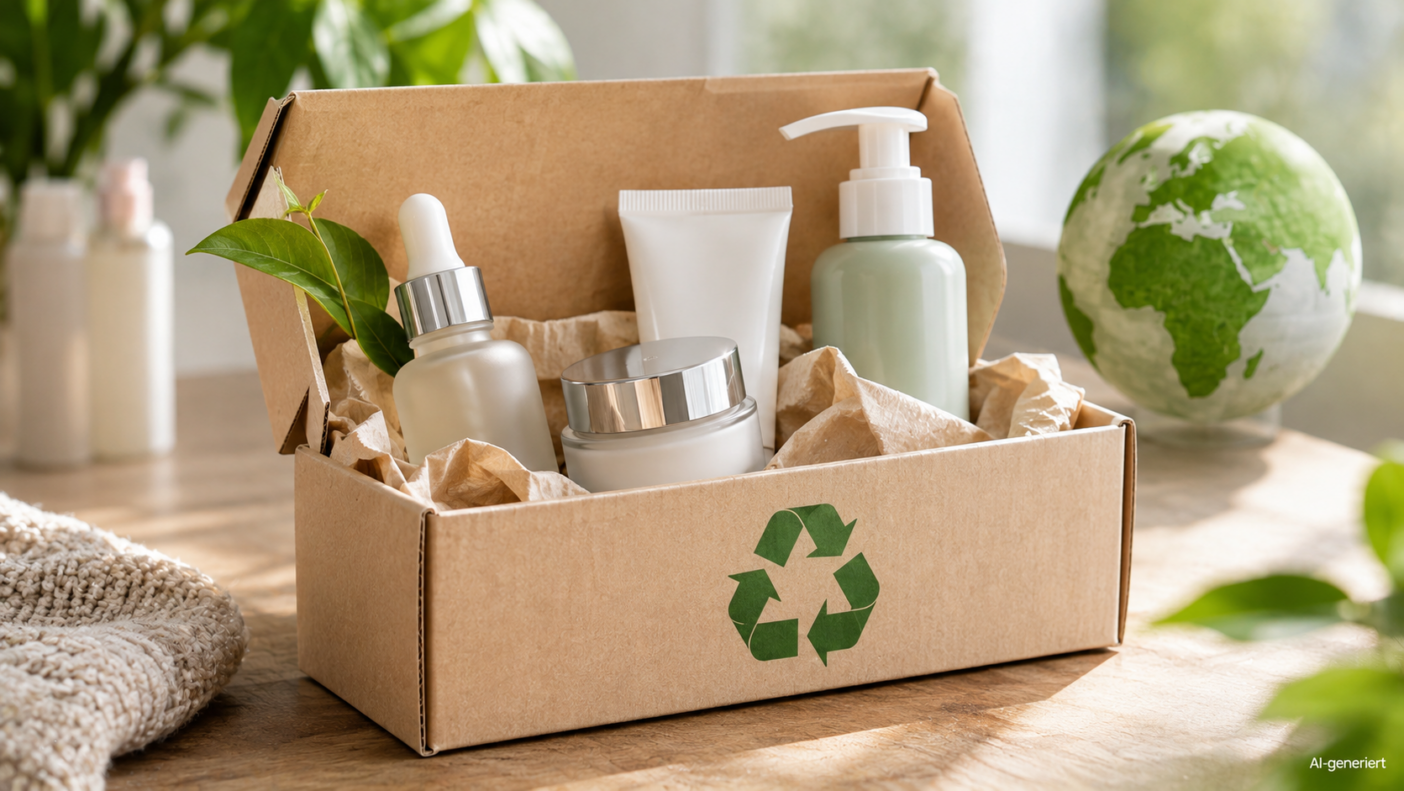
Cosmetics Product Rescue – Sustainability with Guaranteed Quality
Cosmetic products nearing their best-by date are often removed from regular retail shelves and, in the worst-case scenario, destroyed. Yet many of these products may still be perfectly safe, effective, and suitable for use. Disposing of them not only represents an economic loss for manufacturers and brand owners but also a significant waste of valuable raw materials, packaging materials, and energy. Cosmetic product salvage offers a way to counteract this trend and use existing resources more responsibly.
Professional remaining shelf-life management makes it possible to offer cosmetic products in a timely manner through alternative distribution channels. Consumers benefit from attractive prices, while manufacturers can reduce their inventory and avoid unnecessary disposal costs. This requires traceable product origin, documented storage conditions, transparent information on shelf life, and reliable quality assurance.
Why are perfectly good cosmetic products destroyed?
The cosmetics industry is characterized by short innovation cycles, seasonal promotions, and a continuously growing variety of products. New formulations, packaging designs, and marketing concepts are introduced to the market at ever-shorter intervals. As a result, existing products sometimes lose their economic appeal, even though their quality and usability have not yet been compromised.
The reasons for excess inventory are varied:
- Overproduction and inaccurate sales forecasts
- Changes to packaging and product designs
- Product line streamlining and product relaunches
- Seasonal leftover inventory
- Discontinuation of individual product lines
- Unopened and quality-assured returns
- Cosmetic packaging defects that do not affect product safety
- Approaching best-by date
The classic “first in, first out” (FIFO) warehousing principle reaches its limits, particularly with rapidly changing product lines. For products with expiration dates, the “first expired, first out” (FEFO) principle often makes more sense, as it ensures that products with the shortest remaining shelf life are shipped first. Nevertheless, even optimized warehouse management cannot completely prevent excess inventory.
Early product salvage can help ensure that cosmetics that are difficult to sell but of impeccable quality are put to good use.
Cosmetics Product Salvage in the Context of ESG and Sustainability
Sustainable business practices are becoming increasingly important for the cosmetics industry. In addition to selecting environmentally friendly raw materials, recyclable packaging, and energy-efficient production processes, the responsible handling of products that have already been manufactured is also taking center stage. This is because even a sustainably developed cosmetic product loses a significant portion of its environmental benefit if it is destroyed without being used.
In this context, the so-called ESG criteria play an important role. The acronym stands for Environmental, Social, and Governance and describes three central areas of responsible corporate governance:
- Environmental: Resource conservation, climate protection, waste prevention, and sustainable production processes.
- Social: Social responsibility, fair working conditions, and responsible treatment of customers and business partners.
- Governance: Transparency, transparent decision-making processes, compliance, and responsible corporate organization.
European requirements for sustainability reporting—including those under the Corporate Sustainability Reporting Directive (CSRD)—promote a more systematic examination of the environmental and social impacts of business activities. The specific scope of application and reporting obligations depend on the company’s size, structure, and the applicable legal framework. Even companies that are not directly subject to reporting requirements may increasingly be confronted with sustainability issues due to the demands of their business partners.
Avoiding unnecessary product destruction can make an important contribution to a resource-conserving corporate strategy. It is crucial, however, that corresponding sustainability claims are documented in a verifiable manner and do not merely serve as a marketing tool. Credible product salvage requires measurable measures, transparent processes, and responsible communication.
Best-Before Date and Actual Product Quality
An approaching best-by date does not automatically mean that a cosmetic product has lost its quality. Rather, the best-by date describes the period during which the product, when stored properly, fulfills its original function and meets legal safety requirements. Especially for unopened and properly stored products, even a shorter remaining shelf life can therefore be put to economically sound use.
The European Cosmetics Regulation (EC) No. 1223/2009 generally distinguishes between products with a shelf life of no more than 30 months and products with a longer shelf life. For the latter, the period of use after opening—known as the Period After Opening (PAO)—is typically specified. The familiar symbol of an open cream jar with markings such as 6M or 12M indicates how long the product can be safely used after it is first opened, provided that the concept of the period of use after opening applies.
This distinction is particularly important for professional product salvage. The best-by date and the period after opening must not be confused with one another. Even a long PAO indication does not permit unlimited storage of unopened products.
The actual product quality is influenced by various factors, including:
- Physical and chemical stability
- Microbiological quality
- Effectiveness of the preservative system
- Stability of sensitive active ingredients
- Oxidation of oils and lipids
- Interactions between the formulation and packaging
- Storage and transport conditions
- Integrity of the original container
A reliable assessment must therefore be product-specific. The respective stability data are of particular importance for sunscreen products, water-based formulations, and cosmetics containing oxidation-sensitive active ingredients.
Product salvage with guaranteed quality—the business model
One example of a specialized approach to salvaging surplus cosmetic products is the Austrian company Great by Date.
Under this business model, products with a limited remaining shelf life are sourced directly from manufacturers or brand owners and offered through a controlled e-commerce distribution channel. Particular emphasis is placed on traceable product origins, transparent information about remaining shelf life, and attractive discounts.
Known as the pay-per-sold-item model, this approach shares similarities with a commission-based distribution system. Participating manufacturers or brand owners deliver their goods to a designated logistics service provider, while billing is based exclusively on the products actually sold. All financial terms are contractually agreed upon in advance between the participating companies.
For each product sold, the manufacturer or brand owner receives the previously agreed transfer price.
Unsold inventory may be donated or properly disposed of in accordance with the contractual agreements and in compliance with legal and safety requirements, as appropriate. The goal is to put as large a portion of the accepted goods as possible to good use.
In addition to sales, consumer education also plays an important role. Anyone purchasing cosmetic products with a limited shelf life should be able to understand why the goods are being offered at a lower price and how long they can reasonably be expected to be used as intended. Transparent communication builds trust and distinguishes professional product rescue from unregulated clearance sales.
Quality Assurance as the Foundation of Product Rescue
When it comes to cosmetic products, safety, tolerability, and quality are top priorities. Unlike many other consumer goods, cosmetics are applied directly to the skin, hair, nails, or mucous membranes. Consequently, the requirements for the responsible handling of excess inventory are exceptionally high.
Professional product salvage should therefore collaborate as directly as possible with the manufacturer or authorized brand owner. This allows for better traceability of the products’ origin, their batch affiliation, and relevant information regarding shelf life. Documentation of previous storage conditions and the availability of product-specific stability data are also important prerequisites.
A suitable quality management system includes, in particular:
- Verification of lot numbers and product labeling
- Inspection of packaging integrity
- Documentation of remaining shelf life
- Assessment of previous storage and transport conditions
- Consideration of existing stability and quality data
- Risk-based additional quality tests
- Ensuring traceability
- Transparent information for consumers
Not every surplus product is automatically suitable for resale. Products with damaged primary packaging, an unknown storage history, microbiological abnormalities, or safety-related quality defects must be excluded. The same applies to goods affected by a product recall or that no longer comply with applicable regulatory requirements.
Sustainability must never come at the expense of product safety. Successful product salvage is therefore based on a combination of economic utilization, regulatory compliance, and consistent quality assurance.
Controlled distribution channels instead of uncontrolled gray markets
Some surplus cosmetic products enter the market through clearance retailers and unauthorized distribution channels. Such distribution channels are not inherently problematic, but they can be associated with limited transparency regarding product origin, storage conditions, and traceability. Particularly for high-end and exclusive cosmetic brands, uncontrolled marketing can also impact brand positioning.
Professional shelf-life management offers manufacturers the opportunity to market surplus inventory through a coordinated distribution channel. Pricing, product presentation, and communication can be coordinated with the brand owner within the scope of legally permissible contractual arrangements. This allows for a better alignment of economic interests and sustainability goals.
A transparent pricing model can, for example, be based on the remaining shelf life. The shorter the remaining shelf life, the more attractive the discount can be. It is crucial that consumers have sufficient time to use the purchased product according to its intended purpose.
Economic Benefits for Cosmetics Manufacturers and Brand Owners
The destruction of excess goods not only causes environmental impacts but also incurs direct and indirect costs. Raw materials, packaging materials, production capacities, and logistics services that have already been invested in are lost. Added to this may be storage costs, depreciation, and expenses for proper disposal.
By reselling suitable products in a timely manner, companies can recover at least a portion of their tied-up capital. At the same time, inventory levels can be reduced and capacity freed up for new products. Professional product salvage can thus offer both economic and environmental benefits.
Furthermore, the sale of discounted original products opens up opportunities to attract new customers. Consumers who were previously unfamiliar with a high-quality cosmetics brand or who had not tried it due to the regular price are given low-barrier access. Positive product experiences can help attract new customers to the regular product line in the long term.
This also creates interesting opportunities for sustainability communication. For example, companies can document which product quantities were saved from destruction and how much waste was thereby avoided. Further claims regarding reduced CO₂ emissions or resource savings should be based on a transparent calculation methodology.
Benefits for Consumers
Awareness of the responsible use of resources is growing. At the same time, many people are looking for ways to purchase high-quality products at affordable prices. Product rescue combines these two needs by making original products of suitable quality with a limited remaining shelf life available at discounted prices.
This results in several benefits for consumers:
- Access to high-quality cosmetic products at reduced prices
- Traceable product origin
- Transparent information on remaining shelf life
- Opportunity to discover new brands and skincare products
- Active contribution to preventing unnecessary product destruction
- More conscious use of existing resources
However, even discounted products should be purchased only as needed. Anyone who, enticed by attractive discounts, purchases larger quantities than can be used up within the intended period of use merely shifts the problem of waste from retailers to private households. A sustainable purchasing decision therefore takes into account not only the price but also actual needs.
What happens to cosmetics after the best-by date has passed?
Exceeding the best-by date does not necessarily mean that a product will spoil immediately. Nevertheless, this marks the end of the period originally specified by the manufacturer during which proper function and safety are guaranteed when stored correctly. Continued use or marketing should therefore not be automatically classified as safe.
A potential reassessment of shelf life requires appropriate product-specific data and a technically sound evaluation by the responsible parties. For example, existing long-term stability data, retained samples, microbiological analyses, and analytical tests may be used for this purpose. However, a retailer unilaterally changing or extending the shelf-life labeling is not an appropriate course of action.
Even an unremarkable color, a pleasant odor, or an unchanged consistency are not sufficient on their own to assess a product’s safety and efficacy. In particular, microbiological changes and the degradation of certain active ingredients are not always detectable to the naked eye. For this reason, product salvage should begin as early as possible and not only after the best-by date has already passed.
Sustainable E-Commerce as a Sales Channel
Online retail offers favorable conditions for making surplus cosmetic products accessible to a larger target audience. While brick-and-mortar retailers have only limited sales space available, specialized online platforms can bundle different brands and product categories. This increases the chances of selling even smaller remaining stock within their remaining shelf life.
However, e-commerce is not automatically sustainable. Packaging costs, transportation routes, returns, and additional logistics processes must also be taken into account. A resource-efficient approach to online sales therefore includes shipping packaging tailored to customer needs as much as possible, consolidated shipments, and transparent product descriptions that prevent unnecessary returns.
Accurate information is especially important for products with a short remaining shelf life. Customers should know before making a purchase how much of the product they will receive, how to use it, and what shelf-life information applies to the specific batch. This allows for more informed purchasing decisions and reduces avoidable returns.
Avoiding Overproduction Right from the Start
The most sustainable form of product rescue begins long before excess inventory accumulates. Demand-driven production planning, realistic sales forecasts, and flexible production volumes can help reduce overproduction from the very beginning. Especially for emerging cosmetics brands and companies launching new products, smaller production batches are a sensible alternative to large initial orders.
Modern manufacturing and procurement concepts make it possible to better align production volumes with actual demand. Instead of building up large inventories—which require significant capital and carry shelf-life risks—products can be manufactured in incremental batches. This requires reliable supply chains, suitable production partners, and forward-looking raw material planning.
Standardized private-label concepts can also help prevent overproduction. Pre-developed formulations and smaller minimum order quantities allow for a more flexible market entry and reduce economic risk. Companies can first test demand and then increase their order quantities in line with market developments.
Waste prevention at the source remains the most effective strategy against product waste. The controlled salvage of goods that have already been produced complements this approach when excess inventory arises despite careful planning.
Conclusion: Cosmetic Product Salvage—Responsibility Instead of Waste
The salvage of cosmetically sound products combines economic interests with the responsible use of resources. An approaching best-by date alone is not a reason to prematurely destroy a product that is still fit for its intended use. Through professional remaining shelf-life management, controlled distribution channels, and transparent consumer information, excess inventory can be put to good use.
For manufacturers and brand owners, this creates opportunities to reduce storage and disposal costs, attract new customers, and credibly implement sustainability measures. At the same time, consumers benefit from attractive prices and more conscious consumption. However, ensuring product quality while complying with all relevant regulatory requirements remains a prerequisite.
Cosmacon also aims to prevent overproduction and unnecessary waste of resources as early as possible. With flexible production concepts, demand-driven production volumes, and scientifically sound product development, we support cosmetics brands in combining economic and sustainable solutions. We’d be happy to advise you on issues related to shelf life, product stability, and the responsible handling of excess cosmetic inventory.
When speed is of the essence:
✨ Our partner Tojo Cosmetics offers innovative, active-ingredient-rich private-label products—quickly available, high-quality, and perfect for brands that want to impress with passion and quality.
Great by Date Contact Information:
NIKOLAUS HOFER
CEO & Founder
Great by Date GmbH
Dornbacher Straße 48, 1170 Vienna
+43 676 3102210