
Enzymatic Skin Protection
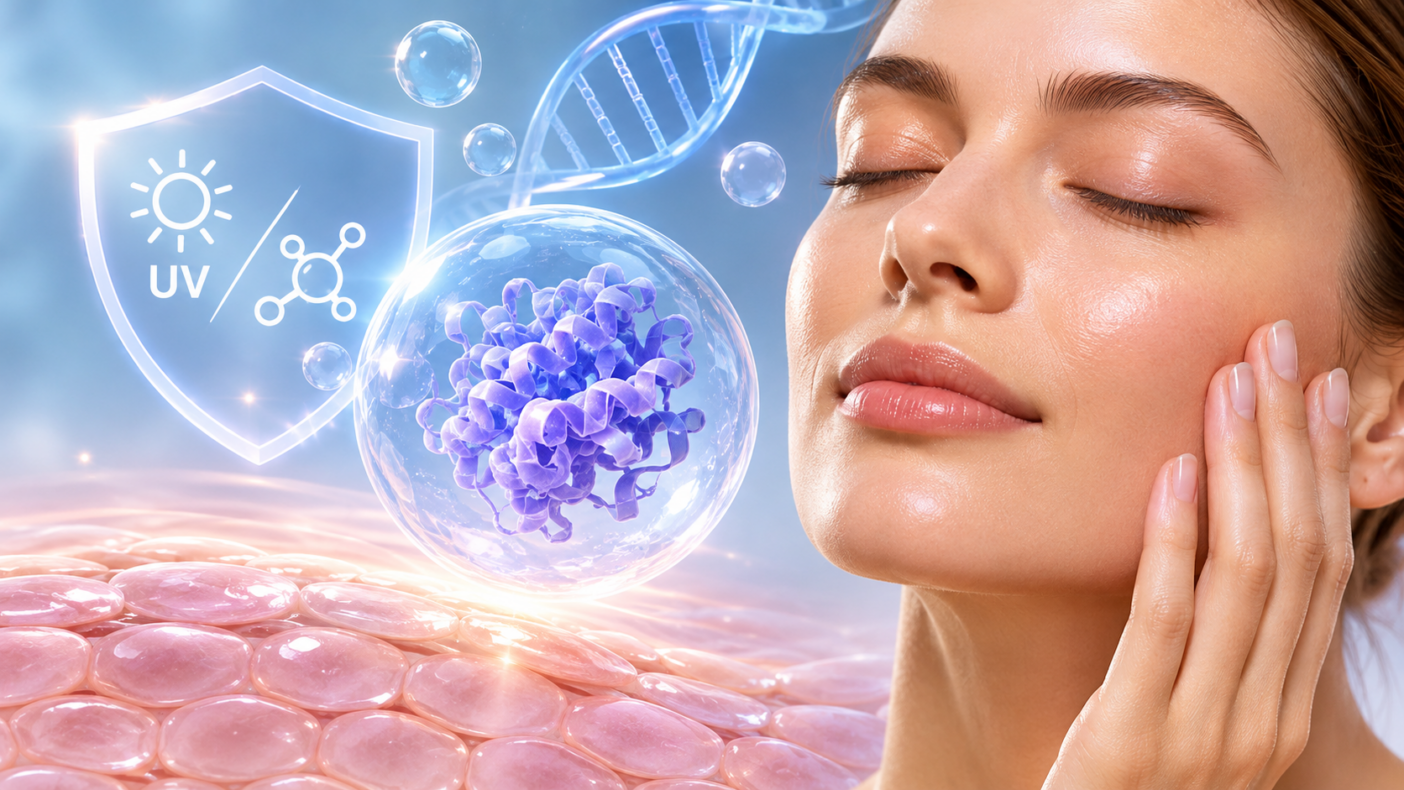
Enzymatic Skin Protection: Innovative Active Ingredients Against Oxidative Stress and Skin Aging
Our skin is exposed to numerous environmental stressors every day. UV radiation, air pollution, ozone, and other external factors can promote the formation of reactive oxygen species. These so-called ROS (Reactive Oxygen Species) are involved in oxidative processes that can damage proteins, lipids, and other biological structures. In the long term, oxidative stress can contribute to premature skin aging and promote the appearance of wrinkles, loss of elasticity, and pigmentation changes.
The human body possesses complex protective and repair mechanisms to counteract such stresses. Enzymes play a central role in breaking down unwanted reaction products, regulating oxidative processes, and repairing certain types of DNA damage.
Enzymatic skin protection is therefore an interesting area of research for modern anti-aging cosmetics. Innovative active ingredient systems are modeled after natural protective mechanisms and combine, for example, antioxidant peptides, enzymes, and biotechnologically derived plant or microalgae extracts.
What are enzymes, and how do they work?
Enzymes are biological catalysts that enable or accelerate chemical reactions. Most enzymes consist of proteins, while certain RNA molecules also possess catalytic properties.
In the human body, enzymes are involved in nearly all important metabolic processes. They support energy production, the synthesis of biological molecules, the breakdown of unwanted substances, and the repair of damaged cellular components.
A distinctive feature is their catalytic function: Enzymes are not typically permanently consumed in a single reaction and can therefore undergo numerous reaction cycles.
However, they are not indefinitely stable. Temperature, pH, oxidation, and other environmental conditions can alter their structure and impair their activity.
For cosmetic development, it is therefore crucial to select suitable enzymes and to preserve their activity as effectively as possible during manufacturing, storage, and use.
How does the skin protect itself from oxidative stress?
The skin has a multi-tiered antioxidant defense system. This includes low-molecular-weight antioxidants such as glutathione and vitamin C, as well as various antioxidant enzymes.
Three enzymes play a particularly important role in the skin’s antioxidant defense system: superoxide dismutase, catalase, and glutathione peroxidases.
Superoxide Dismutase: Protection Against Superoxide Radicals
As one of the body’s key antioxidant enzymes, superoxide dismutase (SOD) catalyzes the conversion of superoxide radicals into oxygen and hydrogen peroxide.
It catalyzes the conversion of superoxide anions into oxygen and hydrogen peroxide.
Superoxide is produced, for example, as part of natural metabolic processes. At elevated concentrations, it can contribute to oxidative stress.
The conversion by SOD is therefore an important first step within the cellular antioxidant defense system.
Catalase: Breakdown of Hydrogen Peroxide
Catalase catalyzes the decomposition of hydrogen peroxide into water and oxygen.
This process is important because hydrogen peroxide, at elevated concentrations, can promote oxidative damage. At the same time, hydrogen peroxide at low concentrations is involved in physiological signaling processes.
The role of antioxidant enzymes is therefore not to completely remove all reactive oxygen species, but to maintain a functional balance.
Glutathione peroxidases: Protection of cellular structures
Glutathione peroxidases are a group of antioxidant enzymes that can reduce, among other things, hydrogen peroxide and certain organic hydroperoxides.
In doing so, they utilize glutathione as a component of the cellular redox system.
Of particular interest is their role in protecting biological membranes, whose lipid components can be damaged by oxidative processes.
Enzymatic Skin Protection and DNA Repair
UV radiation can cause various changes in DNA. Of particular relevance are cyclobutane pyrimidine dimers (CPD) and other UV-induced photoproducts.
These changes occur when adjacent pyrimidine bases within the DNA react with one another. If such damage is not adequately repaired, it can impair normal cell function and promote mutations.
Human skin possesses various DNA repair systems. Particularly important is nucleotide excision repair, which can detect and remove UV-induced DNA damage.
Photolyase: A Light-Dependent Repair Enzyme
Photolyasins are enzymes found in numerous microorganisms, plants, and animals. They can directly repair certain UV-induced DNA photoproducts using light energy.
This process is known as photoreactivation.
Of particular interest is the ability of certain photolyasins to cleave cyclobutane pyrimidine dimers (CPDs), thereby restoring the original DNA structure.
However, humans do not possess a functional CPD photolyase. In humans, the repair of such DNA damage occurs primarily through other mechanisms.
For cosmetic active ingredient systems, it is therefore of interest to determine whether suitable, technologically stabilized photolyasins can exhibit additional enzymatic activity under defined conditions.
Such an effect must be demonstrated for the respective active ingredient system.
Why are liposomal delivery systems of interest?
Enzymes are often sensitive molecules. Their biological activity depends on an intact three-dimensional structure, which can be compromised by unsuitable formulation conditions.
Liposomes offer a way to incorporate sensitive active ingredients into suitable delivery systems.
These vesicular structures consist of phospholipids and can encapsulate water-soluble or lipophilic ingredients. Depending on their composition, this allows for the stabilization, distribution, and controlled release of specific active ingredients.
For enzymatic active ingredients, protection against adverse environmental conditions is of particular interest.
However, liposomal encapsulation does not automatically mean that an enzyme will penetrate the skin barrier or exert its activity in deeper layers of the skin. The actual availability of the active ingredient depends on numerous factors and must be investigated experimentally.
Glorydermal® GUARD FS: A Combination of Photolyase and an Antioxidant Peptide
An innovative active ingredient concept for enzyme-based skincare is Glorydermal® GUARD FS from GloryActives.
The system combines a plankton extract with photolyase activity, the synthetic ferric hexapeptide-35, and an extract from Tremella fuciformis.
The combination of different mechanisms of action is intended to enable a comprehensive skincare approach focused on DNA repair mechanisms, antioxidant properties, and hydration.
Photolyase from Plankton Extract
According to the manufacturer, the plankton extract used contains photolyase activity.
Photolyases are particularly interesting because they can repair certain UV-induced DNA damage using light energy.
However, transferring these enzymatic properties to cosmetic formulations poses specific challenges regarding stability, activity, and active ingredient availability.
Therefore, both the enzyme’s activity and the properties of the entire delivery system are relevant for evaluation.
Ferric Hexapeptide-35: Antioxidant Active Ingredient Concept
Ferric Hexapeptide-35 is a synthetic iron-peptide complex used in innovative antioxidant active ingredient systems.
The raw material is associated with enzyme-like antioxidant properties.
However, a distinction must be made between a classic biological enzyme and a synthetic peptide complex. Ferric Hexapeptide-35 is not automatically equivalent to superoxide dismutase or catalase.
Its antioxidant efficacy depends on its chemical structure, the test conditions, and the activity actually demonstrated.
Tremella fuciformis: Moisture from Fungal Polysaccharides
Tremella fuciformis, also known as the silver ear mushroom, is an edible and cultivated mushroom well-known in East Asia.
Its polysaccharides possess interesting water-binding and film-forming properties. For this reason, extracts derived from it are used in moisturizing cosmetic formulations.
Tremella polysaccharides are occasionally marketed as a plant-based or mushroom-based alternative to hyaluronic acid. Chemically, however, they belong to different classes of compounds, each with its own distinct properties.
For cosmetic products, moisture retention, skin feel, and the potential to promote a comfortable skin surface are of particular interest.
Glorydermal® GUARD FS: Efficacy Studies
GloryActives tested the active ingredient system in in vitro studies using human three-dimensional full-thickness skin models.
An aqueous formulation containing 1% Glorydermal® GUARD FS was used.
Studies Following UVB Exposure
The skin models were exposed to a defined UVB dose of 220 mJ/cm².
According to the results of the manufacturer’s studies, treatment with Glorydermal® GUARD FS reduced the amount of UV-induced cyclobutane pyrimidine dimers (CPDs).
Such results are of interest because CPDs are among the characteristic DNA changes following UVB exposure.
However, when interpreting these results, it is important to distinguish between a reduction in measured DNA damage in a skin model and proven protection against UV-related diseases in humans.
In vitro results do not indicate protection against skin cancer.
Antioxidant studies
Additionally, the effect of the raw material under oxidative stress was investigated.
Hydrogen peroxide was used to induce oxidative stress in the experimental system.
The manufacturer’s studies demonstrated antioxidant effects, suggesting potential for supporting cosmetic protection strategies.
However, additional data are required to assess long-term efficacy, particularly regarding the duration of activity and efficacy in finished cosmetic formulations.
Glorydermal® GUARD FS: INCI and Application
Trade name: Glorydermal® GUARD FS
Supplier: GloryActives GmbH
INCI:
Aqua (Water), Glycerin, Sorbitol, Lecithin, Sucrose, Xanthan Gum, Plankton Extract, Tremella Fuciformis (Mushroom) Extract, Dextran, Ferric Hexapeptide-35
Other components of the preservative system:
Methylpropanediol, Propanediol, Caprylyl Glycol, 1,2-Hexanediol, Phenylpropanol
Recommended usage concentration: 1%
Suitable product concepts: Facial serums, anti-aging creams, body care, after-sun products, and complementary antioxidant care.
The complete INCI declaration of the finished product is based on its actual composition.
Detoxiquin (PF) from Infinitec: Antioxidant Protection for Modern Skincare
Another interesting active ingredient concept is Detoxiquin (PF) from Infinitec. This ingredient combines an extract of Tremella fuciformis with Ferric Hexapeptide-35. It focuses on an antioxidant skincare approach designed to protect cellular structures from oxidative stress.
INCI Composition
Glycerin, Tremella Fuciformis (Mushroom) Extract, Ferric Hexapeptide-35
Protection Against Oxidative Stress
Oxidative stress can impair various cellular components. These include membrane lipids, proteins, and other biological molecules.
Antioxidant active ingredient systems are designed to help limit such reactions and support the skin’s natural protective mechanisms.
Detoxiquin (PF) is offered for cosmetic formulations focused on antioxidant care and protection against environmental stressors.
Autophagy and the Proteasome: Cellular Recycling Mechanisms
Cells possess complex systems for the degradation and recycling of damaged or no longer needed components.
Two important mechanisms are autophagy and the ubiquitin-proteasome system. Among other things, autophagy enables the degradation of certain cellular components via lysosomal processes. The proteasome, on the other hand, is particularly involved in the targeted degradation of appropriately marked proteins.
Both systems play a crucial role in cellular homeostasis.
Oxidative stress can influence these processes. For this reason, antioxidant compounds are also being studied in relation to the maintenance of cellular protective and recycling mechanisms. However, any specific activation or maintenance of autophagy or proteasome activity by Detoxiquin (PF) must be substantiated by appropriate studies.
What Does “Detox” Mean for the Skin?
The term “detox” is frequently used in cosmetics but is not clearly defined scientifically.
Detoxification of the human body occurs primarily through physiological processes, particularly involving the liver and kidneys. Cosmetic products do not perform these functions.
In skincare, “detox” often describes products designed for cleansing, antioxidant properties, and supporting the skin’s natural functions.
For scientifically sound product development, specific claims such as “supports antioxidant protection” or “nourishes skin exposed to environmental stressors” are therefore more meaningful than a blanket promise of detoxification.
Enzymatic Skin Protection in Anti-Aging Products
As we age, various biological processes in the skin change. These include collagen synthesis, epidermal regeneration, and the response to oxidative stress.
External factors such as UV radiation also contribute to skin aging.
Enzyme-based active ingredient systems may therefore be of interest for modern anti-aging formulations. Combining different cosmetic approaches appears particularly sensible.
These include antioxidant active ingredients, suitable humectants, barrier-strengthening lipids, and selected peptides.
A high-quality product does not necessarily have to contain as many ingredients as possible. Rather, what is crucial is that the components used are compatible with one another and demonstrably support the desired cosmetic properties.
What role does UV protection play?
UV radiation is one of the most significant external factors contributing to premature skin aging.
UVB radiation can directly cause characteristic DNA damage. UVA radiation contributes to changes in the skin’s biological structures, in part through oxidative processes.
Effective sun protection is therefore an essential component of a comprehensive anti-aging skincare routine.
Antioxidant enzymes, photolyases, and other innovative active ingredients can offer interesting complementary skincare approaches. However, they are no substitute for approved UV filters or a certified sun protection factor.
Cosmetic claims regarding DNA repair or protection against UV-induced cell damage also require particularly careful regulatory review.
Five Innovative Product Concepts
1. Enzyme Defense Face Serum
A lightweight facial serum with a suitable enzyme-based active ingredient system, humectants, and antioxidant components.
Product goal: Antioxidant care for skin exposed to daily environmental stressors.
2. Advanced Anti-Aging Cream
A high-quality emulsion with antioxidant active ingredients, selected peptides, and barrier-strengthening lipids.
Product goal: To promote a smoother, well-nourished, and supple complexion.
3. After-Sun Recovery Fluid
A lightweight skincare fluid with panthenol, ectoine, moisturizing polysaccharides, and suitable antioxidant ingredients.
Product goal: To provide hydration and a comfortable skin feel after sun exposure.
4. Urban Skin Defense
A day cream with antioxidant active ingredients, ceramides, and selected plant extracts.
Product goal: Cosmetic care for skin regularly exposed to air pollutants and other environmental stressors.
5. Overnight Recovery Mask
An intensely nourishing face mask with Tremella polysaccharides, moisture-binding components, and suitable peptides.
Product goal: Intensive hydration and support for the skin’s natural barrier.
Challenges in Formulating Enzymatic Active Ingredients
The development of such cosmetic products places special demands on formulation technology.
Temperature and Manufacturing Processes
Proteins and enzymes can be sensitive to elevated temperatures. Therefore, it must be determined whether an active ingredient should be incorporated during a suitable cooling phase of the manufacturing process.
pH and Enzyme Activity
Many enzymes have a limited pH range within which their activity is particularly high. Outside this range, catalytic performance may decrease.
Preservation and Raw Material Compatibility
Preservative systems, surfactants, and certain other formulation ingredients can also affect the stability of sensitive proteins.
Packaging and Storage Stability
Selecting suitable packaging materials can help protect sensitive active ingredients from light, oxygen, and other environmental factors.
Verification of Enzymatic Activity
For enzymatic raw materials, a purely visual stability test is insufficient. A product may appear unchanged on the outside even though the activity of an enzyme it contains has already decreased significantly.
Appropriate activity and stability tests are therefore particularly important for such formulations.
Enzymatic Skin Protection: What Types of Efficacy Testing Are Appropriate?
The scientific evaluation of modern active ingredient systems should take multiple levels into account.
In vitro studies can provide evidence of antioxidant activity, DNA-related mechanisms of action, or changes in cellular markers.
Ex vivo models and reconstructed skin models enable supplementary investigations under more complex conditions.
Controlled application studies are particularly valuable for making claims about cosmetic efficacy in humans. Depending on the product concept, parameters such as skin moisture, elasticity, skin roughness, and other cosmetically relevant factors can be assessed.
The selection of test methods should always be guided by the intended marketing claims.
Conclusion: New Possibilities for Cosmetic Skin Care
Enzymes are essential components of natural protective and repair mechanisms. Their ability to catalyze specific chemical reactions also makes them of interest for the development of innovative cosmetic active ingredient systems.
Particularly exciting are combinations of enzymatic components, antioxidant peptides, and modern delivery systems.
Glorydermal® GUARD FS from GloryActives and Detoxiquin (PF) from Infinitec demonstrate different approaches to harnessing such active ingredient technologies for cosmetic skincare concepts.
Crucial to successful development are the stability of the active ingredients, their availability within the formulation, and appropriate proof of efficacy.
Are you looking to develop an innovative anti-aging or antioxidant skincare product?
Cosmacon supports you from active ingredient selection all the way to the finished cosmetic formulation. Contact us!
If you need it fast:
✨ Our partner Tojo Cosmetics offers innovative, active-ingredient-rich private label products—quickly available, high-quality, and perfect for brands that want to impress with passion and quality.