Batana Oil in Cosmetics: A Traditional Vegetable Oil with New Potential
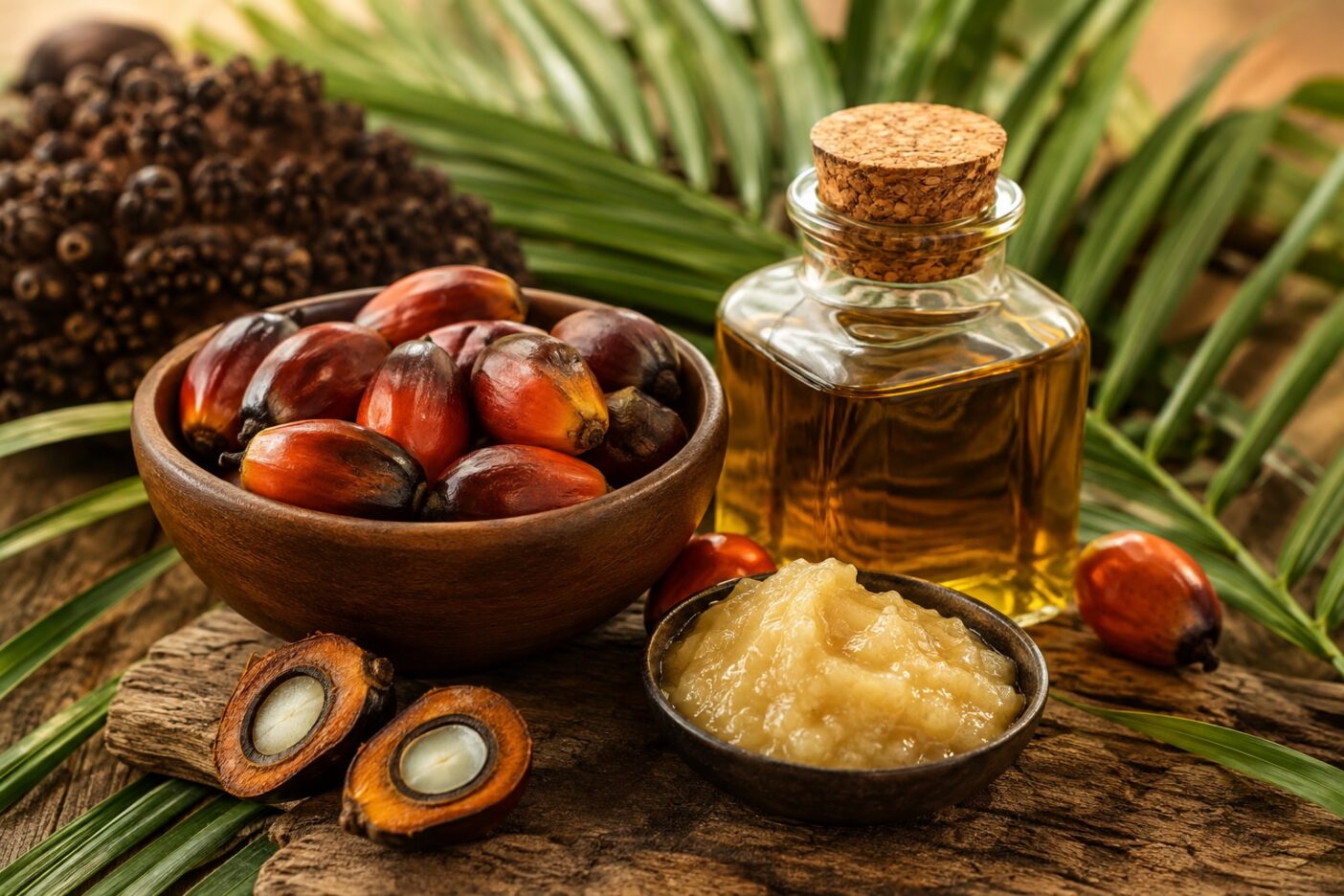
Batana oil is currently evolving from a traditional vegetable oil into an exciting, trending ingredient for modern cosmetics. It is extracted from the American oil palm Elaeis oleifera, which is native to Central and South America. The oil is particularly closely associated with the La Moskitia region in Honduras and the traditional hair and body care rituals of the Miskito people who live there.
For cosmetics developers, however, it is not just this extraordinary origin story that is of interest. Depending on the extraction and processing methods, very different raw material qualities result—ranging from a rich, semi-solid butter to a light, fractionated oil. This is precisely where a key difference lies compared to many other trendy oils.
What is Batana oil?
For the commercial raw material grades available to us, the INCI designation is consistently Elaeis Oleifera Kernel Oil. The oil is thus extracted from the kernels of the American oil palm’s fruit.
This should be distinguished from Elaeis oleifera fruit oil, which is extracted from the fruit pulp. This distinction is important because, despite coming from the same plant species, kernel oil and fruit oil are not automatically chemically identical.
Therefore, especially with this raw material, one should not rely solely on the trade name. What matters are the specific INCI designation, the part of the plant used, the extraction method, the processing, and the analytical specifications.
Tradition from La Moskitia
The use of this oil is closely associated with the Miskito people in the Honduran region of La Moskitia. One raw material supplier describes the Miskito, or “Tawira,” as the “People of Beautiful Hair” and highlights the use of the oil for hair and skin, a practice passed down through generations. Another supplier data sheet also describes its traditional use in La Moskitia for hair and body care.
This ethnobotanical history provides an exceptional foundation for modern beauty storytelling. However, traditional use should not be equated with clinically proven efficacy.
Batana Oil versus Traditional Palm Oil
Both oils come from oil palms, but from different species. Traditional palm oil is primarily extracted from the pulp of Elaeis guineensis. The American oil palm, on the other hand, belongs to the species Elaeis oleifera.
| Characteristic | Batana / American oil palm | Traditional palm oil |
|---|---|---|
| Botanical species | Elaeis oleifera | Elaeis guineensis |
| Origin | Central and South America | originally West Africa |
| Cosmetic INCI names of the Batana raw materials listed here | Elaeis oleifera kernel oil | mostly Elaeis guineensis oil |
| Market positioning | Specialty/premium oil | Global base raw material |
| Production | Partly traditional small-scale production or specialized processes | Predominantly large-scale industrial production |
| Product Characteristics | Solid to slightly fluid, depending on processing | Depends on fraction and refining |
| Cosmetic positioning | Hair Repair, Scalp Care, Premium Skin Care | Base lipid, emollient, and raw material for numerous derivatives |
The difference should not be reduced to the notion that one oil is “good” and the other is “cheap.” Conventional palm oil possesses outstanding technological properties and is, for this very reason, one of the most important vegetable oil raw materials of all.
The unique potential of Elaeis oleifera lies rather in a distinct combination of origin, composition, traditional use, processing, and premium positioning.
What does science say about the American oil palm?
The oil from the pulp of Elaeis oleifera has been particularly well studied. A recent study found approximately 54.7–55.7% oleic acid, 23.7–24.2% palmitic acid, and 15.5–17.0% linoleic acid. In addition, carotenoids and tocotrienols were detected.
Other studies also confirm interesting levels of tocopherols and tocotrienols in Elaeis oleifera.
However, scientific rigor is required here: These analytical data are primarily derived from studies of fruit oil and must not be applied uncritically to commercial Elaeis oleifera kernel oil.
Therefore, cosmetic development should always be based on the actual fatty acid profile and the specifications of the specific raw material batch being used.
Not all batana oil is the same
This raw material becomes particularly interesting when comparing different commercial grades.
One grade is described as a soft, semi-solid paste at 20 °C with a melting range of 35–45 °C. Color and a characteristic natural odor are part of the raw material’s natural profile.
Another grade, by contrast, is a greenish-brown to amber-brown liquid. Specified properties include an iodine value of 90–120, a saponification value of 175–210 mg KOH/g, and a peroxide value below 10 meq O₂/kg.
For formulators, this means that two raw materials may appear identical on the INCI list yet behave very differently in a formulation.
Particularly exciting: fractionated grades
Another option is targeted fractionation. According to the supplier, the kernels for this BCR grade are first gently cold-pressed. Subsequently, a lighter, liquid fraction is isolated through fractionation, which, according to the manufacturer, is particularly rich in unsaturated fatty acids. The goal is an oil that absorbs more quickly with a less heavy or greasy texture.
This opens up entirely new possibilities in cosmetics.
The classic semi-solid grade, for example, is ideal for intensive hair butters and balms. A light, fractionated grade, on the other hand, can also be suitable for serums, leave-in treatments, and modern facial products.
The INCI alone, therefore, does not reveal what sensory experience the consumer will ultimately have.
Interesting cosmetic properties
Batana oil is primarily marketed by suppliers for hair, scalp, and skin care. They highlight its emollient properties, lipid replenishment, and conditioning effects on skin and hair, as well as its use in products for dry and damaged hair. One supplier, for example, recommends the raw material for face creams, facial oils, body lotions, hand creams, hair oils, conditioners, and hair masks.
Another supplier even positions a fractionated grade for skin care, body care, sun care, hair care, and color cosmetics.
From a product development perspective, the following applications are particularly interesting:
- Care and conditioning of dry hair lengths and ends
- Improvement of suppleness and shine
- Rich care for curly and highly textured hair
- Scalp care concepts for dry scalps
- lipid-rich skin care
- water-free balms and oils
- premium products with an ethnobotanical story
Caution regarding hair growth claims
In international raw material marketing, some claims go significantly further. One supplier, for example, mentions hair growth, the reversal of hair loss, and effects on scars and stretch marks. Another supplier cites, among other things, antioxidant properties, support for the skin barrier, and an improvement in the hair fiber.
Such statements about raw materials should not be adopted without verification as claims for a final cosmetic product.
In particular, claims regarding hair loss or new hair growth can be problematic from a regulatory standpoint and require very careful evaluation as well as appropriate proof of efficacy.
More appealing cosmetic messaging focuses on nourishing, conditioning, anti-breakage, shine, scalp care, and hair repair.
Formulation Tip: From 1% to Pure Oil
There are also interesting differences in recommended usage concentrations. For a liquid grade, the supplier specifies a very wide usage range of 1 to 100%.
For the fractionated BCR grade, however, 1–5% is recommended.
This allows Batana oil to be integrated into the product concept in a variety of ways: as a complementary premium oil within a complex active ingredient formulation, as the dominant lipid in a hair butter, or even as a nearly pure oil treatment.
The ideal concentration depends in particular on raw material quality, product type, desired sensory profile, stability, and marketing positioning.
Six Product Ideas with Batana Oil
- Intensive Repair Hair Mask
A rich mask for dry, damaged, and curly hair. A particularly exciting combination would be with ceramides, panthenol, amino acids, and a modern conditioning system.
Concept: Traditional Oil Meets Modern Hair Repair.
- Batana Scalp & Hair Overnight Oil
A water-free pre-shampoo or overnight treatment for the scalp and hair. A fractionated grade could be combined with squalane and light esters to achieve a more elegant sensory profile than that of classic, heavy hair oils.
- Curl Definition Leave-in Cream
Especially in the curl care segment, Batana oil could work exceptionally well as a storytelling and care component. A combination with betaine, panthenol, film-forming polysaccharides, and selected proteins would be conceivable.
The goal: conditioning, definition, shine, and less frizz.
- Lightweight Hair Repair Serum
A fractionated grade would be particularly interesting here. Combined with hemisqualane, squalane, or modern lightweight esters, this could result in a clear hair serum that conditions dry ends without unnecessarily weighing down the hair.
This could represent an interesting modern alternative to classic heavy hair oils.
- Barrier Rescue Balm
Why limit the use of this raw material to just hair?
A combination of Batana oil, ceramides, phytosterols, squalane, and bisabolol could be developed into a high-quality, water-free balm for dry and stressed skin.
This would allow the traditional history of the raw material to be consistently translated into a modern skin barrier concept for the first time.
- Traditional Batana Hair Butter
In our view, this is perhaps the product with the greatest storytelling potential: a rich hair butter whose texture is deliberately reminiscent of the raw ingredient’s traditional semi-solid form.
A blend with shea butter, cupuaçu butter, and other plant-based lipids could be used as a pre-shampoo treatment, intensive split-end care, or overnight hair mask.
Here, Batana oil wouldn’t simply be used as an active ingredient—the raw material would define the entire product concept.
What should you look for when purchasing?
Precisely because Batana is currently becoming an increasingly trendy raw material, brands and developers shouldn’t simply purchase just any raw material with the corresponding trade name.
Key factors include:
- correct botanical name and INCI
- Kernel oil or fruit oil?
- Origin and traceability
- Traditional extraction, pressing, or fractionation?
- Refined or unrefined?
- Fatty acid profile
- Acid value
- Peroxide value
- Iodine value
- Color and natural odor
- Physical state at room temperature
- Oxidation stability
- Microbiological quality
- Batch consistency
- Recommended usage concentration
- Complete regulatory documentation
Storage and oxidation protection should also be taken into account. Two of the available grades, for example, have a maximum peroxide value of 10 meq O₂/kg.
For sophisticated formulations, additional antioxidant stabilization may also be advisable.
Conclusion: More Than Just the Latest Social Media Trend
Batana oil has something that many short-lived trend ingredients lack: an unusual origin story, a long history of traditional use, and, at the same time, interesting possibilities for modern cosmetic formulations.
Particularly exciting is the variety of available raw material grades. Traditional semi-solid variants can form the basis of luxurious hair butters and treatments, while modern fractionated variants enable light hair oils, serums, leave-ins, and even skincare concepts.
The raw material should therefore not simply be viewed as “exotic palm oil.”
A much more interesting question is:
How do you translate a traditional Central American care ritual into a modern, scientifically sound cosmetic product?
This is precisely where the real market potential likely lies.
From the raw material concept to a market-ready product
Cosmacon GmbH develops custom cosmetic products from the initial concept through raw material selection and formulation development to stability testing, safety assessment, and regulatory market launch.
Especially with trending raw materials, we can compare different qualities, determine appropriate usage concentrations, and develop a standalone product from them—rather than simply incorporating a current raw material into an existing formulation.
Those who want to get started faster and with less development effort can draw on an extensive white-label portfolio via Tojo Cosmetics. Existing hair masks, hair oils, scalp treatments, leave-ins, balms, or skin care products can serve as interesting starting points for new product concepts.
Ideally, a solid raw material story leads to what ultimately matters in the market: a standalone product with compelling sensory qualities, a compelling story, and robust cosmetic performance.
Sources
Antoniassi R. et al. (2025): Bioactive compounds and composition of Elaeis oleifera mesocarp oil extracted by hydraulic pressing. Grasas y Aceites. DOI: 10.3989/gya.0646241.2194. Analysis of the fatty acid profile, carotenoids, and tocotrienols in the mesocarp/fruit oil of Elaeis oleifera.
Alhaji M.H. et al. (2024): Palm Oil (Elaeis guineensis): A Journey through Sustainability, Processing, and Utilization.Foods, 13(17), 2814. DOI: 10.3390/foods13172814. Review article covering, among other topics, the composition and differences among various oil palm species.
Costa P.A. et al. (2017): Tocopherols, Tocomonoenols, and Tocotrienols in Oils of Costa Rican Palm Fruits: A Comparison between Six Varieties and Chemical versus Mechanical Extraction. Journal of Agricultural and Food Chemistry. Study of vitamin E compounds in various oil palm genotypes.
Sundram K., Sambanthamurthi R., Tan Y.A. (2003): Palm fruit chemistry and nutrition. Asia Pacific Journal of Clinical Nutrition, 12(3), 355–362. Overview of fatty acids and natural fat co-components in various palm oils.
Supplier Information: Technical Data Sheet Batana Oil (Liquid), Suzhou Greenway Biotech Co., Ltd. – INCI, specifications, physicochemical parameters, applications, and usage concentrations.
Raw material supplier information: Technical Data Sheet Batana Oil, Grand Ingredients – traditional processing, physical properties, and cosmetic positioning.
Supplier information: Batana Oil BCR, Bio Component Research – origin, cold pressing, fractionation, cosmetic properties, and formulation recommendations.