Neurocosmetics
How the Skin-Brain Axis Is Redefining Modern Skincare
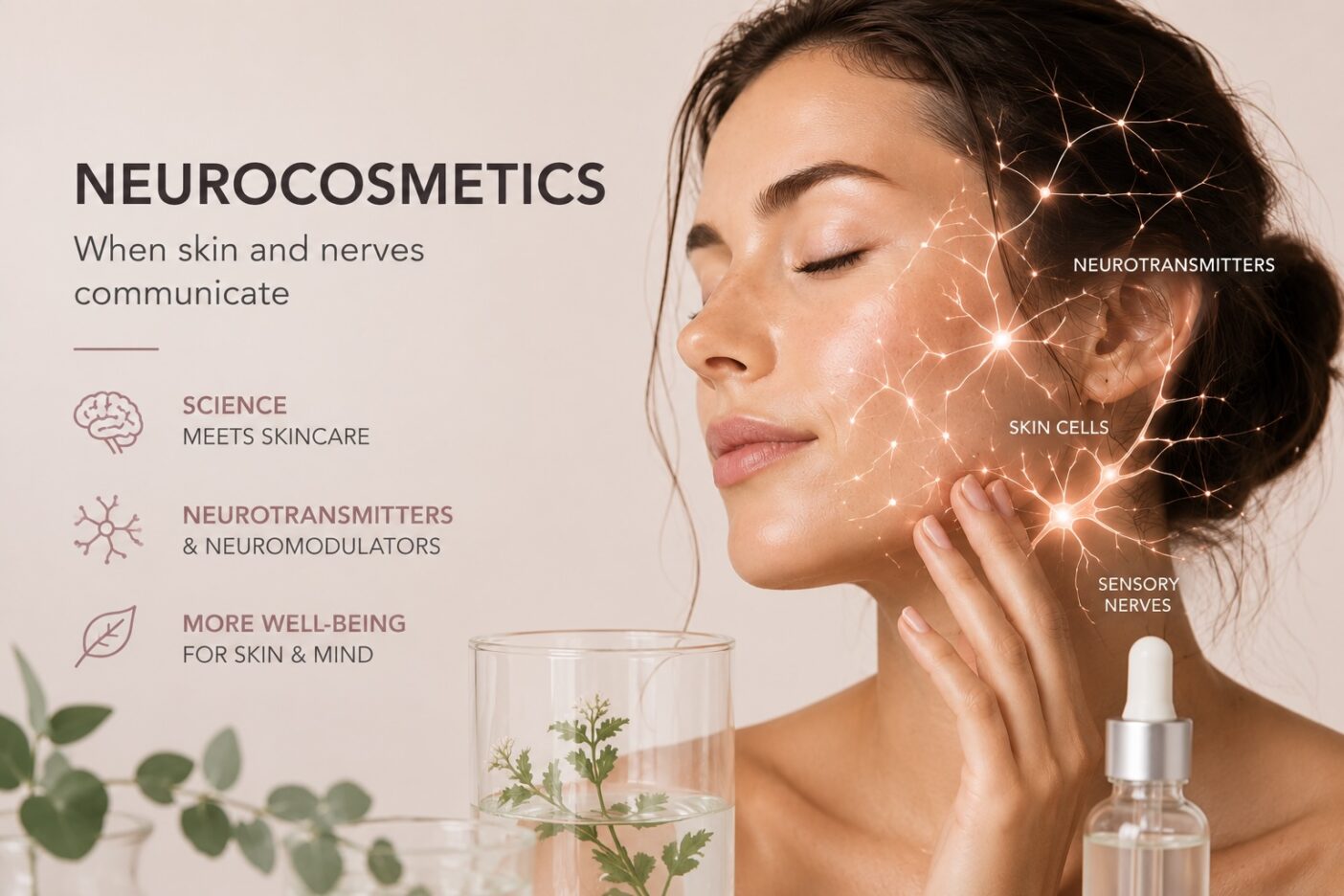
The skin is much more than just a covering—it is a neuroimmunoendocrine organ that produces and responds to neurotransmitters. This is precisely where neurocosmetics comes in: one of the industry’s most exciting trends, linking skincare and emotional well-being via the so-called skin-brain axis.
Under buzzwords like “MoodActive” or “Emotional Beauty,” the focus is shifting from purely visible effectiveness to products that target both the skin and the mind. This article explains the background, shows how the active ingredients work, highlights the benefits of these modern cosmetics—and provides seven specific product ideas featuring real neuroactive ingredients.
What Are Neurocosmetics?
Neurocosmetics refer to topical skincare products that specifically interact with the skin’s nervous system and the skin-brain axis. This concept is based on a finding from skin research: Keratinocytes, melanocytes, and immune cells can produce and respond to neurotransmitters, neuropeptides, and hormones such as β-endorphins, dopamine, serotonin, or substance P. The skin thus forms its own, locally regulated neuroendocrine system.
Stress factors such as environmental pollution, UV radiation, or psychological tension trigger the release of cortisol and pro-inflammatory messengers. The result: The skin becomes more sensitive, reacts with irritation, and ages more quickly. Visible stress reactions range from blemishes and redness to a compromised skin barrier and signs of premature aging. This is precisely where neuroactive ingredients come into play, by interrupting this cascade at multiple points.
How Neuroactive Ingredients Work
The active ingredients in neurocosmetics target different points in the stress cascade:
- Messenger substance modulation: They dampen neuropeptides and stress hormones like cortisol, which trigger changes in the skin and hair.
- Antioxidant protection: They neutralize oxidative stress, which increases during times of tension.
- Soothing & anti-inflammatory effects: They reduce neurogenic inflammation and raise the irritation threshold of sensitive skin—often via sensory receptors such as TRP channels (e.g., TRPV1).
- Positive feedback: They improve comfort and appearance—which in turn positively influences mental well-being.
In formulations, these are combined with neuroactive peptides (such as palmitoyl peptides, GABA, or acetyl hexapeptide-8/Argireline), barrier-strengthening lipids like ceramides, adaptogenic plant extracts (ashwagandha, rhodiola, Centella asiatica), and microbiome-supporting prebiotics, probiotics, and postbiotics. Sensitive active ingredients are protected using liposomes, nanoemulsions, or encapsulation. Sensory characteristics—texture, absorption, and fragrance (such as lavender or citrus notes)—are also part of the concept, as they have been shown to stimulate neural pathways.
Objectively Measurable—The Role of Neuroscience
For a long time, emotional effects were considered elusive. Today, they can be objectively measured using functional magnetic resonance imaging (fMRI): Using the BOLD signal, researchers precisely map brain responses to scent, texture, or application. Studies show that even the “after-feel” of a cream can activate brain regions associated with well-being and reward—and that lavender, for example, triggers measurable changes in the brain’s resting-state networks that last for hours. This objectification provides neurocosmetics with a scientific foundation that goes beyond mere marketing.
The Benefits of Modern Neurocosmetics
The added value is clear: Neurocosmetics address not only visible skin needs but also the stress-related causes behind them. Typical benefits include:
- less redness, irritation, and sensitivity
- a strengthened skin barrier and improved moisture retention
- a more radiant complexion and a more even skin tone
- a noticeable boost in comfort and well-being
The market confirms this trend: According to industry surveys, around 62% of consumers worldwide view their skincare routine as important for their mental well-being, and 80% of Gen Z specifically use beauty products to support their mental health. Double-digit growth is expected in the coming years—meaning the field is evolving from a niche topic into a strategic growth area.
Seven product ideas with neuroactive active ingredients
The following concepts demonstrate how neurocosmetics can be translated into marketable products—each featuring a real, INCI-declared active ingredient:
- Anti-Stress Day Cream – with CALNEURIN®-SENSE (INCI: Cichorium Intybus (Chicory) Root Extract) from Rahn: made from upcycled organic chicory roots, it targets the microbiome-skin-mind axis and combines sensory well-being with smoothing care.
- Soothing Serum for Sensitive, Reactive Skin – with Neutrazen™ (INCI: Palmitoyl Tripeptide-8) and Embelia Extract (Embelia Concinna Leaf Extract): reduces neurogenic inflammation, alleviates redness, and normalizes the irritation threshold.
- Comfort care for stress reactions – with SensAmone P5 (INCI: Pentapeptide-59) from Mibelle: a biomimetic peptide modeled after a sea anemone protein that soothes irritated, itchy skin.
- “Glow” Fluid with a Feel-Good Effect – with GlowCytocin™ (INCI: Hyacinthus Orientalis (Hyacinth) Extract): proven to activate the skin’s oxytocin receptors and combine a sense of well-being with radiance.
- Balancing Tea Serum – with Infini’tea™ biofunctional (INCI: Camellia Sinensis Leaf Extract): a refreshing tea serum that relaxes the skin and supports its homeostasis.
- Night & Sleep Care or Sleep Spray – with Imdermalab® ArMorpheus (galbanum-copaiba-hops aroma blend): COSMOS-certified, with clinically reported effects on brain waves and sleep efficiency.
- Adaptogenic Night Care for Fatigue – with Rhodiola Extract (INCI: Rhodiola Rosea Root Extract): adaptogenic, reduces neurogenic inflammation, and supports skin barrier regeneration.
Here you’ll find even more interesting active ingredients:
| Name | Company Name | INCI Name | Remarks |
|---|---|---|---|
| GLUTRAPEPTIDE | Biosil Technologies, Inc. | Pyroglutamylamidoethyl Indole , Butylene Glycol , Aqua | |
| SYNCHROLIFE | Croda Beauty Actives | Glycerin , Pentylene Glycol , Rosmarinus Officinalis (Rosemary) Leaf Extract , Palmitoyl Tetrapeptide-7 , Chrysin | |
| WKPep Leisurepeptide | Shenzhen Winkey Technology Co., Ltd. | Butylene Glycol , Aqua , Laureth-4 , Acetyl Dipeptide-1 Cetyl Ester , Acetic Acid , Hydroxyethylcellulose , Arginine | |
| DEFENSIL-SOFT | Rahn AG | Propanediol , Citric Acid , Albatrellus Confluens (Mushroom) Extract | |
| SymCalmin green | Symrise | Butylene Glycol , Hydroxyphenyl Propamidobenzoic Acid , Pentylene Glycol | |
| SpecKare Rhamnose | Spec-Chem Industry Inc | Rhamnose | |
| KANNABIA SENSE | Vytrus Biotech | Cannabis Sativa Seed Oil , Glycerin , Pentylene Glycol , Cyamopsis Tetragonoloba (Guar) Gum , Xanthan Gum , Phytic Acid , Tocopherol , Aqua | |
| Embelia Extract | SEPPIC | Aqua , Glycerin , Embelia Concinna Leaf Extract | |
| SEPICALM S WP | SEPPIC | Sodium Cocoyl Amino Acids, Sarcosine, Potassium Aspartate, Magnesium Aspartate | |
| SensAmone P5 | Mibelle AG Biochemistry | Pentapeptide-59 , Hydrogenated Lecithin , Butyrospermum Parkii (Shea) Butter , Phenethyl Alcohol , Ethylhexylglycerin , Maltodextrin , Aqua | |
| Infini’tea biofunctional | DKSH | Camellia Sinensis Leaf Extract | |
| Imdermalab ArMorpheus | Imderma Laboratories Co., Ltd. | Ferula Galbaniflua (Galbanum) Resin Oil , Copaifera Officinalis (Balsam Copaiba) Resin , Hedychium Coronarium Root Extract , Citrus Aurantifolia (Lime) Peel Extract , Humulus Lupulus (Hops) Extract | |
| RHODIOLA EXTRACT | DKSH | Cyclodextrin , Rhodiola Rosea Root Extract | |
| Neutrazen | Lucas Meyer Cosmetics - by Clariant | Aqua , Butylene Glycol , Dextran , Palmitoyl Tripeptide-8 | |
| GlowCytocin | Lucas Meyer Cosmetics - by Clariant | Glycerin , Aqua , Hyacinthus Orientalis (Hyacinth) Extract | |
| Embelia Extract | SEPPIC | Aqua , Glycerin , Embelia Concinna Leaf Extract | |
| CALNEURIN-SENSE | Rahn AG | Aqua , Cichorium Intybus (Chicory) Root Extract , Pentylene Glycol , Citric Acid |
Claims with Caution: What the Law Says
As convincing as the data on individual active ingredients may be, caution is required when marketing them. Cosmetics may only make claims about the appearance and condition of the skin, not about psychological or medical effects in the strict sense. Those offering neurocosmetics should therefore explain the stress-skin connection and emphasize the visible effects. It is also important to distinguish between the efficacy of a single active ingredient and the performance of the finished formulation—the skin-microbiome-brain axis, in particular, is still a relatively new field of scientific research. Robust substantiation and honest claims form the basis for credible neurocosmetics.
From Concept to Finished Product
Would you like to develop neurocosmetics that are scientifically sound, safe, and compliant with regulatory claims? Cosmacon provides independent, manufacturer-neutral support—from active ingredient selection and formulation to regulatory evaluation and safety assessment. Feel free to contact us.
For a quick market entry, Tojo Cosmetics offers tested white-label concepts: tojocosmetics.de/produkte. Contact us—we’ll translate the neuro-beauty trend into market-ready products.
References
1. Barch DM, et al. Function in the human connectome: task-fMRI and individual differences in behavior. NeuroImage. 2013;80:169–189. doi:10.1016/j.neuroimage.2013.05.033
2. Amador-Tejada A, et al. Resting-State Functional MRI Analyses for Brain Activity Characterization: A Narrative Review of Features and Methods. Eur J Neurosci. 2025;62(8):e70276. doi:10.1111/ejn.70276
3. Maniere A, et al. Cosmetic After-Feel Modulates Brain Activity in Sensory and Reward Networks: An fMRI Study. Front Neurosci. 2026;20:1759372. doi:10.3389/fnins.2026.1759372
4. Kupers R, et al. Long-lasting effects of lavender exposure on brain resting-state networks in healthy women. Front Neurosci. 2025;19:1555922. doi:10.3389/fnins.2025.1555922