
Cosmetics during pregnancy
What is suitable – and what should you look out for?
The question “Which cosmetics are suitable during pregnancy?” is one that concerns many expectant mothers. To answer it sensibly, it is important to understand what happens in the body during this special time. Hormonal changes not only affect general well-being, but also the skin, hair, and the body’s responsiveness.
What happens in the body during pregnancy?
Female hormones ensure that the body adapts to the needs of the growing child.
- Estrogens promote blood circulation, stimulate skin metabolism, increase collagen formation, and prepare the breasts for milk production.
- Progesterone maintains pregnancy, inhibits collagen breakdown, and contributes to skin elasticity.
- HCG (human chorionic gonadotropin) is produced shortly after fertilization and stimulates the production of estrogen and progesterone. It can cause nausea, breast tenderness, and temporary metabolic changes.
The increased hormone levels cause the skin to retain more water. It often appears plump, well-cushioned, and rosy. At the same time, it can become more sensitive: redness, itching, dryness, or blemishes are not uncommon.
Hair also changes. It can appear fuller and shinier—or, conversely, become greasy more quickly, drier, or lose its structure.
Why skin needs change during pregnancy
During pregnancy, hormone levels fluctuate. This affects not only mood, but also:
- the moisture balance of the skin
- sebum production
- the irritation threshold
- the tendency to develop allergies
Many women find that their skin becomes more sensitive and that care products that were previously well tolerated can suddenly cause irritation.
Basic rule: less is more
A key recommendation is:
Stick with tried-and-tested, well-tolerated products and introduce new cosmetics with caution.
Ideally, products should:
- be expressly suitable for sensitive skin
- be tested on pregnant women if possible
- contain few, well-selected ingredients
If irritation, burning, or itching occurs, the product should be discontinued immediately and medical advice sought if necessary.
Which cosmetics are suitable during pregnancy?
Preventing stretch marks
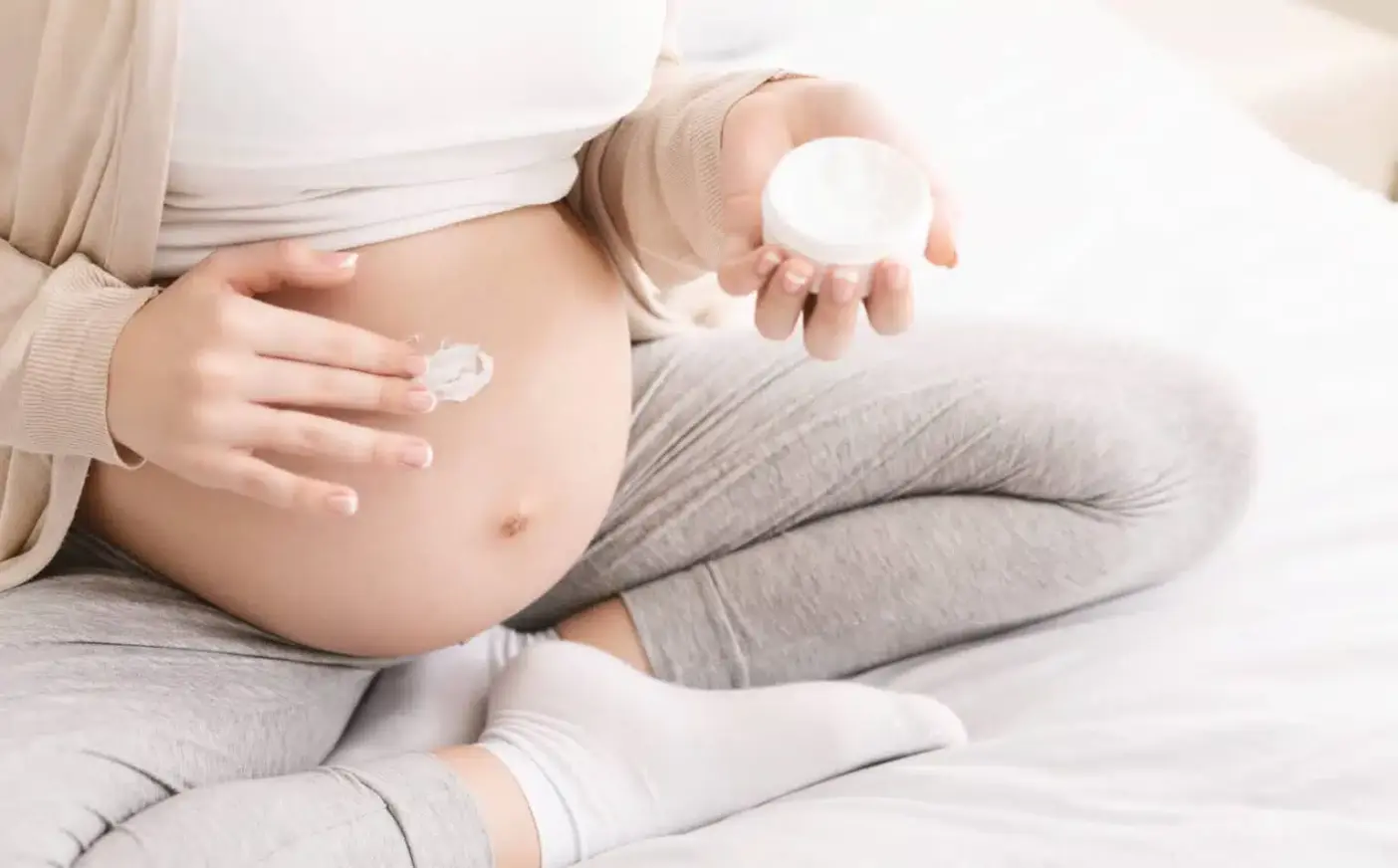
The stretching of the skin on the abdomen, breasts, and thighs is an enormous feat. Skincare can help to support elasticity.
The following have proven effective:
- Skincare oils such as almond oil, jojoba oil, wheat germ oil
- Active ingredients such as Centella asiatica (Indian pennywort), which can have a positive effect on the structure and appearance of the skin
Massage tip
A daily, gentle pinching massage of the abdominal skin (except in the area above the pubic bone) can promote blood circulation and support skin elasticity.
Body care for dry and tight skin
Body lotion is part of basic care before, during, and after pregnancy.
The following are recommended:
- Emulsifier-free 2-phase lotions
- Moisturizing oils such as peach kernel oil, jojoba oil, marula oil
- Active ingredients such as phytosqualane, red algae extracts, sea buckthorn lipids, blueberry extracts
For very dry skin or skin prone to neurodermatitis, rich W/O emulsions or ointments are recommended.
Care for the neck and décolleté
The décolleté is particularly stressed, but is often neglected. The skin is thin, has little padding, and is put under a lot of strain during pregnancy due to breast growth.
Suitable care products contain:
- Hyaluronic acid
- Algae extracts
- Shea butter
- Plant-based active ingredients to support connective tissue
Gentle, upward massage movements from the base of the chest to the chin support the care effect.
Legs: Heavy feeling and water retention
The additional weight causes the legs to tend to swell and feel tight.
The following are helpful:
- Regular elevation
- Cool showers
- Light, moisturizing emulsions
- Gentle stroking massages from the feet towards the thighs
When using fragrances, be aware of possible allergens.
Swollen eye area
Water retention can lead to bags under the eyes and dark circles.
Relief can be provided by:
- cooling eye masks (e.g. with green tea)
- eye roll-on gels with cucumber extract
- gently tapping with the ring finger to promote microcirculation
Facial care for a balanced complexion
Possible skin changes during pregnancy:
- Blemishes
- Dryness
- Redness
- Pigmentation spots
- Increased sensitivity
Facial care should therefore:
- Be suitable for sensitive skin
- Be formulated to be low in irritants
- Strengthen the skin barrier
A moisturizing night cream can visibly soothe the complexion.
Critical ingredients that are best avoided
Not only during pregnancy, but especially during this time, it is advisable to avoid certain groups of substances:
- Acrylates – can impair the skin barrier
- PEGs / PEG derivatives – can make the skin more permeable
- Sulfate surfactants (SLS) – strong cleansing properties, potentially drying
- Polyquaternium compounds – are subject to criticism
- Paraffins (mineral oils) – can seal the skin in the long term
- Silicones – difficult to biodegrade
- Formaldehyde and release agents – can trigger allergies and mucous membrane irritation
As a general rule, short, clear INCI lists are more skin-friendly.
Expert advice and individual consultation
Every pregnancy is different. Products that have been specifically tested on pregnant women can offer additional safety. In the event of severe skin reactions, it is advisable to seek dermatological or gynecological advice. Midwives also have valuable experience in dealing with skin needs during pregnancy.
Conclusion: Cosmetics during pregnancy
The skin goes through an intense period during pregnancy. Gentle, well-tolerated, and carefully formulated care products help to support it without overburdening it.
Cosmacon takes these special requirements seriously and is happy to advise you on the development of cosmetic formulations that are suitable for this sensitive phase of life—minimalist, effective, and skin-friendly.
Benzophenone-3, a chemical UV-filter in cosmetics: is it really safe for children and pregnantwomen?
Wnuk W, Michalska K, Krupa A, Pawlak K.Postepy Dermatol Alergol. 2022 Feb;39(1):26-33
Deierlein AL, Grayon AR, Zhu X, Sun Y, Liu X, Kohlasch K, Stein CR.Int J Environ Res Public Health. 2022 May 6;19(9):5645
Dermatologic and Cosmetic Procedures in Pregnancy.
Garg AM, Mysore V.J Cutan Aesthet Surg. 2022 Apr-Jun;15(2):108-117
Skin Changes and Safety Profile of Topical Products During Pregnancy.
Putra IB, Jusuf NK, Dewi NK.J Clin Aesthet Dermatol. 2022 Feb;15(2):49-57.