Olive Leaf Extract
Olive Leaf Extract: Natural Protection and Care for Demanding Skin
The trend toward natural yet highly effective ingredients in the cosmetics industry shows no signs of slowing down—and olive leaf extract tops the list of these botanical wonder ingredients. Known for centuries in Mediterranean folk medicine, the extract from the leaves of the olive tree (Olea europaea) is now increasingly attracting the attention of modern cosmetic researchers. It is considered antioxidant, antimicrobial, anti-inflammatory, and even skin-soothing—properties that make it a sought-after active ingredient, particularly for anti-aging and problem skin products.
Origin and Occurrence in Nature
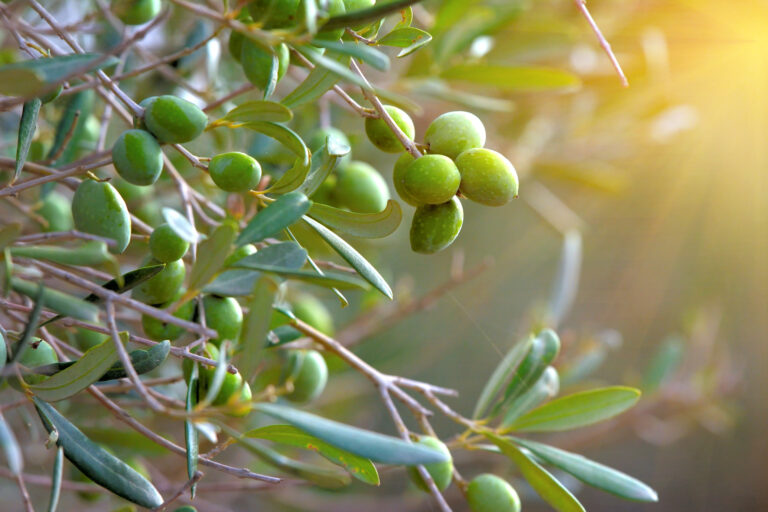
The olive tree belongs to the Oleaceae family and is native to the Mediterranean region, though it also thrives in regions such as South America, California, and Australia. The evergreen plant can grow up to 15 meters tall and live for several hundred years. The leaves are typically harvested between October and February. For cosmetic applications, the leaves are primarily processed, as they contain a high concentration of polyphenols—particularly oleuropein and hydroxytyrosol.
Extraction and Production
Olive leaf extract is obtained through a gentle extraction process using water-glycerin solutions at a low temperature (approx. 40 °C). This method preserves the active molecules such as oleuropein, hydroxytyrosol, flavonoids, and triterpenes (e.g., oleanolic acid), ensuring high efficacy. The production process is environmentally sustainable and allows for use in both conventional and organic cosmetic lines.
Benefits of Olive Leaf Extract in Cosmetics
- Antioxidant Effect
Olive leaf extract protects the skin from oxidative stress and free radicals. This is particularly important for preventing skin aging. Studies show that oleuropein and hydroxytyrosol can be more effective than vitamin E or BHT in protecting against lipid peroxidation.
- Anti-inflammatory Effects
The extract inhibits the activity of 5-lipoxygenase, thereby reducing the formation of pro-inflammatory leukotrienes—a key mechanism in inflammatory skin conditions.
- Antimicrobial properties
Oleuropein and oleanolic acid exhibit strong activity against bacteria and fungi, which is particularly beneficial for blemished skin or acne.
- Soothing & moisturizing
Thanks to the phytosterols it contains, olive leaf extract soothes the skin and supports moisture balance. Tannins also regulate sebum production.
Disadvantages and challenges
Despite the many advantages, there are also some disadvantages:
- Odor and color: The natural odor and the yellow-brownish color can pose aesthetic challenges for the formulation.
- Cost: High-quality extracts are more expensive to produce than synthetic alternatives.
- Instability: Polyphenols can degrade in the presence of light and oxygen—stabilization is required.
Efficacy and Recommended Concentration
Studies have shown that oleuropein exhibits antioxidant and anti-inflammatory effects at a concentration of 10–50 µM. In cosmetic formulations, a usage concentration of 0.5 to 5% is recommended, depending on the extract type and the desired effect.
Application ideas for cosmetic products
Olive leaf extract is ideal for a wide range of cosmetic applications:
Anti-aging cream: Protection against oxidative stress, strengthening of the skin barrier.
Soothing moisturizing mask: For sensitive or irritated skin.
Acne care: Antibacterial effect combined with sebum regulation.
Sunscreen products: Complement to UV filters to prevent light-induced skin aging.
After-sun care: Soothing and regeneration after UV exposure.
Eye cream: Protection against wrinkles thanks to the radical scavenger hydroxytyrosol.
Physicochemical properties – profile
INCI: Olea Europaea (Olive) Leaf Extract
CAS number: 8001-25-0
Appearance: Yellowish to brownish powder or hydroglyceric extract
Physical state: Solid (powder) / Liquid (extracted)
Solubility: In water (in hydroglyceric formulation)
Active ingredients: Oleuropein, hydroxytyrosol, oleanolic acid, flavonoids, phytosterols
Recommended usage concentration: 0.5 – 5% (depending on product type and intended use)
Special characteristics: Antioxidant, anti-inflammatory, antimicrobial, astringent
Conclusion
Olive leaf extract is a highly interesting ingredient for modern, effective, and nature-based cosmetics. The wide range of active components, such as oleuropein, hydroxytyrosol, and oleanolic acid, makes it a true all-rounder—whether in anti-aging products, anti-inflammatory care creams, or regenerating masks.
For cosmetic brands, this extract offers an excellent opportunity to position themselves in the growing market for natural active cosmetics. Cosmacon GmbH is here to support you as a development partner in creating customized products with olive leaf extract that impress with their effectiveness and skin compatibility. Let’s work together to design innovative concepts for your brand!
When products are needed quickly:
✨ Our partner Tojo Cosmetics offers innovative, active-ingredient-rich private label products—quickly available, high-quality, and perfect for brands that want to impress with passion and quality.
References:
De Cicco P, Ercolano G, Tenore GC, Ianaro A. Phytother Res. 2022 Oct;36(10):4002-4013.
Olive leaf-derived PPAR agonist complex induces collagen IV synthesis in human skin models.
Majewski GP, Singh S, Bojanowski K. Int J Cosmet Sci. 2021 Dec;43(6):662-676.
Verdú-Soriano J, de Cristino-Espinar M, Luna-Morales S, Dios-Guerra C, Caballero-Villarraso J, Moreno-Moreno P, Casado-Díaz A, Berenguer-Pérez M, Guler-Caamaño I, Laosa-Zafra O, Rodríguez-Mañas L, Lázaro-Martínez JL. J Clin Med. 2022 Feb 25;11(5):1260.
Machała P, Liudvytska O, Kicel A, Dziedzic A, Olszewska MA, Żbikowska HM. Molecules. 2022 Aug 12;27(16):5144.