
Palmitoyl Tripeptide-8
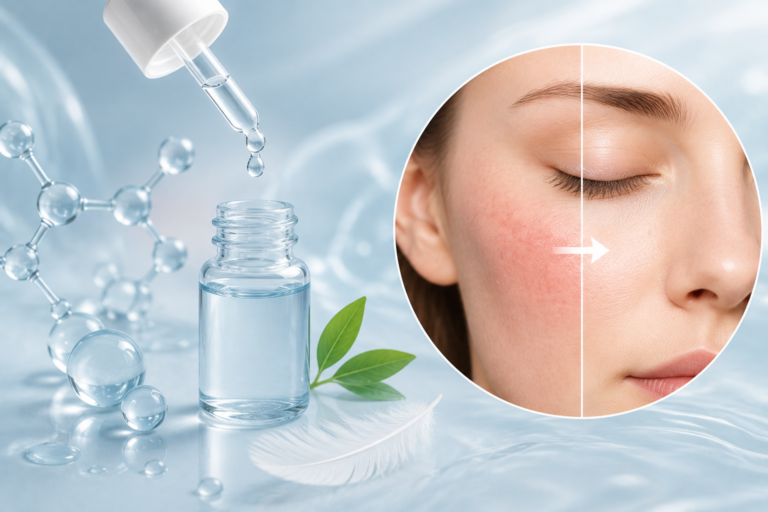
Palmitoyl Tripeptide-8: An Innovative Active Ingredient for Sensitive Skin
The skincare industry is constantly evolving to discover new, more effective ingredients that both soothe the skin and improve its resilience. One of the most promising peptides in this field is Palmitoyl Tripeptide-8. This active ingredient is known for its anti-inflammatory and skin-soothing properties and is particularly recommended for sensitive, irritated, or redness-prone skin. In this article, we take a detailed look at Palmitoyl Tripeptide-8, its physicochemical properties, advantages, disadvantages, and areas of application in cosmetics.
What is Palmitoyl Tripeptide-8?
Palmitoyl Tripeptide-8 is a synthetically produced tripeptide known for its skin-soothing and anti-inflammatory properties. It was specifically developed to soothe sensitive and stressed skin and strengthen the skin barrier. The active ingredient reduces skin reactions to external stimuli such as UV rays, environmental pollution, or chemical irritants.
Extraction and Production
The peptide is synthesized using biotechnology to ensure the highest purity and stability. Production typically involves peptide synthesis, in which various amino acids are combined in a specific sequence. This method ensures that the active ingredient is reproducible and can be specifically tailored to address skin concerns.
Mechanism of Action of Palmitoyl Tripeptide-8
The active ingredient works by interrupting the neurogenic inflammatory signal that leads to redness and skin irritation. Specifically, Palmitoyl Tripeptide-8 promotes the production of proopiomelanocortin (POMC), which is converted into anti-inflammatory neurotransmitters such as α-MSH (melanocyte-stimulating hormone). These molecules reduce skin irritation and help regenerate the skin barrier. Studies have shown that this mechanism can lower the temperature of irritated skin by up to 78%.
Benefits of Palmitoyl Tripeptide-8
- Anti-inflammatory – Reduces skin redness, swelling, and irritation.
- Skin-soothing – Alleviates symptoms of sensitive skin such as itching and burning.
- Strengthens the skin barrier – Supports skin regeneration and improves resistance to external factors.
- Suitable for all skin types – Especially recommended for sensitive and reddened skin.
- Fat-soluble property – Can be easily incorporated into cosmetic formulations.
- Versatile – Effective in serums, creams, emulsions, and other skincare products.
Disadvantages of Palmitoyl Tripeptide-8
- Cost-intensive – High-quality peptides are more expensive than many conventional ingredients.
- Limited long-term studies – Although initial studies are promising, long-term studies on its effects on various skin types are still lacking.
- Dependence on formulation – Its effectiveness depends heavily on how it is incorporated into cosmetic products.
Efficacy and Recommended Concentration
Studies have shown that the peptide can be effective even at concentrations ranging from 0.000001% to 0.5%. In tests using a concentration of 4 ppm, a significant reduction in redness and skin irritation was observed after 28 days.
Another important finding from the research is the peptide’s ability to significantly lower the temperature of irritated skin, which points to its anti-inflammatory effect.
Physicochemical Properties of Palmitoyl Tripeptide-8
INCI Name: Palmitoyl Tripeptide-8
CAS Number: 936544-53-5
Molecular Formula: Not publicly available
Appearance: White to cream-colored powder
Solubility: Liposoluble (fat-soluble)
Melting point: Not specified
Recommended concentration: 0.0005–0.01%
Function: Anti-inflammatory, skin-soothing, skin-protective
Applications: Emulsions, serums, creams, facial oils
Applications in cosmetics
The peptide is particularly suitable for products designed to soothe and regenerate sensitive skin. Here are a few examples:
- Soothing face creams
Perfect for people with rosacea, atopic dermatitis, or sensitive skin. A formulation containing the peptide can alleviate redness and irritation.
- After-sun products
Since UV rays can trigger inflammatory reactions in the skin, this active ingredient is excellent for relieving sunburn and soothing the skin after intense sun exposure.
- Sensitive serums for stressed skin
A serum containing the peptide can serve as a daily skincare treatment for sensitive skin types to prevent irritation and redness.
- Anti-Aging Products for Sensitive Skin
Since many anti-aging ingredients (e.g., retinol) are too harsh for sensitive skin, the peptide can be a gentle alternative that helps prevent skin aging without irritating the skin.
- Skincare for Men After Shaving
Since the skin is often irritated after shaving, a balm or aftershave containing the peptide can help reduce redness and soothe the skin.
Conclusion: Innovation for Sensitive Skin
Palmitoyl Tripeptide-8 is a highly effective yet gentle active ingredient that is particularly suitable for sensitive, irritated, or inflamed skin. Thanks to its anti-inflammatory and skin-soothing properties, it can be used in many cosmetic formulations—from soothing serums to after-sun products.
Cosmacon GmbH can help develop highly effective yet gentle cosmetics by incorporating the peptide into innovative skincare products. Whether for a luxurious anti-redness skincare line or a dermatologically tested sensitive skin series—this active ingredient allows for the creation of unique and high-performance products for every skincare routine.
If you’d like to strengthen your brand with innovative, high-quality cosmetic products, we’d be happy to assist you. Contact us!
If you need something quickly:
✨ Our partner Tojo Cosmetics offers innovative, active-ingredient-rich private-label products—quickly available, high-quality, and perfect for brands that want to impress with passion and quality.