Natural dyes
Colors from nature – beauty in its purest form
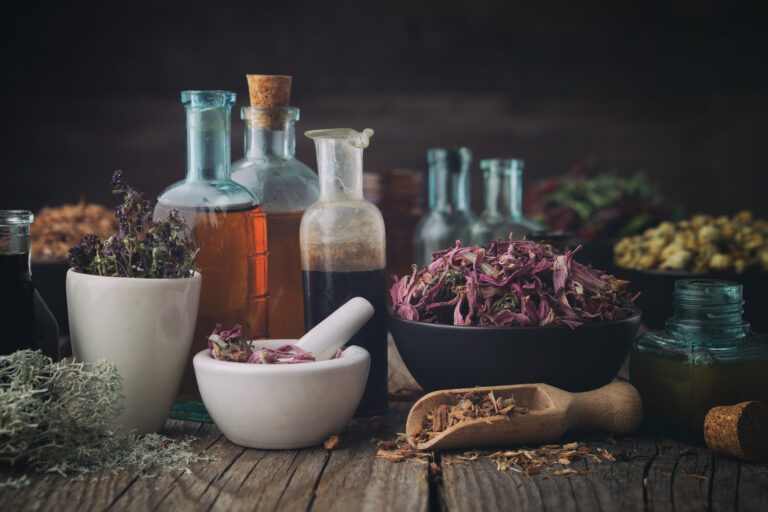
In the world of cosmetics, it is not only the effect that plays a central role, but also the appearance. Colors influence our perception and our well-being – and they contribute significantly to the attractiveness of a product. However, more and more consumers today want natural ingredients – even when it comes to coloring. The good news is that nature offers an amazing variety of coloring plant substances that not only look beautiful but also have nourishing and protective properties.
In this article, we present a selection of natural colorants that are playing an increasingly important role in modern cosmetic formulations. From intense violet to sunny yellow to deep blue—discover the variety of plant-based colors and their benefits for skin care, decorative cosmetics, and more.
Açaí
- INCI: Euterpe oleracea extract
- Solubility: hydrophilic (extract), lipophilic (oil)
- Main chemical pigments: cyanidin-3-rutinoside and cyanidin-3-glucoside
- Color: violet (extract), green (oil)
Açaí berries are dark purple in color. Their main chemical components are anthocyanins, including cyanidin-3-rutinosideand cyanidin-3-glucoside, which are the predominant pigments in açaí fruit. The berries also contain various flavones and flavonol glycosides, flavanol derivatives, and phenolic acids. An oil of dark green color is extracted from the flesh of the fruit of the açaí palm, which grows in Brazil, by pressing.
Alkanet
- INCI: Alkanna tinctoria root extract
- Solubility: hydrophobic
- Main chemical pigment: alkannin
- Color: red/violet
Alkanet belongs to the borage family. The roots provide a dark red pigment. Although the flowers are blue, the plant has dark red roots that appear black on the outside but are blue-red on the inside and whitish in the middle. The most important chemical component of the madder root is alkannin, which is soluble in alcohol, ether, and oils but not in water. However, madder is toxic when ingested (hepatotoxic) and should therefore not be used in formulations such as lipsticks.
Annatto
- INCI: Bixa orellana seed extract
- Solubility: lipophilic (bixin), hydrophilic (norbixin)
- Main chemical dyes: Norbixin, Bixin
- Color: Orange / Red
Annatto is an orange-red dye obtained from the seeds of the achiote shrub (Bixa orellana). The reddish-orange annatto dye comes mainly from the resin layer that covers the seeds. The yellow to orange dye is formed by the carotenoids bixinand norbixin. Through saponification, the fat-soluble bixin is converted into the water-soluble norbixin. It is very rare for a carotenoid to have two types of solubility, as is the case with the annatto dye. The seeds contain 4.5–5.5% dye, 70–80% of which is bixin. Unlike the well-known beta-carotene, annatto dyes are not precursors of vitamin A. The higher the proportion of norbixin in the annatto pigment, the stronger the yellow color; the higher the proportion of bixin, the stronger the orange color.
Avocado
- INCI: Persea gratissima oil
- Solubility: lipophilic (oil)
- Main chemical pigment: lutein
- Color: green/yellow
Unrefined avocado oil is bright green and so heavy that it quickly hardens at cooler temperatures. The skin, flesh, and oil contain carotenoids and chlorophylls such as lutein, alpha-carotene, beta-carotene, neoxanthin, violaxanthin, zeaxanthin, antheraxanthin, chlorophylls a and b, and pheophytins a and b.
The most significant pigment in avocado oil is lutein. Lutein is one of 600 known naturally occurring carotenoids. It is produced only by plants and, like other xanthophylls, is abundant in green vegetables such as spinach, kale, and avocado.
Beetroot
- INCI: Beta vulgaris (beet) extract
- Solubility: hydrophilic
- Main chemical pigment: betanin
- Color: red/pink
Beetroot is a well-known pigment for water-based natural cosmetic products. The main chemical component is betanin, which decomposes when exposed to light, heat, or oxygen. When beetroot powder is dissolved in glycerin, the result is a bright pink or red glycerite that can be used in emulsions, water-based gels, or facial toners. Since beetroot is water-soluble, the dye cannot be used in oil macerations.
Blue tansy
- INCI: Tanacetum annuum flower oil
- Solubility: lipophilic (essential oil)
- Main chemical dye: chamazulene
- Color: blue
Blue tansy belongs to the Asteraceae family and is related to chamomile. Chamomile contains chamazulene. This substance is also found in blue tansy: 17-38% chamazulene in the essential oil. It is obtained by steam distillation. The essential oil of blue tansy can be used to color formulations blue. It should not be confused with tansy oil (Tanacetum vulgare).
Buriti
- INCI: Mauritia flexuosa fruit oil
- Solubility: lipophilic (the oil)
- Main chemical pigment: beta-carotene
- Color: red/orange
Buriti is a type of palm tree that grows mainly in the Amazon region. Its fruits resemble chestnuts. The yellow-orange pulp is used to make juice and extract oil. The oil is edible and is used in cooking and frying. Can you imagine frying chips in this oil? The oval seeds of the fruit are also edible.
Buriti oil contains over 70% oleic acid, which is similar to acai oil. Buriti has an incomparably high beta-carotenecontent. No other natural source surpasses the fruit in its beta-carotene concentration, not even carrots: 100g of carrots contain 6.6 mg of beta-carotene, while 100g of buriti pulp contains 30g of beta-carotene. The concentration is even higher in buriti oil: 330 mg of beta-carotene in 100g.
Blue clitoria
- INCI: Clitoria ternatea flower extract
- Solubility: hydrophilic
- Main chemical pigment: delphinidin
- Color: violet/blue
The flowers of the blue clitoria have a striking blue color and are often used as a pigment in organic cosmetics. They contain anthocyanins,
p-coumaric acid, and ferulic acid. In addition to anthocyanins, the petals of blue clitoria contain many flavonoids, such as p-coumaric acid and ferulic acid. The anthocyanins in the petals of blue clitoria are derivatives of the anthocyanin delphinidin.
Calendula
- INCI: Calendula officinalis flower extract
- Solubility: hydrophobic
- Main chemical pigment: flavoxanthin
- Color: orange
Carotenoids are primarily responsible for the yellow to red colors of the flowers. The wide spectrum of flower colors in calendula is due to the diverse combinations of carotenoids. Nineteen carotenoids have been discovered in extracts from the petals of orange and yellow calendula varieties. The most important carotenoid in calendula petals is flavoxanthin;
which is responsible for the orange color of calendula flowers. Other carotenoids in calendula are lycopene and lutein. As a food additive, flavoxanthin is used as a colorant with the E number E161a, but it is not approved in the EU or the US.
Carrot
- INCI: Daucus carota sativa root extract
- Solubility: hydrophobic
- Most important chemical colorant: Beta-carotene
- Color: Orange
The term carotenoids derives from the fact that they are the characteristic colorants in carrots, Daucus carota. They are among the most common and important colorants in living organisms. Carotenoids give many plants their color, including carrots. Alongside chlorophylls, carotenoids form the largest group of pigments found in nature. The main pigment in carrots is a beta-carotene derivative. Carrot macerated in oil is very important in the production of organic skin care products and gives them a beautiful orange color.
Chamomile (true)
- INCI: Matricaria recutita flower oil
- Solubility: lipophilic (essential oil)
- Main chemical pigment: chamazulene
- Color: blue
This type of chamomile, also known as Hungarian or blue chamomile, produces an essential oil that is deep blue due to its high chamazulene content (2-5%). The essential oil also contains a high percentage of alcohols, such as bisabolol. Chamazulene is only found in the essential oil of Roman and true chamomile. It is extracted from a substance called matricin during the distillation process. This substance gives the essential oil of true chamomile its bright blue color. During the distillation of Roman chamomile essential oil, the formation of chamazulene is often prevented, as the industry prefers this oil to have a pale straw color. The anti-inflammatory properties of both types of chamomile are based on chamazulene.
Dyer’s reseda
- INCI: Reseda luteola extract
- Solubility: hydrophobic
- Main chemical dye: luteolin
- Color: yellow
Luteolin gives dyer’s reseda (also known as yellowweed, yellow herb, or dyer’s woad) its color. Dyer’s reseda is one of the oldest plants used for yellow dyeing and is native to many parts of Central Europe. The leaves and seeds are used, as they contain more dye than the stems. Infusions of the plant are suitable for treating wounds.
Elderberry
- INCI: Sambucus nigra extract
- Solubility: hydrophilic (extract)
- Main chemical dye: cyanidin 3-glucoside
- Color: red/violet
Elderberry has a similar content of chemical pigments and natural dyes as acai berry. This is not surprising, as they are very similar in their dark purple color. Their most important dye is cyanidin-3-glucoside, a highly water-soluble anthocyanin.
Hemp
- INCI: Cannabis sativa oil
- Solubility: lipophilic
- Most important chemical dye: Chlorophyll
- Color: Green
The hemp oil has an intense green color due to its chlorophyll content. Hemp oil extracted using supercritical CO2 contains three times as much chlorophyll and four times as much carotene as oil extracted using cold pressing (Aladić, et al., 2014) . Chlorophyll is soluble in alcohol and oil, but not in water.
Henna
- INCI: Lawsonia inermis extract
- Solubility: hydrophobic
- Main chemical dye: Lawson
- Color: red/orange
Since ancient times, henna has served as a natural dye for skin, hair, fingernails, and textiles like silk, wool, and leather. Henna contains the dye Lawson (2-hydroxy-1,4-naphthoquinone), also known as henna tannic acid. The red-orange dye is found in the leaves of the henna plant (Lawsonia inermis) and also occurs in the flowers of the water hyacinth (Eichhornia crassipes).
Hibiscus
- INCI: Hibiscus rosa-sinensis flower extract
- Solubility: hydrophilic
- Main chemical dyes: cyanidin-3-sophoroside, cyanidin-3-sambubioside, delphinidin-3-sambubioside
- Color: red/pink
The red pigments in the red flowers of the rose mallow plant are anthocyanins, which are widely used as colorants. The petals of the species Hibiscus rosa-sinensis mainly contain the chemical pigment cyanidin-3-sophoroside. Extracts are also obtained from the hibiscus variety Roselle (Hibiscus sabdariffa), which probably originates from West Africa. The most important anthocyanins in Hibiscus sabdariffa are cyanidin-3-sophoroside and delphinidin-3-sophoroside.
Indigo
- INCI: Indigofera tinctoria extract
- Solubility: Hydrophilic
- Main chemical dye: Indigotin
- Color: Blue / Mauve
The blue dye is obtained from the fermented leaves of the indigo plant. It produces a blue to mauve dye called indigotin(indigoid structure). The dye from the plant is also known as Pigmentum indicum. It is a paste-like substance that is secreted during the fermentation of the plant material. It is processed into cakes, which are then finely ground. Upon exposure to air, the powder develops its characteristic blue color.
The indigo dye is a derivative, indican, a glucoside of several Indigofera species, which is converted into blue indigotin by an enzymatic process. The dye is very colorfast; and is used to produce a number of dyes with stabilizers and other components. Today, almost all commercially used indigo dyes are produced synthetically (Dweck, 2002).
Iris
- INCI: Iris germanica extract
- Solubility: hydrophilic
- Main chemical dyes: mangiferin, delphinidin
- Color: violet / blue / green
The iris extract obtained from the roots of Iris germanica (blue iris) contains high concentrations of isoflavones. The mangiferin contained in iris is considered one of the essential co-pigments of iris flowers; in interaction with anthocyanin (a delphinidin glycoside), it forms a whole spectrum of violet, mauve, and blue tones.
In earlier times, Iris germanica was used to produce iris green together with the petals and other plants. To prepare the dye, the juice was simply pressed from the flowers and then mixed with an aluminum hydroxide base (alum). The green color came from the petals of the purple iris. The dye was initially purple, but turned blue with the addition of alum and green with the addition of calcium.
Madder
- INCI: Rubia tinctorum extract
- Solubility: slightly hydrophilic
- Main chemical dyes: Alizarin and purpurin
- Color: Red / Violet
Madder is native to Mediterranean countries and was cultivated on a large scale in the past for the production of dyes. The genus name Rubia means red. This plant is the source material for permanent red dyes. The 2–3-year-old rootstock of the plant is used medicinally and retains its red color even after drying. Its components include anthraquinone glycosides, which are two red chemical compounds from the roots and tubers: alizarin and purpurin.
Monascus purpureus
- INCI: Monascus extract
- Solubility: hydrophilic
- Main chemical dye: Rubropunctamine
- Color: Red/violet
Monascus purpureus is a purple mold. During its growth, it breaks down starch into several metabolic products, including dyes as secondary metabolites. The colors available to date are violet and red. The most important chemical dye in Monascus purpureus is rubropunctamine, which accounts for 57-87% of the total dyes formed.
Nettle
- INCI: Urtica dioica leaf extract
- Solubility: lipophilic
- Most important chemical pigment: chlorophyll
- Color: green
Nettle leaves contain caffeic acid, chlorogenic acid, abundant chlorophyll
and other pigments. Depending on the location of the plant, in the sun or in the shade, dried nettle leaves contain almost 5mg of chlorophyll per gram. Plants that grow in the shade have a higher chlorophyll and carotenoid content. Chlorophyll is fat-soluble.
Paprika
- INCI: Capsicum annuum extract
- Solubility: lipophilic
- Main chemical pigments: capsanthin, capsorubin
- Color: red/violet
Paprika contains a mixture of carotenoids. Capsanthin and capsorubin are the main components responsible for the red color. Red paprika has a high content of carotenoid pigments such as capsanthin, capsorubin, carotene, lutein, zeaxanthin, and cucurbitaxanthin. Paprika red is used not only as a pigment but also for its stimulating effects in cosmetic creams, oils, emulsions, and sports massage products. Since capsanthin generates heat (anyone who has ever eaten a chili pepper knows this!), care must be taken when applying it to the skin and low concentrations (<0.1%) must be used in cosmetic products.
Pomegranate
- INCI: Punica granatum fruit extract
- Solubility: hydrophilic
- Main chemical pigment: punicalagin
- Color: Red/purple
Although it is mainly the water-soluble anthocyanins that give pomegranate juice its beautiful red/purple color, the dyes are mainly extracted from the inedible skin of the fruit. The main components are punicalagin, punicalin, gallic acid, and ellagic acid. In addition, there are alkaloids such as isopelletierine. Pomegranate dye and many other natural dyes have strong antimicrobial properties due to their high tannin content.
Red cabbage
- INCI: Brassica oleracea leaf extract
- Solubility: hydrophilic
- Main chemical dyes: cyanidin-3-glucoside and delphinidin-3-glucoside
- Color: pink/purple
Red cabbage, Brassica oleracea L. var. capitata, is known for its pink/purple color. The main components of the water-soluble dye used as a natural coloring agent are anthocyanins. Red cabbage contains eight anthocyanins, including cyanidin-3-glucoside and delphinidin-3-glucoside.
Red clover
- INCI: Trifolium pratense extract
- Solubility: Hydrophilic
- Main chemical dye: Formononetin
- Color: Golden yellow
The Red clover contains abundant isoflavones, including a natural dye called formononetin (7-hydroxy-4′-methoxyflavone), which is a dull golden yellow. Formononetin is estrogenic in vitro and in vivo. (The estrogen-like effects of formononetin have been studied in numerous scientific papers on sheep.) However, little is known about when red clover is best harvested to obtain its maximum isoflavone content.
Red sandalwood
- INCI: Pterocarpus santalinum extract
- Solubility: hydrophobic
- Main chemical dye: santalin
- Color: red
The red dye from the red sandalwood tree or Pterocarpus santalinum is a complex molecule called santalin. Numerous forms are derived from the basic structure, all in vibrant red colors. The stability of this red is very good compared to other red dyes. It has been used for centuries. The chemical components of red sandalwood provide a red dye (santalin A or santalin B) or a yellow dye (santalin Y).
Rosehip
- INCI: Rosa canina fruit oil
- Solubility: lipophilic
- Main chemical dyes: lycopene, beta-carotene
- Color: red/orange
The reddish color of rosehip oil obtained by cold pressing is due to its carotenoid content. Oil extracted using solvents, on the other hand, is yellowish; this could be because the organic solvent extracts pigments and other substances from the seeds and/or because the red dye is broken down by the high temperatures used in oil extraction. Rose hips contain nine carotenoids: three carotenes (lycopene, ζ-carotene, β-carotene) and six xanthophylls (neoxanthin, trans-violaxanthin, cis-violaxanthin, 5,6-epoxylutein, lutein, β-cryptoxanthin). This makes rose hips one of the fruits with the greatest variety and highest concentration of carotenoid pigments, especially lycopene and beta-carotene.
Safflower
- INCI: Carthamus tinctorius seed oil
- Solubility: lipophilic (carthamine), hydrophilic (carthamidine)
- Main chemical pigment: Carthamine
- Color: Yellow/red
Safflower contains the yellow-orange pigment carthamine. However, closer examination revealed two natural pigments, one yellow and one red. The seeds provide an oil, while the flowers provide a yellow pigment. Carthamine is a water-insoluble red dye, while carthamidine is a water-soluble yellow dye.
Saffron
- INCI: Crocus sativus extract
- Solubility: hydrophilic
- Most important chemical dyes: crocin, crocetin, picrocrocin, riboflavin
- Color: Yellow
The dried stigmas and tips of the styles of Crocus sativus contain crocins,
crocetins, picrocrocins, and safranal. The dyes are sensitive and should be protected from light. The stigmas of C. sativusare rich in riboflavin, a yellow dye, and vitamins. Saffron also contains crocin, which is the main source of the yellow-red pigment. α-Crocin is a carotenoid pigment and is primarily responsible for the golden yellow-orange color of saffron. The bitter glycoside picrocrocin gives saffron its taste and safranal gives it its typical aroma. Crocus sativus should not be confused with the poisonous autumn crocus, Colchicum autumnale.
Sea buckthorn
- INCI: Hippophae rhamnoides fruit oil
- Solubility: lipophilic
- Main chemical pigments: beta-carotene, zeaxanthin, lycopene
- Color: orange
It is mainly the carotenoids that give sea buckthorn berries their typical color. These substances are particularly concentrated in the oil of the pulp. However, the total carotenoid content varies greatly depending on the location and variety of sea buckthorn (300–2000 mg/100 g). The carotenoids present in the pulp oil are mainly beta-carotene, zeaxanthin, and lycopene.
Spinach
- INCI: Spinacia oleracea leaf extract
- Solubility: lipophilic
- Main chemical pigment: chlorophyll
- Color: green/yellow
Spinach leaves contain the pigments chlorophyll a, chlorophyll b, and beta-carotene, as well as smaller amounts of other pigments such as xanthophylls. As with other green leafy vegetables, only the green of the chlorophylls is visible in spinach because they mask the red, orange, and yellow of the carotenoids. Blanching spinach reduces its chlorophyll content. Chlorophyll is fat-soluble.
Spirulina
- INCI: Spirulina platensis extract
- Solubility: hydrophilic
- Main chemical pigments: Phycocyanin and phycoerythrin
- Color: Blue/green
Spirulina is the collective term for a biomass of cyanobacteria (blue-green algae). There are two types: Arthrospira platensis and Arthrospira maxima, which produce the pigments phycocyanin and phycoerythrin. Phycocyanin is a bluish pigment that absorbs orange and red light. Phycoerythrin is a reddish pigment. Microalgae-based pigments are currently in high demand on the market, and spirulina is extremely popular!
St. John’s wort
- INCI: Hypericum perforatum flower extract
- Solubility: lipophilic and hydrophilic
- Main chemical pigment: hypericin
- Color: red
Hypericin is a fluorescent red pigment found in St. John’s wort. The bright yellow flowers produce a dark red oil when macerated. If the flowers are immersed in oil for a period of time, the oil turns deep red. It is used in anhydrous or emulsified formulations. Alongside hyperforin, hypericin is one of the best-known chemical components in St. John’s wort. Hypericin is said to have antibiotic, antiviral, and antidepressant effects. It has a special chemical structure, as one half of the molecule is hydrophilic and the other is hydrophobic.
Tomato
- INCI: Solanum lycopersicum extract
- Solubility: lipophilic
- Main chemical pigment: lycopene
- Color: red/orange
The main pigments in tomatoes are lycopene, α- and β-carotene, lutein, zeaxanthin, and b-cryptoxanthin. Lycopene is a bright red carotene and carotenoid pigment. The phytochemical compound is found in tomatoes and red fruits and vegetables, such as red carrots, watermelons, gac fruit, and papayas. Lycopene is used as a colorant in tomato-based sauces. It is insoluble in water and can only be dissolved in organic solvents and oils. It accounts for 80–90% of the total carotenoid content in ripe red tomatoes. Beta-carotene, the yellow pigment in carrots, is a lycopene isomer.
Turmeric
- INCI: Curcuma longa extract
- Solvent: hydrophobic
- Main chemical pigment: curcumin
- Color: yellow/orange
Turmeric is also known as Indian saffron. The dried and fresh rhizome of the plant Curcuma longa is used. The rhizome has been used for thousands of years as a medicine, spice, and pigment. It’s chemical component curcumin provides a color spectrum ranging from yellow to dark orange. Turmeric contains about 5% volatile oils, resins, and yellow dyes, the curcuminoids. In terms of chemical composition, curcumin, which is responsible for the yellow color of the natural dye, accounts for 50-60%.
Black walnut
- INCI: Juglans nigra shell extract
- Solubility: lipophilic
- Main chemical dye: juglone
- Color: orange/brown
The black walnut fruit contains juglone (5-hydroxy-1,4-naphthoquinone), plumbagin
(yellow quinone pigments), and tannin. It produces an orange-brown dye. The liquid dye from the inner shell darkens over time, while the outer shell changes color from green to black when exposed to light. Juglone is an isomer of Lawson, which is the coloring compound in the leaves of the henna shrub.
Woad
- INCI: Isatis tinctoria leaf extract
- Solubility: hydrophilic
- Main chemical dye: indigotin
- Color: blue/indigo
Dyer’s woad is a plant that produces a blue dye. The chemical name of the extracted dye is indigotin; it is similar to the dye extracted from the “true indigo plant,”
Indigofera tinctoria, but less concentrated. In parts of the USA, woad is considered an invasive species.
Yarrow
- INCI: Achillea millefolium oil
- Solubility: lipophilic (essential oil)
- Most important chemical dye: chamazulene
- Color: blue
Similar to blue tansy and chamomile, some yarrow essential oils may contain chamazulene, which gives the oil a dark blue color. Some yarrow essential oils are dark blue and contain over 15% chamazulene, which is well suited as a natural dye in skin care formulations.
During steam distillation of the herb, the component matricin is converted into azulene or chamazulene, substances that are not present in the original plant. Azulene and chamazulene are produced by the heat during steam distillation.
Conclusion: Naturally beautiful with the power of colors
Natural dyes not only offer a wide range of colors, but also valuable additional cosmetic benefits – from antioxidant to anti-inflammatory properties. Whether blue from chamazulene, orange from beta-carotene, or violet from anthocyanins: nature provides an impressive variety of effective pigments for modern, sustainable cosmetic products.
Cosmacon GmbH supports you as an innovative development partner in formulating effective cosmetic products with natural dyes. Our expertise in natural cosmetics and functional plant extracts helps your brand position itself sustainably on the market with high-quality products. Contact us – together we will bring color to your cosmetics line!
When you need it fast:
✨ Our partner Tojo Cosmetics offers innovative, active ingredient-rich private label products – quickly available, high-quality, and perfect for brands that want to impress with passion and quality.