Magnolia extract – the natural shield against skin ageing and inflammation
Introduction
In the world of cosmetic products, natural ingredients that can combat skin problems in a targeted and gentle manner are becoming increasingly popular. One of these active ingredients has proven particularly effective against skin ageing and inflammation in recent years: magnolia extract. This multi-talented plant offers much more than just an antibacterial effect – it soothes, protects and rejuvenates the skin in a natural way.
Origin and occurrence
Magnolia extract is obtained from the bark of Magnolia officinalis, a tree from the Magnoliaceae family that is native to China, Japan and Korea. The plant can grow up to 20 metres high, prefers temperate, humid climates and thrives best in well-drained, nutrient-rich soil. The bark is mainly harvested from older trees, typically over ten years old, when the active ingredient content is at its highest.
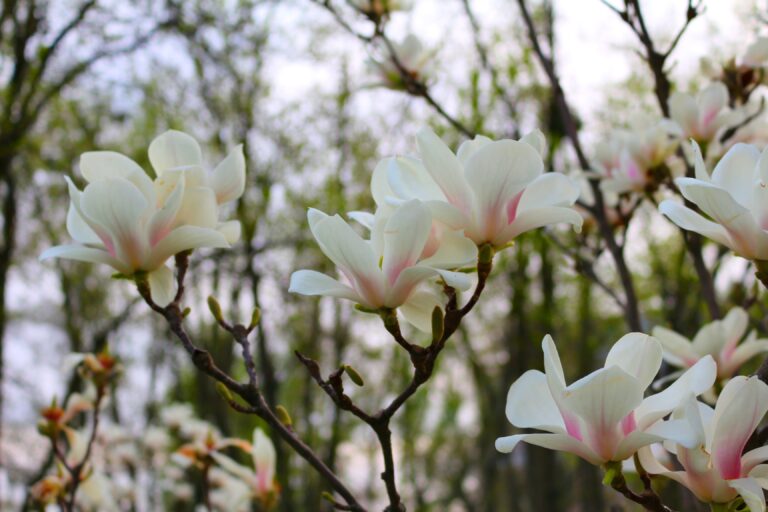
Magnolia officinalis mainly flowers between April and June. Its impressive, fragrant flowers are not only beautiful to look at, but also express the vitality of this traditional medicinal plant.
Production of magnolia extract
Extraction is carried out using a gentle process, usually with ethanol-water mixtures or CO₂ extraction. This isolates the two most important bioactive ingredients – honokiol and magnolol. These lignans have a broad spectrum of activity, particularly in the areas of anti-inflammation and antioxidant defence.
Benefits of magnolia extract
- Anti-inflammatory & anti-ageing
Magnolia extract specifically targets the process of ‘inflamm-aging’ – a chronic, underlying inflammation that increases with age and leads to wrinkles and sagging skin. Honokiol and magnolol inhibit the activation of the inflammatory factor NF-κB, thereby reducing the production of inflammatory messengers such as TNF-α and IL-8.
- Antimicrobial
Magnolia extract has strong antimicrobial properties against bacteria such as Staphylococcus aureus, Propionibacterium acnes and Streptococcus mutans – typical pathogens in acne, tooth decay and skin irritations.
- Anti-redness
In studies, magnolia extract significantly reduced redness in the face and improved skin elasticity.
- Versatile application
In addition to cosmetic applications, magnolia extract is also used in chewing gum and sweets to combat bad breath – with impressive results.
Applications in cosmetics
Magnolia extract is suitable for:
- Anti-ageing care
- Soothing care for sensitive or reddened skin
- Acne treatment
- Dental and oral care products
Recommended concentration: 0.1–0.5% in emulsions or gel formulations.
Fact sheet Magnolia extract
Appearance: White to ivory-coloured powder
Molecular components: Honokiol (C18H18O2), magnolol (C18H18O2)
Physical state: Solid
Melting point: Approx. 102–106 °C
Solubility: Soluble in alcohol, poorly soluble in water (liposomal preparation recommended)
INCI name: Magnolia Officinalis Bark Extract
Alternative names: Magnolia Bark Extract, Honokiol, Magnolol
Relevant cosmetic ingredients
Honokiol
- Appearance: White crystalline powder
- Molecular formula: C18H18O2
- Physical state: Solid
- Melting point: approx. 86–88 °C
- INCI name: Honokiol
- Effect: Anti-inflammatory, antioxidant, antimicrobial
Magnolol
- Appearance: White powder
- Molecular formula: C18H18O2
- Physical state: Solid
- Melting point: approx. 102–106 °C
- INCI name: Magnolol
- Effect: Similar to honokiol, with additional soothing and anti-allergic properties
We enjoy working with these magnolia-containing active ingredients:
| Handelsname | INCI | Hersteller | Bemerkung | |
|---|---|---|---|---|
| MAXnolia | Magnolia Officinalis Bark Extract (and) Vitis Vinifera (Grape) Seed Extract (and) Tocopherol (and) Lecithin (and) Maltodextrin (and) Aqua | TRI-K Industries | ||
| Phytodefense CLR | Glycine Soja (Soybean) Oil (and) Dicaprylyl Ether (and) Magnolia Grandiflora Bark Extract (and) Lauryl Alcohol | CLR Chemisches Laboratorium Dr. Kurt Richter GmbH | ||
| MAXnolia | Magnolia Officinalis Bark Extract | Mibelle AG Biochemistry | ||
| HerbEx MagnoSoother | Butylene Glycol (and) Magnolia Kobus Bark Extract | Bio Spectrum | ||
| Akoactive Garuda | Caprylic/Capric Triglyceride (and) Orchid Extract (and) Magnolol | Akott Group | ||
| Cutipure CLR | Aqua (and) Taraktogenos Kurzii Seed Oil (and) Nigella Sativa Seed Oil (and) Leptospermum Scoparium Branch/Leaf Oil (and) Potassium Lauroyl Wheat Amino Acids (and) Palm Glycerides (and) Capryloyl Glycine (and) Magnolia Grandiflora Bark Extract | CLR Chemisches Laboratorium Dr. Kurt Richter GmbH | ||
| Naturotics Plus | Pentylene Glycol (and) Camellia Sinensis Leaf Extract (and) Chamomilla Recutita (Matricaria) Flower Extract (and) Thujopsis Dolabrata Branch Extract (and) Sorbitan Caprylate (and) Magnolia Kobus Bark Extract (and) Salix Alba (Willow) Bark Extract (and) Levulinic Acid | Bio Spectrum | ||
| Cosphaderm MultiMeg | Glyceryl Caprylate, Pentylene Glycol, Magnolia Officinalis Bark Extract | Cosphatec |
Conclusion
Magnolia extract is a versatile, natural active ingredient with excellent properties for cosmetic applications. It specifically combats inflammation, supports skin regeneration and offers protection against environmental skin ageing. Magnolia extract is a highly effective ingredient, especially for anti-ageing products and care for sensitive skin.
We would be happy to advise you on the selection of active ingredients and the formulation of innovative, effective cosmetic products based on magnolia extract – for a strong, trustworthy brand positioning and visible skincare results.
Literature:
Poivre M, Duez P.J Zhejiang Univ Sci B. 2017 Mar.;18(3):194-214
Wu L, Chen C, Cheng C, Dai H, Ai Y, Lin C, Chung Y.Biomed Res Int. 2018 Nov 15;2018:5201786
Safety and Toxicology of Magnolol and Honokiol.
Sarrica A, Kirika N, Romeo M, Salmona M, Diomede L.Planta Med. 2018 Nov;84(16):1151-1164