Hericium fungus – Neuroactive Mycotherapy for the Skin Barrier, Stress Balance, and Sensitive Skin
Hericium fungus in Modern Skincare
Hericium is one of the most fascinating medicinal mushrooms in modern mycotherapy. While many medicinal mushrooms are primarily known for their antioxidant or immunomodulatory properties, this particular mushroom is increasingly becoming the focus of scientific research due to its influence on skin-nerve communication, stress resilience, and the gut-skin axis.
Particularly in the field of neurocosmetics, Hericium opens up new perspectives for innovative skincare concepts. Modern consumers are increasingly seeking solutions for sensitive, stressed, and reactive skin conditions, where traditional skincare approaches often reach their limits. Here, the medicinal mushroom can provide interesting insights.
Botanical and mycological classification
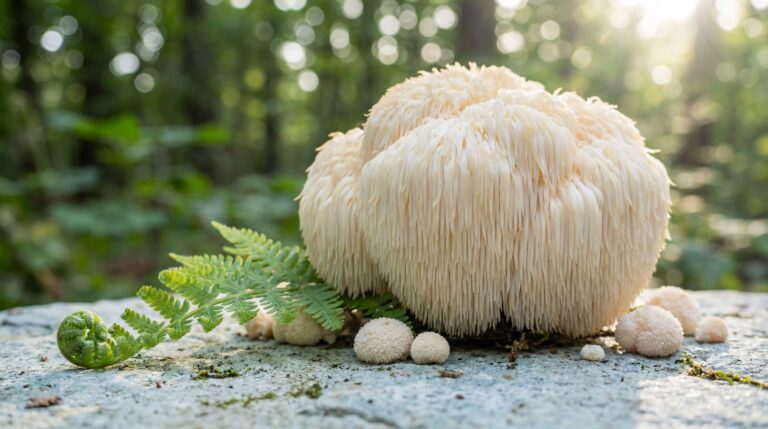
The scientific name is Hericium erinaceus. The mushroom belongs to the Hericiaceae family and is easily recognizable by its characteristic long, drooping spines. In nature, it grows primarily on deciduous trees, but today it is mostly cultivated under controlled conditions to ensure reproducible active ingredient profiles and consistent quality.
For cosmetic applications, both fruiting body extracts and fermented mycelium extracts are used. The active ingredients and their concentrations vary depending on the manufacturing process.
Bioactive ingredients
The distinctive feature of Hericium fungus lies in its unique spectrum of bioactive compounds.
The most important ingredients include:
- Erinacine (primarily in the mycelium)
- Hericenone (primarily in the fruiting body)
- β-glucans
- Polysaccharides
- Sterols
- Phenolic compounds
- Amino acids
- Trace elements
It is precisely the interaction of these ingredients that makes the mushroom interesting for modern cosmetic formulations.
Why neurocosmetics are gaining increasing importance
The skin is far more than just an outer protective layer. It is a highly complex neuroimmunological organ that communicates continuously with the nervous system.
Stress, lack of sleep, or emotional strain can directly affect the skin and contribute to symptoms such as:
- Redness
- Tightness
- Itching
- Barrier dysfunction
- Increased sensitivity
.
This is why so-called neurocosmetics are gaining increasing importance. The goal is to positively influence communication between the skin, nervous system, and immune system, thereby supporting skin balance.
Mechanisms of action for skin care
Current research is particularly investigating the connection between the characteristic ingredients of Hericium fungus and the regulation of nerve growth factor (NGF).
This opens up interesting avenues for cosmetic applications:
- Supporting the skin-nerve axis
- Promoting a balanced skin sensation
- Supporting epidermal regeneration
- Improving the skin barrier
- Soothing sensitive and stressed skin
- Supporting modern anti-stress concepts
These properties make the medicinal mushroom particularly attractive for premium skincare products.
Traditional Use of Hericium fungus
Hericium has been used in traditional Asian medicine for centuries. Historically, it was primarily used to support the nervous system, promote general well-being, and harmonize digestion.
Today, these traditional insights are increasingly viewed in the context of the gut-skin-nerve axis. Modern skincare concepts adopt this holistic approach without making medical efficacy claims.
Use in Cosmetic Formulations
This medicinal mushroom is particularly used in high-quality dermocosmetic and sensitive-skin formulations.
Typical areas of application include:
Sensitive-skin products
Sensitive skin benefits from formulations designed to soothe the skin and strengthen the skin barrier.
Anti-stress care
Products for stressed skin increasingly rely on ingredients that support skin balance.
Barrier repair concepts
A stable skin barrier is considered the foundation of healthy skin. Here, β-glucans and polysaccharides offer interesting formulation approaches.
Night Care
During the nightly regeneration phase, the skin can particularly benefit from soothing and barrier-strengthening active ingredients.
An overview of the most important groups of active ingredients
Erinacine
Erinacines belong to the group of diterpenoids and are considered the most important neuroactive compounds of the mushroom.
Of particular cosmetic relevance are:
- Supporting skin-nerve communication
- Promoting the regeneration of stressed skin
- Application in neurocosmetic concepts
Hericenones
These aromatic compounds are found primarily in the fruiting body.
Possible cosmetic properties:
- Antioxidant activity
- Cell protection
- Supporting skin soothing
β-Glucans and Polysaccharides
These water-soluble macromolecules have been known for years for their beneficial properties in skincare.
Benefits:
- Moisture retention
- Support of the skin barrier
- Reduction of irritation
- Film-forming properties
Product ideas for modern cosmetics
The medicinal mushroom is ideal for innovative formulations such as:
- Neuro-Calm Serum with panthenol
- Barrier Repair Cream with ceramides
- Sensitive Skin Night Cream
- Calming Mask with β-glucans
- After-Stress Eye Cream with niacinamide
Additionally, such formulations can be very effectively combined with active ingredients such as reishi, madecassoside, oat extract, ceramides, or modern ferment extracts.
Scientific Findings
Several scientific studies describe interesting properties of extracts from Hericium erinaceus:
- Protection of fibroblasts against UV-induced damage
- Promotion of type I procollagen
- Reduction of inflammation-associated signaling pathways
- Antioxidant properties
- Support of wound healing
- Improvement of skin moisture
- Reduction of transepidermal water loss (TEWL)
These findings make this medicinal mushroom an exciting candidate for the next generation of functional skincare products.
Conclusion of hericium fungus
Hericium is emerging as one of the most interesting raw materials for modern neurocosmetics, sensitive-skin products, and barrier-repair concepts. The combination of neuroactive compounds, β-glucans, and antioxidant ingredients opens up a wide range of possibilities for innovative formulations.
This exceptional medicinal mushroom holds great potential for future cosmetic developments, particularly in the areas of stress-related skin reactions, sensitive skin, and skin barrier-strengthening care concepts.
From concept to finished product
At Cosmacon, we support you from the initial product idea through formulation development to market launch. With Tojo Cosmetics, we produce private-label cosmetics starting with small batch sizes. Cosactive supplies modern active ingredients and innovative raw materials starting at 1 kg.
Together, we are developing the next generation of scientifically sound and effective skincare products. Get a free consultation now