Chestnut Leaf Extract
Chestnut Leaf Extract: A Versatile Solution for Dryness, Irritation, and Inflammation
In a world where environmental stressors and daily stress take a toll on our skin, natural active ingredients that protect and regenerate the skin barrier are in greater demand than ever. One of these promising ingredients is chestnut leaf extract. People with sensitive, dry skin or skin prone to atopic dermatitis particularly benefit from its versatile properties. Based on the latest studies and taking traditional uses into account, chestnut leaf extract is increasingly becoming a valuable component of modern cosmetics.
Origin in Nature: The Chestnut Tree and Its Valuable Leaves
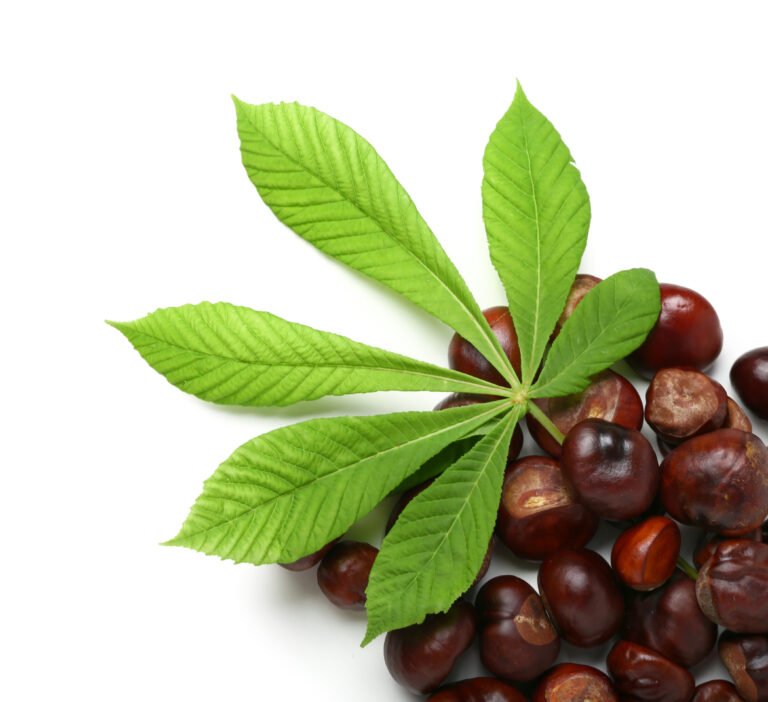
The chestnut tree (Castanea sativa) is a plant steeped in tradition, originally native to the Mediterranean region and now growing in many parts of Europe, Asia, and North America. The tree reaches impressive heights of up to 30 meters and can live for several centuries. It thrives particularly well in acidic, nutrient-rich soils and prefers temperate climates.
Chestnut leaves are harvested primarily in France (Ardèche and Cher) between August and September. Young, fruitless trees yield the best leaves for extract production. This sustainable approach supports the conservation of chestnut populations and creates new value chains.
Production of Chestnut Leaf Extract
Chestnut leaf extract, known under the trade name “Castaline,” is obtained through extraction from the certified organic leaves of the chestnut tree. Particular care is taken to ensure gentle processing in order to preserve the sensitive plant active ingredients such as astragalin and miquelianin.
Benefits of chestnut leaf extract
Comprehensive scientific studies, particularly in 2D and 3D skin models, show that chestnut leaf extract strengthens the three most important skin protective barriers:
- Physical barrier: Increases the production of key molecules such as filaggrin (+31%), claudin-1 (+22%), and Rab11a (+19%), which improves skin structure and reduces water loss.
- Microbial barrier: Inhibits the adhesion and biofilm formation of Staphylococcus aureus, a major contributor to atopic dermatitis, by up to 95%.
- Immune barrier: Significantly reduces inflammatory markers such as IL-6 and IL-8 (-76% and -88%).
Clinical efficacy:
In a clinical study, application of 2% chestnut leaf extract over 56 days resulted in:
- a 27% reduction in transepidermal water loss (TEWL)
- an improvement in skin pH of 0.26 pH units
- a 43% reduction in the EASI score (eczema severity)
- 73% of participants reported increased hydration, softness, and soothing of their skin.
Disadvantages of chestnut leaf extract
Despite its impressive benefits, chestnut leaf extract also has a few minor limitations:
- Slight color change: Minimal color change may occur when stored above 45 °C.
- Usage restrictions: The pH range for cosmetic formulations should be between 3 and 7 to ensure stability.
- Cost: Compared to synthetic alternatives, extracts from wild-harvested sources are naturally more expensive.
However, these drawbacks can be easily mitigated through careful formulation and proper product storage.
Ideas for cosmetic products with chestnut leaf extract
Given its versatile properties, chestnut leaf extract is ideal for various product concepts:
- Nourishing body balms for dry and atopic skin
- Moisturizing facial emulsions for sensitive skin
- After-sun products to soothe irritated skin
- Hand creams to combat redness and dryness
- Baby care products, especially for sensitive baby skin
- Microbiome-friendly serums to stabilize the skin flora
- Soothing face masks to support the skin barrier
Chestnut leaf extract offers unique benefits, particularly in the “Skin Relievers” category for atopic-prone skin (e.g., “Nutri-Soothing Body Balm”).
Fact Sheet Chestnut Leaf Extract
INCI Name: Glycerin (and) Water (and) Castanea Sativa (Chestnut) Leaf Extract
Appearance: Syrupy liquid, dark yellow to amber
Main Molecular Components: Astragalin, Miquelianin
Physical State: Liquid
Melting Point: Not relevant, as it is liquid
Solubility: Water-soluble
Alternative Names: Castaline
Recommended Usage Concentration: 2%
Summary
Chestnut leaf extract delivers impressive results across the board: It naturally protects, soothes, and regenerates the skin. It is an indispensable active ingredient, particularly for sensitive, dry, and atopic skin. Its multifunctional properties make it a true insider tip for innovative cosmetics.
Cosmacon GmbH supports you in developing exclusive formulations with chestnut leaf extract. Together, we create cosmetic products that are not only on-trend but also meet the highest quality standards. Partner with us to leverage innovative natural cosmetics and strengthen your brand sustainably!
When you need it fast:
✨ Our partner Tojo Cosmetics offers innovative, active-ingredient-rich private label products—quickly available, high-quality, and perfect for brands that want to impress with passion and quality.
References:
Investigation into the Anti-Acne Effects of Castanea sativa Mill Leaf and Its Pure Ellagitannin Castalagin in HaCaT Cells Infected with Cutibacterium acnes. Piazza S, Martinelli G, Maranta N, Pozzoli C, Fumagalli M, Nicolaci V, Sonzogni E, Colombo L, Sangiovanni E, Dell’Agli M. Int J Mol Sci. 2024 Apr 27;25(9):4764.