Oleanolic Acid
Oleanolic Acid – A Plant-Based Active Ingredient with Powerful Cosmetic Benefits
In the world of cosmetic ingredients, natural active ingredients are becoming increasingly popular. One of these promising candidates is oleanolic acid. This phytochemical not only offers a wide range of beneficial effects on skin and hair but also boasts high tolerability and versatility. In this article, we explore the origin, mechanism of action, advantages and disadvantages, application ideas, and physicochemical data of oleanolic acid—and demonstrate how Cosmacon GmbH can utilize this active ingredient in innovative cosmetic products.
Natural Origin: From the Leaves of the Olive Tree
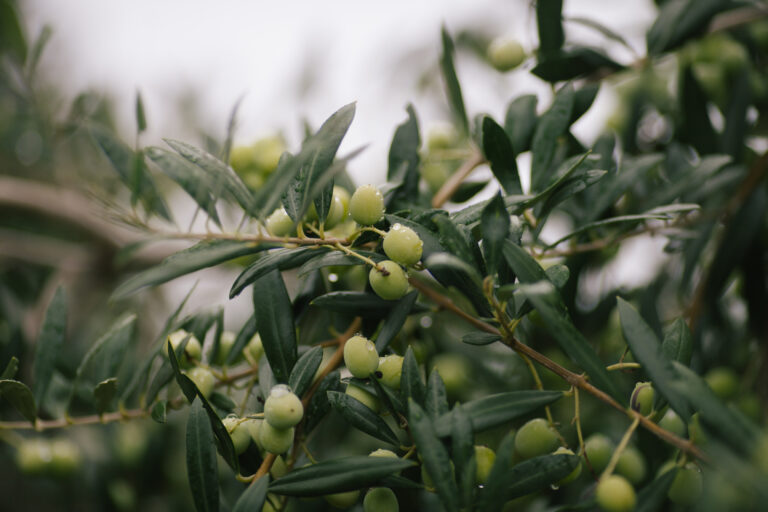
Oleanolic acid is a naturally occurring triterpenoid found primarily in the leaves of the olive tree (Olea europaea). The olive tree belongs to the Oleaceae family and thrives throughout the Mediterranean region as well as in parts of Asia and South America. It can reach a height of up to ten meters and live for several hundred years. The harvest season for the leaves is usually between fall and spring, depending on the climate. Olive trees prefer warm, sunny locations with well-drained soil and tolerate drought well.
Oleanolic acid occurs in the plant in its free form or bound to sugar as so-called oleanane saponins. It is chemically closely related to ursolic acid, another bioactive triterpene.
Production and Extraction
In the cosmetics industry, oleanolic acid is usually obtained as a standardized extract from olive leaves. The extract contains at least 80% pure oleanolic acid and is available as a fine, greenish-cream-colored powder. Extraction is often performed using organic solvents, followed by purification and standardization.
The process is complex but yields a highly pure product that can be easily integrated into cosmetic formulations—such as creams, lotions, gels, shampoos, or lip care products.
Benefits of Oleanolic Acid
Oleanolic acid is a true all-rounder for cosmetic applications. An overview of its main benefits:
- Anti-inflammatory: Inhibits the enzymes cyclooxygenase and lipoxygenase, thereby reducing inflammatory processes.
- Antioxidant: Protects against free radicals that contribute to skin aging.
- Antimicrobial: Protection against bacteria and fungi, particularly effective against Candida species.
- Elastase inhibitor: Slows the breakdown of elastin in the skin—this supports skin elasticity and reduces wrinkles.
- Sebum-regulating: Ideal for oily and blemished skin.
- Skin-soothing: Reduction of redness and swelling.
Studies have shown that oleanolic acid is already significantly effective at concentrations of 0.2 to 3% in topical formulations. Significant effects, such as a reduction in PGE2 (prostaglandin E2) production, were observed particularly at concentrations of 1% or higher, which has been shown to reduce inflammatory processes.
Disadvantages and Challenges
Despite its many advantages, oleanolic acid also has some disadvantages:
- Limited water solubility: As a lipophilic active ingredient, it is poorly soluble in water, which complicates formulation in aqueous systems.
- Stability: In formulations that are not optimally stabilized, oleanolic acid can oxidize.
- Cost factor: High-purity extraction is expensive—oleanolic acid is therefore more expensive than synthetic alternatives.
- Sensitization potential: In very rare cases, irritation may occur in sensitive skin.
However, these challenges can be effectively managed through targeted galenic strategies and suitable emulsifiers/encapsulation techniques.
Ideas for cosmetic products
Due to its active profile, oleanolic acid is suitable for a wide range of cosmetic applications. Here are some product ideas:
- Anti-aging cream: Reduces wrinkles and strengthens the skin structure by inhibiting elastase.
- Soothing serum: For reddened and inflamed skin, e.g., in rosacea.
- Hair care tonic: Stimulates the scalp, has anti-inflammatory effects, and promotes hair health.
- Acne gel: Regulates sebum production, reduces bacteria, and alleviates inflammation.
- Lip balm: Nourishes and protects sensitive lips, especially when combined with vitamins.
- After-sun care: Soothes UV-induced skin damage and supports regeneration.
Physicochemical properties of oleanolic acid
CAS number: 508-02-1
EC number: 208-081-6
Appearance: Creamy powder with a greenish sheen
Odor: Characteristic, herbal
Form: Powder
Active ingredient content: ≥ 80% oleanolic acid
Recommended usage concentration: 0.2–3% in topical formulations (creams, lotions, gels, lip care, etc.)
These properties make oleanolic acid not only an effective but also an easily processable raw material in cosmetic product development.
Efficacy and effective concentration
Oleanolic acid exhibits a variety of biological effects that are particularly relevant for skin and hair care. In vitro and in vivo studies demonstrate its:
- Anti-inflammatory effect, particularly through inhibition of cyclooxygenase (COX) and lipoxygenase (LOX) enzymes
- Antioxidant activity, which prevents lipid peroxidation and reduces oxidative stress
- Antimicrobial properties, e.g., against Candida species and viruses such as Vacciniavirus
- Elastase-inhibiting effect, which supports skin elasticity
Particularly noteworthy is a study in which oleanolic acid, with an IC50 of 23.51 µM, inhibits the release of prostaglandin E2 in macrophages—an effect comparable to that of the well-known anti-inflammatory drug indomethacin (IC50 = 0.95 µM). The recommended concentration for use in cosmetic formulations ranges from 0.2% to 3%, which is sufficiently documented to achieve the effects mentioned above.
Conclusion: Naturally effective with great potential
Oleanolic acid is an extremely promising active ingredient for modern cosmetics. Its broad spectrum of effects—ranging from anti-inflammatory and antioxidant to antimicrobial—makes it a valuable component in formulations for sensitive, aging, and problem skin. Innovative galenic technologies can effectively compensate for its few drawbacks, such as low water solubility.
Cosmacon GmbH specializes in developing customized cosmetic solutions with highly effective natural ingredients such as oleanolic acid. Whether anti-aging, acne care, or scalp serum—we create effective and modern products for your brand with scientifically proven efficacy. Contact us—together we’ll create unique cosmetic products that deliver results.
When speed is of the essence:
✨ Our partner Tojo Cosmetics offers innovative, active-ingredient-rich private label products—quickly available, high-quality, and perfect for brands that want to impress with passion and quality.
References:
Development of Polymeric Micelles of Oleanolic Acid and Evaluation of Their Clinical Efficacy.
An JY, Yang HS, Park NR, Koo TS, Shin B, Lee EH, Cho SH. Nanoscale Res Lett. 2020 Jun 22;15(1):133.
Stelling-Férez J, López-Miranda S, Gabaldón JA, Nicolás FJ. Int J Mol Sci. 2023 Oct 3;24(19):14860.
He H, Li H, Akanji T, Niu S, Luo Z, Li D, Seeram NP, Wu P, Ma H. J Enzyme Inhib Med Chem. 2021 Dec;36(1):1665-1678.